How Did Electric Cars Run on the Streets of the 19th Century?
Share This Page
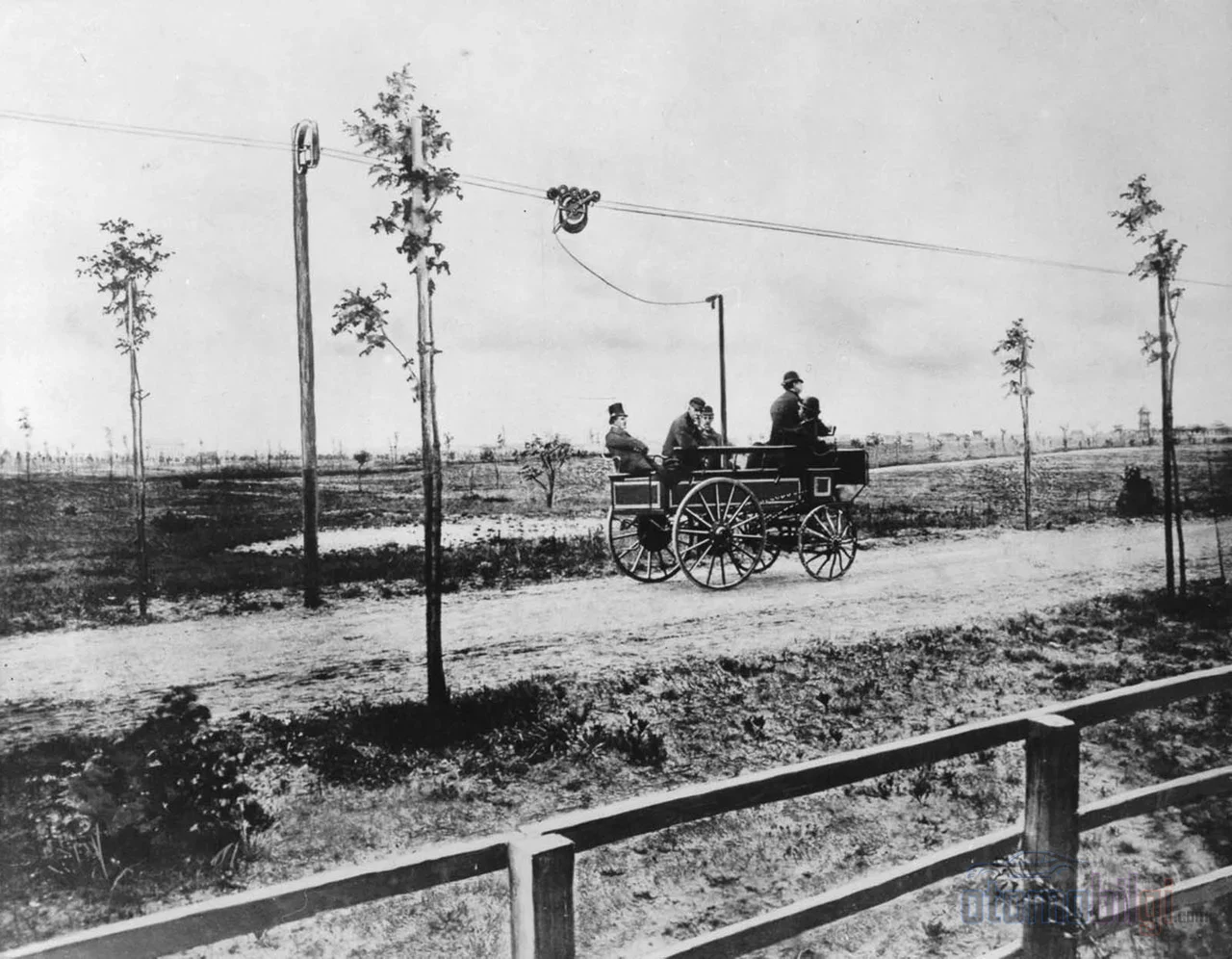
In the late 19th century, the electric car was a mature technology, racing on the same roads as gasoline vehicles and often finding a far wider market than them. As of 1900, about 28 percent of vehicles on the road in the United States were electric; 40 percent were steam-powered, and only 22 percent were gasoline-powered. This article covers how electric cars worked technically between the 1880s and the early 1900s, who they were sold to and why, and how they quickly established a legendary golden age.
Highlights
- 1899: La Jamais Contente broke the 100 km/h barrier with electric power: 105.88 km/h.
- 1900: About 28% of vehicles on the road in the United States were electric, and only 22% were gasoline-powered.
- 1912 Baker Electric: 72-volt system, 8 HP, 23 mph top speed, a $2,700 price tag.
- 1897: The fleet that started with 12 electric taxis in New York reached 62 vehicles in 1898.
- 1915: Electric vehicles' market share fell to 5%; by 1935 they had all but vanished from the roads.
How Was the First Electric Car Born?
The story of the electric car begins together with the story of the electric motor. In 1827, Hungarian priest Ányos Jedlik developed the first electric motor and the following year powered a small model vehicle. In the 1830s, names multiply: Scottish inventor Robert Anderson tried a crude electric carriage, Vermont blacksmith Thomas Davenport built a vehicle that ran on an electrified track, and Dutch professor Sibrandus Stratingh and his assistant Christopher Becker produced a small-scale vehicle powered by primary cells. Scotsman Robert Davidson took the matter to the rails: the 7,100-kilogram Galvani locomotive could pull a 6-ton load at 6.4 km/h for 2.4 kilometers. Railway workers saw this machine as a threat of job loss and destroyed it - we could say the technology first met opposition outdoors, with their own hands.
The real turning point came in energy storage. In 1859, Gaston Planté invented the rechargeable lead-acid battery; in 1881, Camille Alphonse Faure greatly improved the design, making industrial production possible. Without a battery that could be recharged, the electric car would have remained a laboratory toy. That same year, on April 19, 1881, Gustave Trouvé tested in Paris along Rue Valois the first electric vehicle believed to carry a person under its own power - it was an electric version of a Starley tricycle.
The following years followed one another rapidly. Thomas Parker built his first electric car in Wolverhampton in 1884; Andreas Flocken produced the Flocken Elektrowagen, considered the first "real" electric car, in 1888. On the American side, the first name was chemist William Morrison of Des Moines: the six-passenger "electric wagon" he developed between 1890 and 91 could hit the road with a top speed of 23 km/h. In 1898, Ferdinand Porsche built both the P1 the electric car and even the world's first hybrid electric automobile; he also drew a fully electric all-wheel-drive design with a separate motor at each wheel hub. There is no single answer to the question "Who built the first electric car?"; depending on which definition you use, the answer is Trouvé, Parker, Flocken or Morrison.
How Did Early Electric Cars Work Technically?
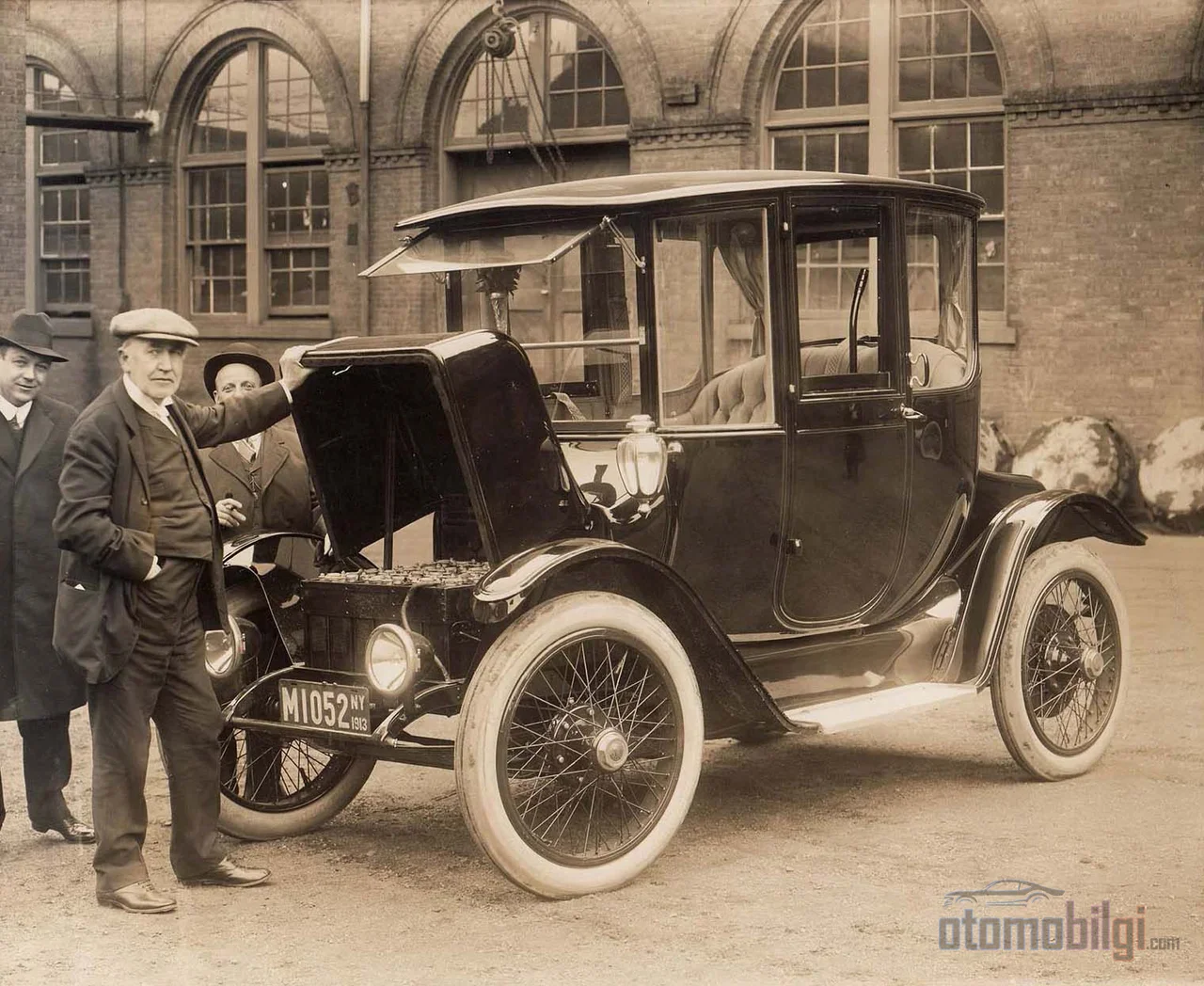
If you look for the brain of a modern electric car, you won't find one, because there is no brain. These cars ran without computers, using direct and simple electrical circuits: a battery pack, an electric motor, and a few switch contacts for speed control. Simplicity, not complexity, was the selling point. A gearbox, clutch, carburetor, spark plug - none of these featured in the electric car's schematic.
Let's look at the numbers. Cleveland-based Baker Motor Vehicle Company (in production between 1899 and 1914) placed six 6-volt batteries under the front hood and six under the rear hood, powering a 72-volt motor in total. The 1912 Baker Electric produced 8 HP, reached a top speed of 23 mph (37 km/h), and sold for $2,700. The 1911 brochure was even more explicit: it promised about 100 miles at 15 mph in the city - roughly 7 hours of continuous driving. Detroit Electric, meanwhile, produced 13,000 electric vehicles from 1907 onward, with a typical range in the 30-65 kilometer band. The Standard Electric of the 1910s claimed a 110-mile range on a single charge, offered a 20 mph top speed and a price of $1,785-1,900.
| Model | Year | Range | Top speed | Price |
|---|---|---|---|---|
| Baker Electric | 1912 | ~100 miles (city brochure figure) | 23 mph | $2,700 |
| Standard Electric | 1910s | 110 miles (single charge, claimed) | 20 mph | $1,785-1,900 |
| Beardsley "light town car" | 1916 | ~70 miles typical range | - | $1,285 |
| Morrison electric wagon | 1890-91 | - | 14 mph | - |
Behind this picture stands battery technology, the real limit on performance. Lead-acid chemistry is not generous in terms of energy density: weight increases, range shrinks. Beardsley Electric managed to produce only 661 vehicles in Los Angeles from 1913 to 1917 - the market was relatively small and the cars were expensive. But within the city, these limits hardly bothered most users; daily needs of 20-70 miles fell within the available range.
Did Electricity Break the 100 km/h Barrier?
Yes - and it is one of the least known but most striking engineering achievements of the era. On April 29, 1899, Camille Jenatzy drove his rocket-shaped, battery-powered vehicle at Achères near Paris La Jamais Contente reached a speed of 105.88 km/h. The previous record broken was 92.78 km/h and belonged to a steam-powered vehicle. Recalling in today's launch speeches that the qualities praised as "silent, smooth, fast" were crowned with a land speed record in the 19th century is the clearest proof of how mature a field of engineering electric propulsion is. High speed means high current and high weight; achieving this with lead-acid batteries was a bold power transmission experiment for the conditions of that day.
Why Were Electric Cars First Sold to Women Drivers?
The answer is purely mechanical. The gearbox of gasoline vehicles was cumbersome, and the hand crank was a real danger: when the crank kicked back, arms were broken. The electric car had no crank, no gearbox, no vibration, no smell and no noise. The social perception of the era turned this advantage into a target: Women drivers were considered "too weak, timid and fussy" for loud, smelly gasoline vehicles; manufacturers turned this stigma into marketing. The electric vehicle was positioned as "silent, clean, odorless and elegant," and was equipped with details such as special headliners for women. In photographs from 1904, women drivers were charging Columbia Mark 68 Victoria themselves with a hand-cranked battery charger.
This strategy had a cost too. Marketing aimed at women could create a counter-stigma among male consumers: The "electric car is for women" perception split the market in half. A 2025 academic study argues that this gendering created a strong lock-in effect and that the early American electric car was intertwined with the conservative "separate spheres" order of the era. A technically superior use case may have been crushed under a social label - this is the first sign that the electric car's demise cannot be explained by cost alone.
Electric Taxis and Fleets on City Streets
The golden age of electric cars was not limited to ornate city cars; it was a serious business model in commercial fleets. In 1897, Walter Bersey's electric taxis, nicknamed "Hummingbirds," took to the streets of London. That same year in New York, Samuel's Electric Carriage and Wagon Company began operating 12 electric hansom cabs and expanded the fleet to 62 taxis by 1898; the city had more than 60 electric taxi fleets. Before World War I, the New York Electric Vehicle Association - a structure that included GM's truck division and GE's General Vehicle division - owned approximately 2,000 electric vehicles in the metropolis; Lord & Taylor boasted an electric delivery fleet of 38 trucks. Even the White House was convinced: President Woodrow Wilson and Secret Service agents used a Milburn Light Electric in Washington.
The real problem for fleet operations was charging and energy management, and an early answer came for that too. The idea of a swappable battery service was proposed in 1896 and implemented in trucks by Hartford Electric Light Company between 1910 and 1924: customers did not buy the battery, they swapped it when it ran out, and the system covered a total of more than 6 million miles. From 1917 onward, a similar service was operated in Chicago for Milburn owners. What we today call a "battery swapping station" was first tried at an industrial scale a full century ago.
Why Gasoline Won Against Electric?
No single reason explains the end of the golden age; four separate developments converged on the same point:
- The production revolution: In 1908, Ford Model T made the gasoline car affordable. In 1912, a gasoline car sold for $650, while an electric roadster cost $1,750.
- Solving the hand-crank problem: In 1912, Charles Kettering's electric starter motor eliminated the gasoline car's biggest disadvantage. One of the electric car's core selling arguments vanished along with the crank.
- Infrastructure asymmetry: In the 1920s, the intercity road network improved, Texas oil made gasoline cheap and widespread, and gas stations spread everywhere. In rural America, however, the electric grid was almost nonexistent.
- The use case: Gasoline cars could go farther, faster, and over rough terrain; once rural road paving moved beyond the cities, long-distance travel and automobile tourism became gasoline's home turf.
Physics was not helping either. A gallon of gasoline contains about 36 kWh of energy; approaching that density with lead-acid batteries was impossible in that era. Electric car sales peaked in the early 1910s, market share fell to 5% in 1915, and by 1935 they had effectively vanished from the roads. Thomas Edison showed the era's mark clearly: he had said that "within 15 years, electricity will be sold more for electric vehicles than for lighting." Edison saw the electric car as superior technology, was working on a better battery, and in 1914 even explored a partnership with Henry Ford for a low-cost electric vehicle. That battery never arrived. The press of the time, meanwhile, was optimistic: a 1911 article noted that even the most renowned and prominent gasoline car manufacturers owned electric vehicles. When the first US auto show opened at Madison Square Garden on November 3, 1900, electric cars were in the showcase; the same could not be said for the decades that followed.
The Legacy of the Early Era: Lessons That Can Be Read Today
The story of the early 1900s electric car is a textbook case showing that technology alone was not enough to win. The vehicle did its job well: quiet, clean, easy to use, with sufficient range for city driving, and even powerful enough to set speed records. The losing side was not the technology, but the intersection of cost, infrastructure, and social labels. Moreover, the era had already tried all the solutions we call modern today - battery swapping, fleet management, home charging. A century later, as we solve the same problem again, the shortest mirror to look into is those quiet and odorless streets of the 19th century.
Sources
- The History of the Electric Car
- History of the electric vehicle
- La Jamais Contente
- Femininity and the Electric Car
- On the gendering of the early American electric car
- The Baker Electric - Auto Heritage Foundation
- 1912 Baker Electric Specifications
- 1911 Baker Electrics brochure
- About Us - Detroit Electric
- Electric Cars Engineering & History - Edison Tech Center
- EVs Were Outselling Gas Cars 100 Years Ago
- Electric Vehicles Have Been Around Since the 19th Century
- Land speed record history