How Does TPMS Measure Tire Pressure?
Share This Page
TPMS, or tire pressure monitoring system, is an electronic safety device that alerts the driver by illuminating a yellow warning light on the dashboard when a tire's air pressure drops significantly. It detects this either through actual pressure sensors inside each tire or by calculating from ABS wheel speed data; which method it uses depends entirely on the vehicle's architecture.
Highlights
- Direct TPMS, with the sensor inside the tire 0.1 PSI measures the actual pressure with precision.
- Indirect TPMS does not measure pressure; it calculates changes in rolling radius from ABS wheel speed.
- With every 10°F (approximately 5.5°C) drop in temperature, pressure decreases by about 1 PSI .
- In the US, mandatory under FMVSS No. 138 since 2008 , and in the EU from November 1, 2014 for all new passenger vehicles.
- The sensor battery lasts an average of 5-10 years and cannot be replaced on its own.
How Does TPMS Work? Two Distinct Engineering Approaches
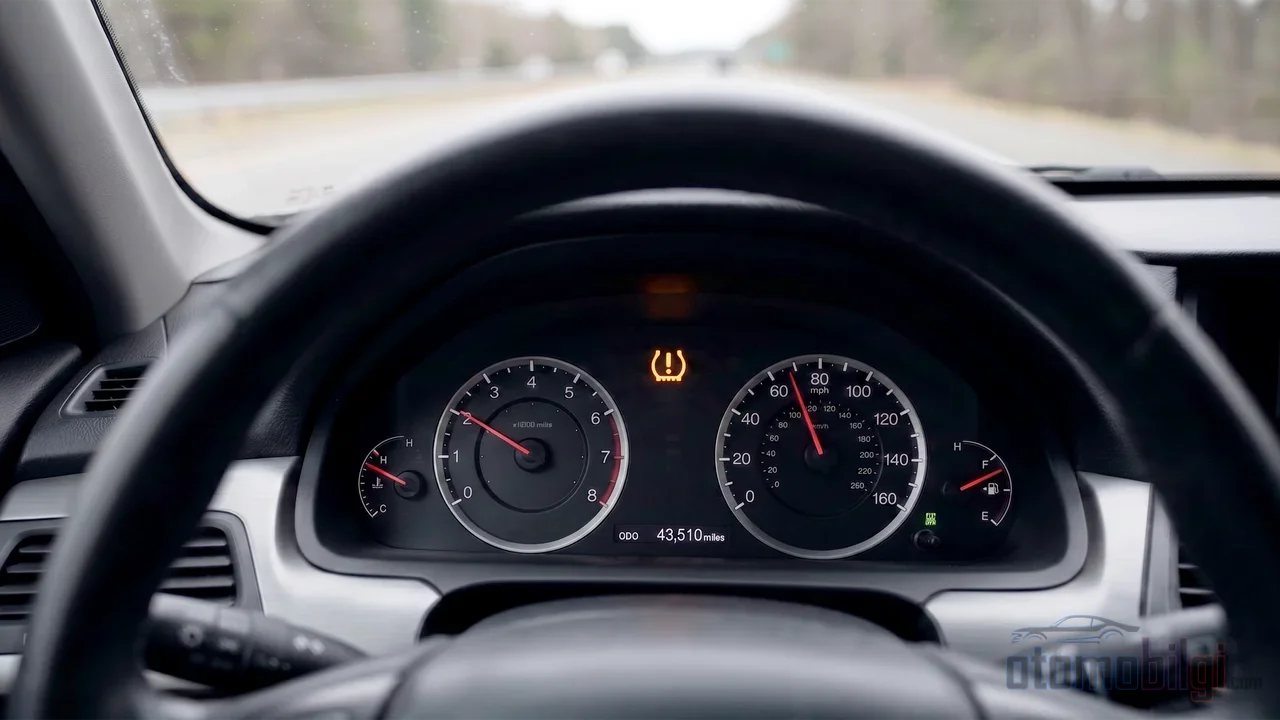
When your car talks to you about tire pressure, one of two completely different technologies is at work: one measures directly, the other estimates indirectly. Both light up the same yellow warning light, but the story inside is entirely different. Let's take a closer look at both.
Direct system: a real sensor inside the tire
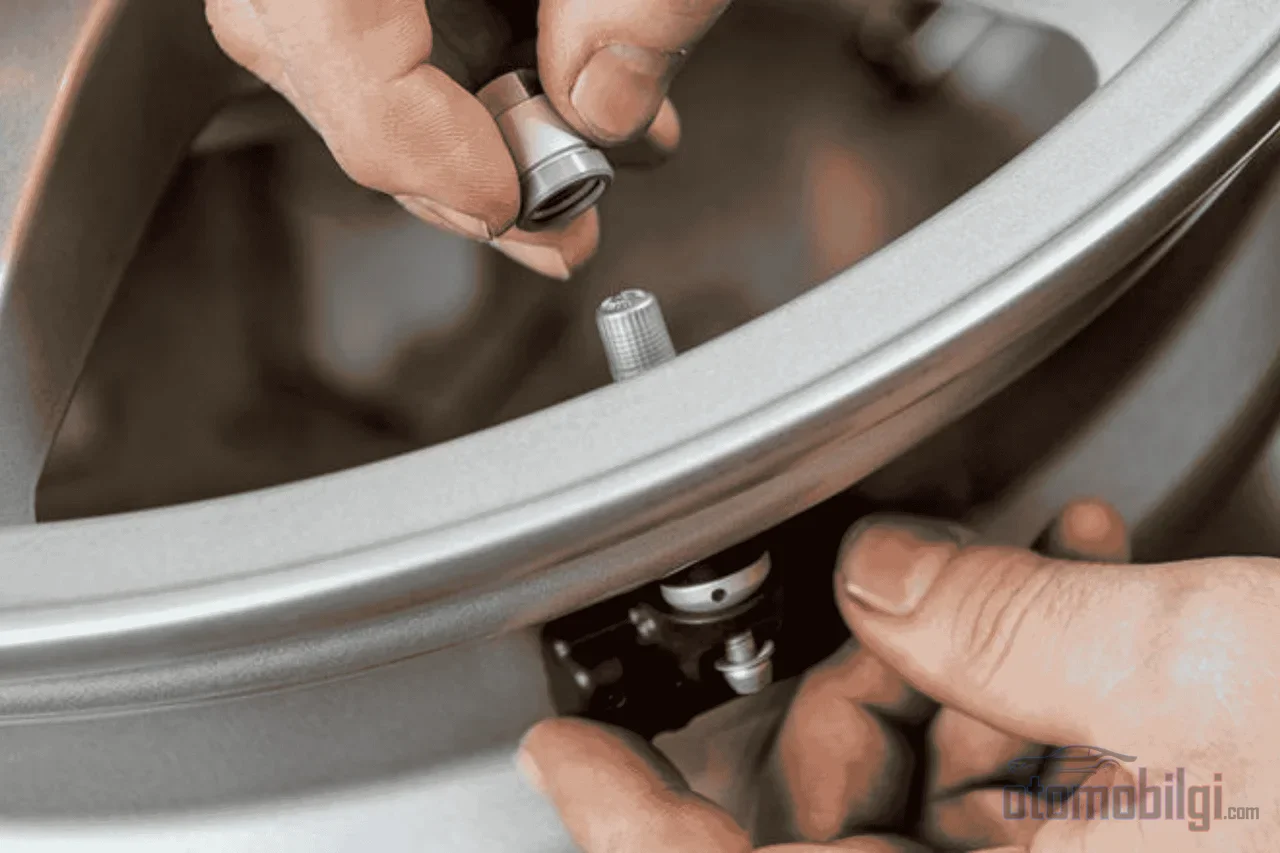
In a direct TPMS, each wheel contains an actual pressure-sensitive sensor. In most passenger vehicles, this sensor is mounted to the inner base of the valve stem; in high-performance vehicles, it is strapped to the barrel section of the wheel rim. What's inside the sensor? A pressure cavity monitoring pressure in real time, a microcontroller, an RF transmitter, a temperature sensor, and a tiny battery. In short, a miniature computer lives inside your tire.
Each sensor has a unique serial number; thanks to this number, the system knows both which tire has a problem and that the data isn't coming from another vehicle. All data is transmitted wirelessly to the central control unit. Measurement precision is at the 0.1 PSI level - a subtle difference that even manual pressure gauges struggle to catch.
The physics behind pressure detection is also interesting: sensors can operate on piezoelectric, piezoresistive, strain gauge, and MEMS principles. For power saving, a clever arrangement has been devised: the sensors sleep while the vehicle is parked and wake up when the wheel starts to turn. During driving, they typically transmit data every 30-60 seconds ; if there is a rapid change in pressure, they begin sending signals more frequently.
Indirect system: making inferences from ABS data
Indirect TPMS (iTPMS), on the other hand, carries no sensor inside the tire. Instead, it works with software algorithms that analyze the rotational speed data coming from the already-existing wheel speed sensors of the ABS and ESC. The logic is this: as air pressure drops, the tire's rolling radius shrinks, meaning the tire becomes squashed and has to spin faster to cover the same distance. If a wheel is spinning faster than expected, the computer calculates that this tire is losing air and issues a warning.
One of the best-known examples of this approach is patented as a sensorless deflation detection system that evaluates changes in the rolling circumference. It offers a simpler and cheaper architecture than a direct system because it requires no separate sensor hardware. In return, it is estimate-based and cannot show the actual pressure value - the light comes on, but it can never tell you at what pressure.
Temperature Mischief: Why Does the Light Come On in Cold Weather?
If you have seen the TPMS light come on when starting your car on a winter morning, no panic - this is most often not a real leak, but pure physics. For every 10°F (about 5.5°C) drop in temperature, tire pressure decreases by roughly 1 PSI. The air has not escaped the tire; the gas inside has simply contracted. Just like the air in a balloon appearing deflated in the cold. As the tire warms up, the pressure rises again - which is why pressure measurements are taken on warm tires.
But there is more depth to it. The valve-mounted sensor does not actually measure the temperature of the gas inside the tire, but usually the temperature of the wheel rim. Heat transferred from the brake disc to the rim or sudden temperature changes such as leaving a cold garage for the street create a temperature difference between the rim and the gas, and the sensor can produce erroneous readings. Also, as tire temperature increases, pressure naturally rises; the system may mistake this rise for a malfunction.
Engineers are trying to solve this problem with compensation methods. One relevant patent describes calculating the gas temperature from at least two sources of information - physical sensors and/or a virtual temperature model derived from driving dynamics variables such as wheel torque, longitudinal and lateral acceleration, and yaw rate. The measured values are converted to a 20°C reference temperature before being displayed on the instrument panel. The goal is single and clear: to reduce false alarms.
Where Do False Alarms Come From?
Do not assume every time the TPMS light comes on that the tire is about to blow out. The main sources of false alarms are known:
- Cold weather and natural pressure drop - the gas contraction we just mentioned.
- Slow leaks remain silent until the system's threshold is crossed, then suddenly issue a warning.
- The system not being reset after a tire rotation.
The behavior of the light also provides a clue: after a few minutes of driving, a steady light usually means serious low pressure, means; by contrast, flashing light usually indicates a sensor communication fault or a dead battery And a critical point: if all tires are losing air at an equal rate, an indirect system may not notice anything at all.
Indirect systems have a somewhat higher risk of false alarms. Uneven tire wear or fitting a spare tire can deceive the system by changing the rolling circumference. Wheel circumference mismatch can be confused with ESC warnings; ABS calibration faults and wheel speed sensor failures are also known sources of misdiagnosis.
Know one limit too: TPMS cannot warn in advance of a slow leak or a blowout not caused by high temperature. It only generates an alarm when the pressure drops below a certain threshold. To locate the leak, the classic method still applies: the soap bubble test. TPMS can never replace manual air checks.
Direct or Indirect? A Comparison
Which is better? The right answer is debatable. The direct system is definitely more accurate and gives more detailed data, but it is not entirely innocent either - without temperature compensation it too can produce false alarms. The indirect system is cheap and simple but based on estimation. Let's look at the table:
| Feature | Direct TPMS | Indirect TPMS |
|---|---|---|
| Measurement method | In-valve pressure sensor | Inference from ABS wheel speed data |
| Precision | 0.1 PSI | Approximate value, actual pressure is not displayed |
| Additional hardware | Sensor and battery in each wheel | Not required, works with software |
| Cost | $40-120 per unit + $20-50 programming | Lower |
| Known weakness | Can produce false alarms without temperature compensation | May fail to detect if all tires lose air equally |
The direct sensor's battery lasts around 5-10 years, with a life of approximately 100,000 miles. Extreme temperatures and road salt can shorten this lifespan. The battery cannot be replaced separately; in case of failure, the entire sensor unit is renewed. When changing tires, the valve stem kit (seal, washer, valve) must absolutely be renewed.
Legislation and Safety: Is TPMS Mandatory?
TPMS is not a luxury but a requirement imposed by legislation. In the US, FMVSS No. 138 makes the system mandatory in all new passenger and multipurpose vehicles under 10,000 lb GVW; the system must warn the driver when pressure drops to 25% or below of the manufacturer's recommended value. This functionality has been required in all passenger vehicles sold in the US since 2008.
On the European side, TPMS is mandatory in all new passenger cars sold from November 1, 2014; this requirement does not apply to N1-class light commercial vehicles. For commercial vehicles there is a separate threshold: TPMS is required in newly registered trucks, buses and trailers from July 2024. Euro NCAP applies strict minimum safety requirements updated every three years for each star rating; the role of safety equipment in scoring is evaluated within the framework of these requirements.
What's on the Agenda? The Smart TPMS Era
Technology, of course, is not standing still. Smart TPMS units that send data directly to the phone via Bluetooth Low Energy, without requiring a display unit, are becoming widespread. Even more impressive, software algorithms can analyze pressure trends to produce a protective warning before a blowout - meaning the system no longer just detects the cold, it predicts the sneeze before the cold.
On the fleet and heavy vehicle side, wide-range sensors capable of monitoring up to 150 PSI stand out. Solar-powered receivers and autonomous driving integration are also on the agenda; automatic speed reduction at the moment of a critical deflation is one of the concrete examples of this integration. Discussions under the UNECE umbrella about the future of indirect systems continue.
Frequently Asked Questions
- Why does the light come on in cold weather? When the temperature drops by 10°F, pressure decreases by about 1 PSI; the air doesn't leak, it contracts.
- Is the light solid or flashing? A flashing light usually means a sensor/battery failure, while a solid light usually means low pressure.
- How long does the battery last? 5-10 years; it cannot be replaced individually, the entire sensor unit is renewed.
- Is a reset needed after rotation? In most vehicles, yes; many relearn automatically after driving above 20 mph.
- Does the indirect system show the actual pressure? No, it only gives a warning.
- Can it detect a slow leak? It points to the low-pressure tire; the soap bubble test locates the leak.
In short: TPMS is a small interpreter inviting you to talk with your tire. Knowing which architecture it works with prevents you from panicking when the light comes on, or conversely, from feeling unnecessarily reassured. Have you ever wondered which system your car carries? Don't forget to ask at your next service.
Sources
- What is TPMS & How Does it Work?
- What Are TPMS Valve Stems and Sensors?
- Method for compensating temperature in a tyre pressure monitoring system
- Federal Motor Vehicle Safety Standards; Tire Pressure Monitoring Systems
- FMVSS No. 138 Tire Pressure Monitoring Systems
- TPMS System
- TPMS Legal Requirements for commercial vehicles
- How cars are tested - Euro NCAP
- TPMS Warning Light: What It Means and What to Do
- Tire Pressure In Cold Weather
- Tire pressure monitoring requirement kicks in
- Direct TPMS vs Indirect iTPMS
- Direct and Indirect TPMS in Modern Vehicles
- Understanding Indirect TPMS
- When Should TPMS Sensors Be Replaced?
- Types Of Tire Pressure Monitoring Sensors
- How temperature drops affect tire pressure
- Tire temperature