South Korean Models That Failed to Catch On in Türkiye: What's Their Used-Car Market Situation?
Share This Page
The South Korean-origin models that failed to capture the expected sales success in the Türkiye market paint a dual-character picture in the used car market: Sonata, Opirus, Stinger and other names that failed to gain traction lose value quickly and wait a long time in listings; Sportage and Kona Electric and similar models are counted among the market's lowest value losers. In other words, the source of the problem is not the brand's Koreanness, but the model's position in Türkiye.
Highlights
- Kia Stinger In 2018 550,000 TL it was sold by special order with a starting price, and was later withdrawn from Türkiye.
- Kia Optima In 2015, in Türkiye, only 1 unit, Kia Soul on the other hand, sold 304 units .
- The used car price index declined in the first half of the year from 103.4 to 102.1.
- In July 2026, the average used car price was 1.17 million TL; the real annual change was -8.6%.
- Kia Sportage with 16.02%, Hyundai Kona Electric with 14.43% value loss, are among the lowest losers.
Which Korean models failed to gain a foothold in Türkiye?
For someone who has been watching this market for more than thirty years, the Korean brands' adventure in Türkiye is not a single story. Hyundai and Kia's small-class models have been at the top of sales lists for years; in contrast, some steps the same brands took in the mid and upper segments were simply ignored by the market. It was not the technical side of the business but the market psychology side that was decisive.
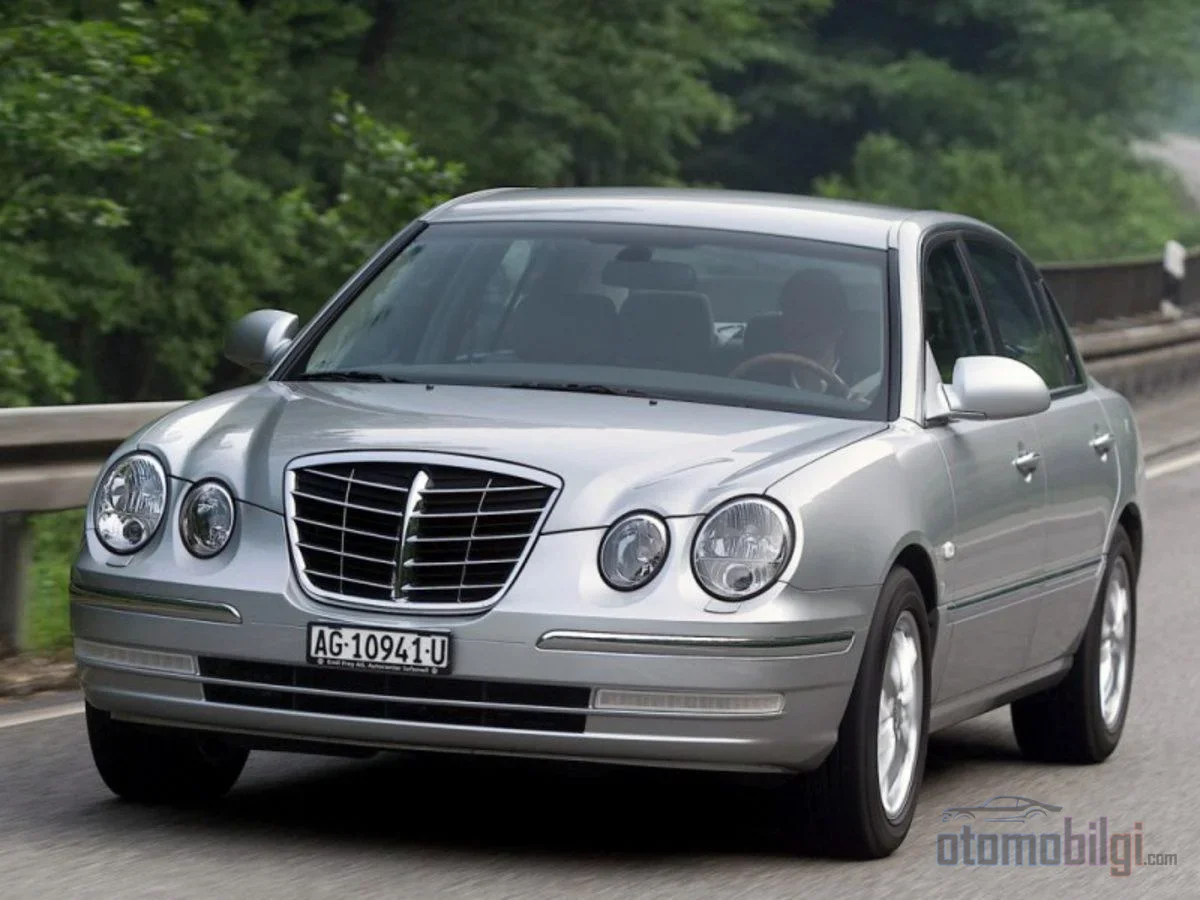
One of the most striking examples is the Hyundai Sonata. The model arrived in Türkiye in 2008 with a 2.0 CRDi-VGT diesel engine and Select, Style and Style Plus trim levels; it was last sold in the 2011 model year and then quietly withdrawn. Finding a Sonata in the used car market today is a hunting exercise in itself. Kia Opirus shared a similar fate: the 3.5-liter V6 gasoline model launched in 2003 as Kia's flagship can barely be said to be remembered by anyone today outside a very niche user base.
The figures sometimes reach hardly believable dimensions. Kia Magentis and Optima are actually different-era names of the same model; but in 2015 the Optima sold only 1 unit in Türkiye. That same year, Kia Soul got 304 units. Kia Stinger was a more ambitious venture: in 2018, with a 2.0 turbo gasoline engine, an 8-speed automatic transmission and 244 horsepower, at a starting price of 550,000 TL, and it could only be purchased by special order. We are all somewhat aware of the outcome: the model was withdrawn from Türkiye, and one of the most important reasons was that the 2.0 engine fell into a high tax bracket.
Going further back, the picture becomes clearer. Daewoo's late-period product range, the Lanos, Nubira and Leganza, drifted into uncertainty following the brand's financial troubles. GM's takeover of its assets in 2002 to establish GM Daewoo Auto & Technology, and the sale of some models under the Chevrolet banner, was decisive in erasing the Daewoo name in Türkiye. Expecting used-car trust from a brand with no corporate continuity is a tough ask anyway. SsangYong Rodius the visibility in Türkiye of large-bodied, 7-seat models like these never even reached a measurable level.
The lesson here is clear: the reason for failure to catch on is not just technical specifications on their own. Price positioning, segment, sales period, and the brand's market perception at the time all work together. It is a car that even non-Stinger drivers give credit to; but selling a Korean car with a price tag of 550,000 TL in 2018 Türkiye was not easy for anyone.
What determines depreciation: service, parts, and demand
Value retention in the second-hand market is actually determined by surprisingly concrete factors. A widespread authorized service network, cheap and readily available spare parts, low running costs, and a reliable brand perception; these directly affect how many days a vehicle spends in listings. That is why models like the Clio, Egea, Corolla, Civic, Polo, and Golf sell quickly, while lesser-known names wait for months.
Korean-origin models that failed to catch on fall exactly outside this triangle: low demand, a limited service network, and high maintenance and spare parts costs. The picture is not easy on the importer side either; importers are required to have at least 20 authorized service stations in each of the seven geographical regions. This threshold filters out any brand wanting to build a service network in an already narrow market.
SsangYong is a separate lesson at this point. The brand's bankruptcy news and the possibility of its withdrawal from Türkiye turned spare parts supply into a risk in itself. The Korando and Torres are cited at the top of depreciation lists due to brand unfamiliarity, parts uncertainty, and an inadequate service network. In the past, one looked at whether a car ran trouble-free for years; now the buyer's main question is whether its part will be found three months later.
Six criteria from the buyer's perspective
When looking at the vehicles that retain their value best in the second-hand market, six common features stand out. These can also be read as a checklist for those considering buying a lesser-known Korean model:
- A widespread service network and affordable, easily available spare parts
- Good fuel efficiency, including hybrid versions
- Automatic transmission preference; automatics sell faster and at higher prices
- Neutral colors, meaning white, gray, and black, and rich equipment
- Strong demand for the B-SUV and crossover segment
- A documented maintenance history and, if possible, a certified or corporate history
None of the items on this list work in favor of a model with almost no service network. Therefore, the first thing a buyer who finds a Korean car that failed to catch on cheap on the second-hand market should do is clarify the parts and service question.
The second-hand market's 2026 picture: prices are falling, buyers are selective
To evaluate these models, we need to look at the overall climate of the market. In June 2026, the total market, meaning passenger cars and light commercial vehicles combined, shrank by 11.44 percent, while the passenger car market shrank by 10.35 percent. The decline in light commercial vehicles reached 15.53 percent. In the first seven months of the year, passenger car sales fell back to 502,712 units, an annual loss of 12.14 percent. From January to October, the market managed to exceed 1 million units; but there is a weak core behind this growth: high inflation and difficulties in access to credit are suppressing demand.
The picture on the used-car side is somewhat different. The Used Vehicle Price Index, which stood at 103.4 in December 2025, fell to 102.1 by June 2026; in the first half of the year prices effectively regressed. As of July, the average price is at the level of 1.17 million TL, and the inflation-adjusted annual real change is minus 8.6 percent. In contrast, while a monthly increase of 5 percent was reported in sales, the 582,100 used-car sales in January 2026 marked the third-strongest January performance of the last decade. Some publications emphasize that the market shrank by 13 percent and that buyers remain reluctant despite prices, while other data show sales activity. This seemingly contradictory picture comes from the different layers of the used-car market recovering at different speeds: prices and demand are falling and rising at the same time because buyers now turn not to every vehicle, but to specific models.
Why is the interest concentrated in three models?
The claim that the market has shifted to a new normal is not empty talk. On the used-car side, interest is squeezed into a handful of models; even popular but high-mileage or poorly maintained examples can sell at low prices, whereas clean examples of models that fail to hold their value wait in the listings. On the new-car side, the continuation of campaigns further disrupts this balance. As long as discounted new-car prices do not fall below a certain level, even the advantageous prices of used models that fail to hold their value struggle to convince buyers. There is a similar ambivalence on the electric side: the small size of the EV fleet in Türkiye and the high purchase cost cause depreciation in the used values of early electric vehicles, while some current electric models have managed to keep their losses to a minimum.
Opportunity or risk: should you buy a cheap Korean model?
There is no single answer to this question; the picture changes completely on a model-by-model basis. Under the same brands' umbrella, there is the Sportage, which appears on the list of fastest-selling used vehicles; on the other hand, the aforementioned SsangYong models top the depreciation lists. The Sportage's depreciation of 16.02 percent is among the lowest in the market, while the Kona Electric, with 14.43 percent, enters the low-loss models despite being electric. In other words, buying a cheap Korean-origin vehicle without understanding the reason for its cheapness means putting both a solid model and a risky model in the same basket.
| Model | Situation in Türkiye | Used-car perspective |
|---|---|---|
| Kia Stinger | Entered in 2018 with prices starting from 550,000 TL, then withdrawn | Niche and risky due to its high tax bracket and scarcity |
| Hyundai Sonata | Sold between 2008 and 2011 | Very few examples exist, hard to find |
| Kia Optima | Only 1 unit sold in 2015 | Effectively out of the market |
| Kia Sportage | Strong sales in the current market | Among those losing the least, with a 16.02% value loss |
| Hyundai Kona Electric | Currently sold in the market | Stands out among electrics with a 14.43% loss |
| SsangYong Korando/Torres | Service network and parts uncertainty | At the top of the value loss lists |
The practical conclusion from the buyer's perspective is this: if you can find a low-mileage example with a documented service history of a model that failed to catch on, it could be an opportunity; but the price of that opportunity is taking on the risk regarding parts supply and service. If cheapness is the price of risk, it is a negotiable advantage; if the reason for the cheapness cannot be explained, there is no need to rush. For an electric example, the battery health, i.e. the SOH value, must definitely be reported before purchase.
Do not forget the tax factor
Taxes applied on the new side also affect second-hand values; top-segment models falling into high tax brackets suppress both their sales and, subsequently, their second-hand prices. The Stinger is a textbook example of this. While campaign prices on the Hyundai side start from 6,040,000 TL today, the top-segment reflection of this picture in the second-hand market is even harsher: the weight of taxation multiplies part of the value loss in models that are already a tax story.
Signals from Korea: what does the home market say?
When evaluating the picture in Türkiye, one must also look at movements in the manufacturer's home market. In September 2026, South Korea reduced its automobile exports by 5.5% to 6.05 billion dollars, the reason being the tensions in the Middle East and the decline in used car exports. The regional distribution is interesting: while exports to North America rose by 9.2% to 3.07 billion dollars and exports to the EU rose by 15.3% to 1.11 billion dollars, exports to Asia fell by 60% to 330 million dollars. Eco-friendly vehicle exports increased by 5.9% to 2.89 billion dollars. Although the domestic market declined by 14.3% to 135,000 units due to the Chuseok effect, new vehicle registrations in the first nine months of the year reached 279,729 units, up 24.1%.
This table shows that Korean industry is not problematic on a global scale; the issue lies in the positioning of specific models in specific markets. While the Türkiye market shrinks, Renault maintains leadership with 84,969 units, followed by Volkswagen and Fiat, with the market consisting of 306,488 imported and 146,650 domestically produced vehicles. In this intense competition, it is harder than ever for a model with a weak service network and an unestablished brand perception to find a place. In the past, a little-known brand's gallery could still breathe; now, the buyer checks the prices of the ten most popular alternatives that most resemble it for every listing.
Conclusion: model-based thinking is essential
South Korean models that failed to gain traction in Türkiye tell two different stories in the used car market. On the Sonata, Opirus, Stinger, and SsangYong side, low demand and parts and service risks accelerate depreciation; Sportage and Kona Electric, on the other hand, prove how much value healthy positioning can preserve for the same brands. The formula for buyers is simple but requires discipline: do not make a decision without questioning the model's service and parts reality in Türkiye, without seeing the battery health report, and without comparing the used price with new car campaigns. In the right example, cheapness is still an opportunity; in the wrong one, it is simply a cheaper risk.
Sources
- South Korean Cars That Failed to Gain Traction in Türkiye
- ODMD Press Release July 2, 2026
- Cardata 2026 used car expectations
- July 2026 Used Car Report
- Used Car Price Index July 2026
- Vehicles That Retain Their Value Best in 2026: Türkiye Guide
- Cars that lose the least value on the used market
- Cars with the Hardest-to-Find Spare Parts in Türkiye
- New vehicle registrations in South Korea, January-September 2026
- South Korea's car exports declined
- Türkiye Automotive Market 2026
- The Chinese and European squeeze: danger growing in Turkish automotive
- Data-Driven Pricing in Used Vehicle Sales
- Electric vehicles losing ground in the used car market
- Hyundai Price List