TOSFED Ordinary General Meeting Approved the 2027-2028 Budgets
Share This Page
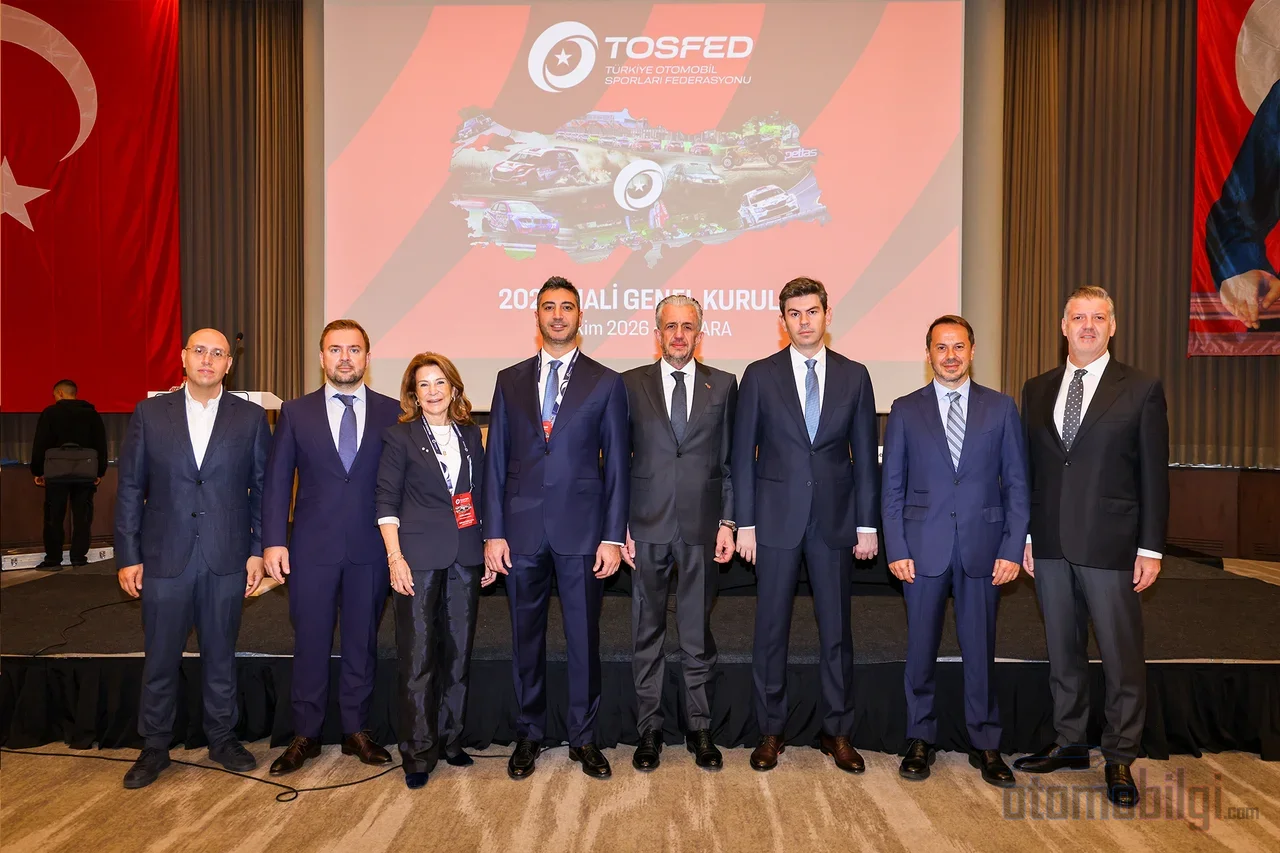
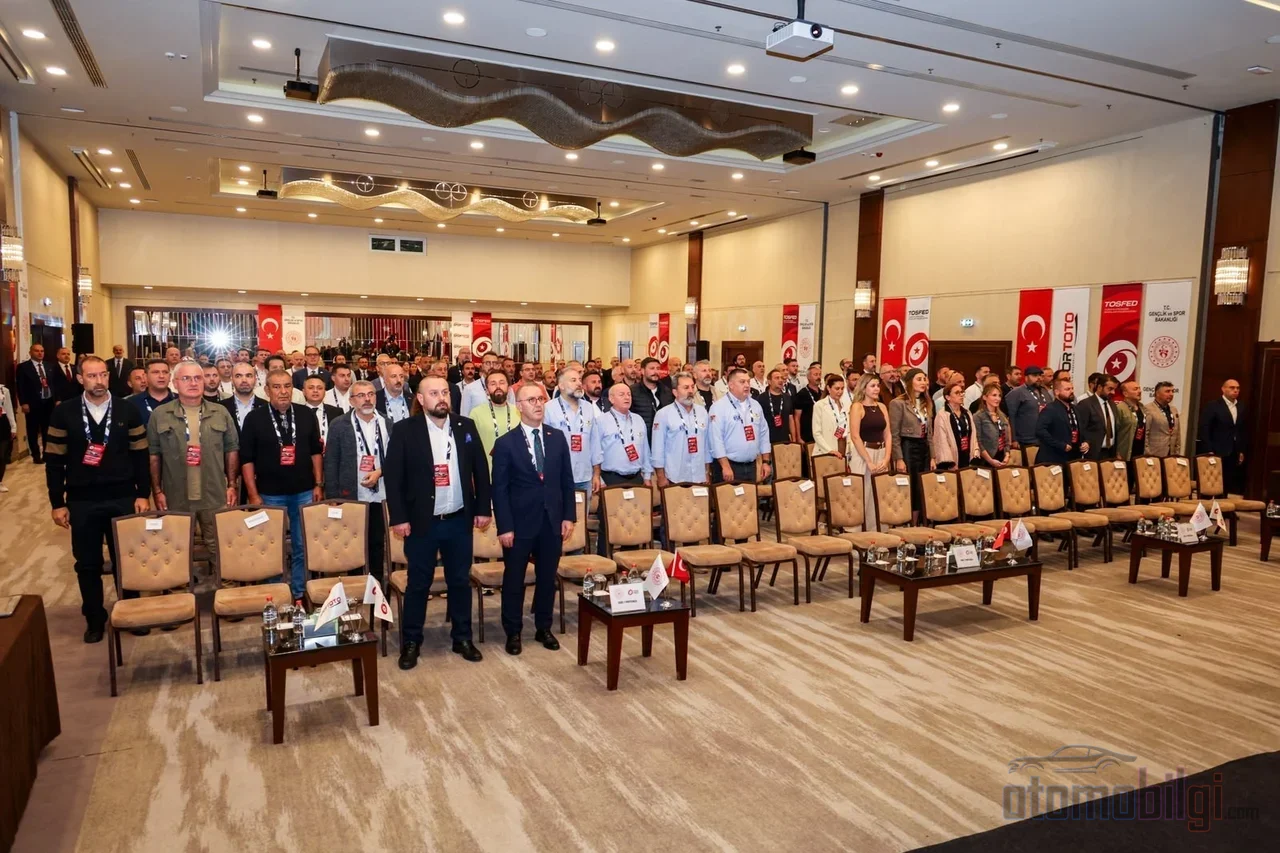
The Turkish Automobile Sports Federation set the financial framework for the next two years with its 9th Financial General Assembly, held on Tuesday, October 13, 2026 at a hotel in Ankara. At the meeting, the activity and audit reports were approved, and the estimated budgets for 2027 and 2028 were discussed and finalized. At the center of the agenda, as much as the budget items, were the discussions about the impact of Istanbul Park's transfer to the federation on the financial picture and the karting track to be built inside the circuit. In this article, we examine the general assembly with a focus on the budget and analyze what the decisions mean for the resource planning of Turkish motorsport.
Highlights
- TOSFED 9th Financial General Assembly, October 13, 2026 was held in Ankara.
- The estimated budgets for 2027-2028 were discussed and finalized; the activity and audit reports were approved.
- The chairmanship of the assembly Mitat Ülkü undertook.
- Istanbul Park 2027-2031 will host the Formula 1 Türkiye Grand Prix for five seasons between; the first race October 1-3, 2027.
- Inside the circuit, by ministerial instruction, an internationally standard karting track will be built.
How the General Assembly Proceeded: Approval, Budget and the Assembly Committee
The meeting in Ankara was one of the routine but critical steps of the federation's calendar. The activity report covers the two-year period from September 2024 to August 2026; that is, the period in which the federation's Istanbul Park process began and F1's return was confirmed. The approval of this report by the membership means institutional endorsement of the accomplishments of the past two years. The approval of the audit report in the same way shows that the financial management passed without issues in the eyes of the auditors.
Mitat Ülkü, who served as chairman of the assembly, stood out as the figure who managed the meeting's procedure. In such general assemblies, the real debate often arises not in the reports themselves but in their financial implications; the discussion and finalization of the estimated budgets for 2027 and 2028 took place exactly at this point. The figures of the budget were not shared item by item in the federation's resources; therefore, the information available to the public is only at the level that the two-year plan was approved. This shortcoming is not something to be criticized; sharing the detailed items of federation budgets with the public is not yet a common practice in sports administration in Türkiye.
Federation President Eren Üçlertoprağı has been in office since 2019, and in his general assembly speech he summarized the financial situation under three headings: the opportunities provided by the Ministry of Youth and Sports, the own resources increased every year, and their efficient use. The assessment that the federation has transformed into a structure built on solid financial foundations can be read as a statement of political confidence placed behind the budget approval.
Why Are the 2027-2028 Budgets So Critical?
We are living through a period when the two-year estimated budget has ceased to be a routine formality for each federation and has become a strategy document. From TOSFED's perspective, this period coincides with the time when it has taken on the largest operating burden in its history. The operation of Istanbul Park has passed to the federation; from 2027 onward, the Formula 1 Türkiye Grand Prix will be hosted for five years, with the first race taking place on October 1-3, 2027. All of these mean cash flows that must be reflected in the budget.
The framework of Üçlertoprağı can be summarized as follows: the narrative that the foundations of a more comfortable future for clubs are being laid starting from the beginning of 2025 was presented as the philosophy of the budget. The message that organizational support will increase as the federation grows stronger implies that transferring resources to the club structure is the priority of the upcoming two-year plan. This is a point that differs from the picture we were accustomed to in the past; previously, federation budgets consisted largely of ministry transfers and licensing revenues, but now far more complex income and expense items such as the direct operation of a facility and the promotion of an international event are on the table.
Istanbul Park's Impact on the Financial Picture
Istanbul Park is a structure whose foundations were laid in 2003 and which is one of the country's largest sports facilities; however, over the decades its operating model has been a constant subject of debate. The question of how the new operating period of the track, expected to begin in July 2023, should be evaluated had been the subject of a public statement by the federation in 2021; the tender debates of that period have now been effectively resolved with the transfer. The question asked today is different: can the federation operate this facility sustainably?
Renovation, Renewal, and the Karting Track
Following the transfer, a comprehensive renovation, renewal, and modernization effort is foreseen in the first phase. The budgetary equivalent of these works will likely constitute one of the largest expense items of the upcoming two years. By ministerial instruction, an international-standard karting track will also be built inside the circuit. Karting is the school step of motorsport; it is the first tool that comes to mind in developing pilot talent through grassroots programs, and it is precisely this layer that Türkiye has lacked for many years. Nevertheless, at the general assembly, the construction of the karting track and the track's operating model were among the most discussed topics; it must be acknowledged that there is a question of balance between facility investment and the resources allocated to existing disciplines.
The information that the track will be opened to the public and that races will be planned in all disciplines after the renovation shows that the facility is designed not merely as an elite arena but as a revenue-generating operation. A broad facility operation, when managed correctly, brings recurring revenue to the federation; when managed incorrectly, it strains the budget for years. This dilemma is the true test of the financial planning for the upcoming two years.
F1 Promotion: What Does It Add to the Budget, and What Does It Take Away?
The most important detail of the 2027 Türkiye Grand Prix is that, this time, Formula 1 will be organized by TOSFED from A to Z not as the host but as the promoter. This is a radically different financial position compared to the past. A host federation is largely the spending party; a promoter generates revenue through ticket sales, hospitality packages and event income - but also assumes the organizational risk along with it. Üçlertoprağı's address to the clubs, saying that they are now the host and that support is needed, implies that revenue and burden will be shared along the federation-club axis.
Statements about ticket prices and preparations have so far been made only in broad strokes; once the concrete price range is finalized, the most critical revenue assumption in the budget will also become clear. Although we have no fill data to estimate the magnitude of the figure, there is an indicator of demand: approximately 11,000 spectators were hosted at one of the circuit championship races. This figure, notable for a national championship-level organization, is the federation's main data for measuring its rise in prestige and interest.
The Calendar for the Upcoming Period: Circuits, Championships, the Return of GT
The calendar that will make the revenue side of the budget concrete is also full. İstanbul Park hosted the 2nd round of the AVIS Türkiye Circuit Championship (5 July 2026) and the 3rd round including the Victory Cup (29-30 August 2026) in the 2026 season, and TOSFED is planning the return of major-level GT racing to İstanbul on 6-8 November 2026. Each of these events contributes to the facility's operating income while also generating organizational costs.
Another important statement concerns the circuit infrastructure: Üçlertoprağı stated that the contracts of seven circuits will expire within 2026. This means the federation will enter negotiations in the coming period to renew circuit contracts or move to a new operating model. The status of these circuits, which are the backbone of national championships, will directly affect the rent and organization line items of the 2027-2028 budget. Those who have been following motorsport in Türkiye for years know: in periods when infrastructure is weak, championship calendars shrink, spectator numbers fall, and every link in the revenue chain weakens. Now a clustering in the opposite direction seems to be taking place.
How These Decisions Will Reflect on the Clubs and Competitors
The reflection of the budget approval on the club level is anticipated, in the federation's own words, as an increase in organizational support. In practice, this could mean that part of the transport, safety, timing and officiating expenses of clubs organizing events will be covered by the federation. The construction of the karting circuit, meanwhile, is the investment that will produce the most significant impact in the medium term; without talent coming out of karting - where a new driver takes their first meters - the long-term sustainability of circuit championships and international representation is difficult.
From an athlete's perspective, a modernized Istanbul Park and an international karting facility concentrate training and competition opportunities within the country. Every team manager who knows the logistical and financial burden of going abroad appreciates what this means. In the acknowledgments section of Üçlertoprağı, President Recep Tayyip Erdogan and Minister of Youth and Sports Dr. Osman Askin Bak are cited for their will as the factors that made the opening of Istanbul Park and F1's return possible, which also shows how broad the chain of political support behind this project is; without political support, a facility transfer of this scale and a five-year F1 period would be unthinkable.
Conclusion: The Two-Year Plan Will Be Tested on the Track
The 9th Ordinary General Assembly went smoothly on paper: the reports were approved, the 2027-2028 estimated budgets were ratified, and opposition objections did not make a notable appearance on the agenda. However, the real test of these budgets will not be given in the general assembly hall, but at Istanbul Park on October 1-3, 2027. Over two years, a facility operation, an F1 promotion, a renovation program, and a karting investment will all be run simultaneously. Turkish motorsport has never attempted a financial operation of this scale before; its success will depend on budget discipline and the tangible return of the cooperation established with the clubs. In the past, the federation budget was a spending sheet; now it has turned into a business plan. That is the difference, and the next two years will measure the solidity of this business plan.
Sources
- TOSFED 9th Ordinary General Assembly Held
- 2027 Formula 1 Türkiye Grand Prix Press Conference
- Formula 1 Returns to Istanbul on October 3, 2027
- 2027 Formula 1 Türkiye Grand Prix - TOSFED
- Istanbul Park Is Now Entrusted to TOSFED
- About Us - TOSFED Istanbul Park
- TOSFED Ordinary General Assembly Held - Habertürk/AA
- A Breathtaking Battle at TOSFED Istanbul Park
- TOSFED President Announced: 2027 Türkiye GP Preparations
- TOSFED Bulletin 2026/18
- TOSFED Public Statement