2026 Toyota C-HR Hybrid: Full Hybrid That Shines in the City
Share This Page
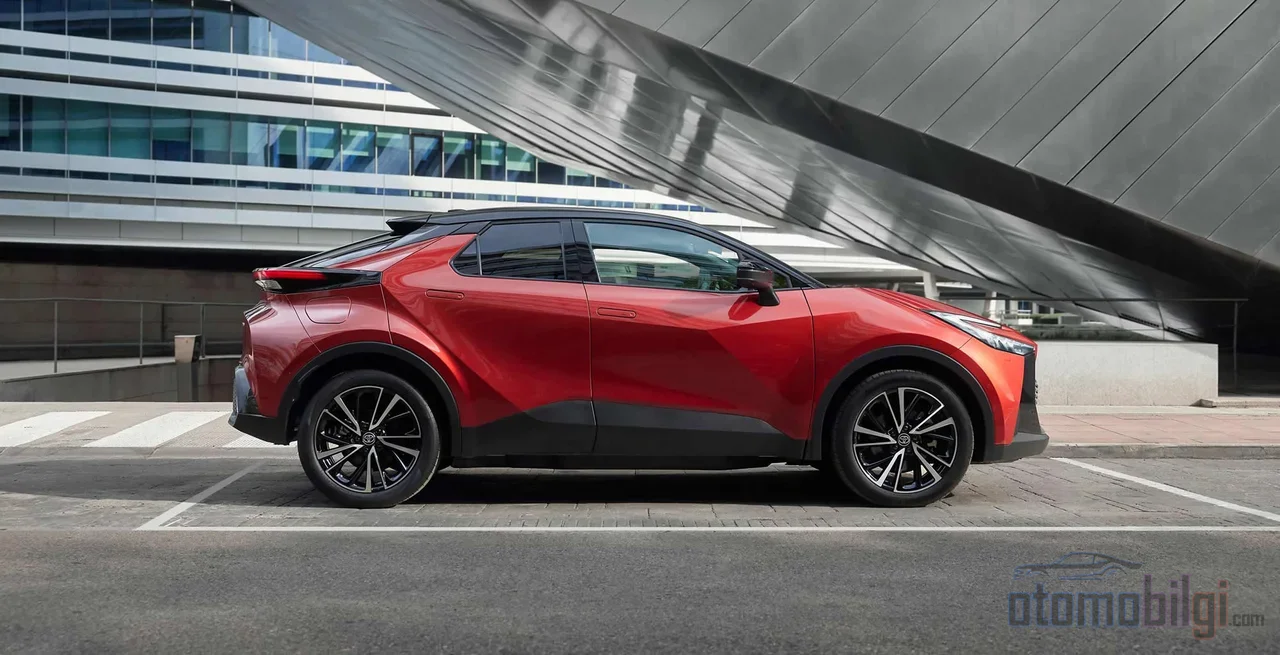
The Toyota C-HR hybrid is a compact crossover with a full hybrid powertrain that manages the petrol engine and electric motor as a single system through an e-CVT transmission. It is produced in Türkiye, with a WLTP combined consumption 4.7-4.9 lt/100 km range, and this efficiency is felt most in stop-and-go traffic. For someone driving mainly in the city, consumption can drop to around 4 liters; at constant speeds above 120 km/h, it can rise to as much as 5.5 liters. In return for its design-focused body, it compromises on rear seat space and cargo volume.
Highlights
- The second-generation C-HR is sold exclusively with hybrid powertrains; production takes place entirely at the Toyota factory in Türkiye.
- 1.8 hybrid: 140 HP system output, 9.9 seconds 0-100 km/h, instead of 4.082 cc, 1798 cc petrol engine.
- Official consumption 4.7-4.9 lt/100 km; user data points to 4-4.5 liters in the city and 5.5-6.5 liters at high speeds.
- Cargo capacity 388 liters (GR Sport); there is criticism of the cramped rear seats caused by the design.
- Starting price 2,400,000 TL; Türkiye offers Flame, Passion, Passion X-Sport and GR SPORT trim levels.
How the Hybrid System Works: The Harmony of Engine and Electricity
At the heart of the C-HR lies a classic series-parallel hybrid logic. The 1.8-liter 1798 cc four-cylinder petrol engine operates with an efficiency target close to the Atkinson cycle and produces 140 HP / 185 Nm . Alongside it stands 70 kW / 185 Nm an electric motor with power and torque figures. The two power sources are mechanically connected through the gearset; the system manages them by splitting output according to instantaneous power demand.
In practice, this is how it works: at startup and low speeds, the vehicle moves primarily on the electric motor, with the petrol engine either off or in generator mode. When throttle demand increases, the petrol engine kicks in, and for sudden transitions the two work together. During braking and deceleration, regenerative braking comes into play: the rotation of the wheels turns the electric motor into a generator, and kinetic energy is written back to the battery. The 4.08 Ah capacity lithium-ion battery stays constantly full with this cycle; there is no plug-in charging point, which is precisely why the configuration is called a "full hybrid."
The transmission is an e-CVT, meaning an electronically controlled continuously variable powertrain. There are no gear steps like in a conventional automatic; engine speed is continuously adjusted according to speed and power demand. This provides a smooth ride in terms of comfort; the engine revving sound arriving before the speed increase under hard throttle is the known character of this architecture. 0-100 km/h in 9.9 seconds, with a maximum speed of 175 km/h.
Toyota C-HR Hybrid Fuel Consumption: In the City and on Long Journeys
The essence of the C-HR hybrid's consumption story is hidden in this sentence: this car's advantage is in the city, its cost at speed. The official WLTP combined value is 4.7-4.9 lt/100 km; but to understand how this figure is formed, one needs to look at usage scenarios.
City driving and stop-and-go traffic
Stop-and-go traffic is the regime where the hybrid system works most efficiently: launches are made on electricity, braking energy is recovered at every stop, and the engine doesn't idle unnecessarily. Real user data in urban mid-speed conditions (40-80 km/h) 4-4.5 lt range has been collected; with a gentle foot out of town, values as low as 3.8 lt have also been reported. Achieving this largely depends on right-foot discipline: applying the throttle lightly and consistently, using ECO mode, and coasting within ranges where you can stay in EV mode directly lowers consumption.
Long distance and high speed
At a constant 120 km/h, consumption 4.3-4.8 lt hovers around; when speed rises to 140-150 km/h, it climbs to 5.5-6.5 lt. The physical explanation is simple: aerodynamic drag increases with the square of speed, and at this point the petrol engine does the job alone, with less support from the electric motor. The hybrid's city character works against its highway character.
Is a short distance a realistic test?
A hybrid's efficiency also depends on the engine warming up and the battery being full. On distances under 10 km, the engine runs in cold mode, and there isn't enough braking cycling for regenerative gain; in this profile, there are long-term user experiences reporting consumption of 6-6.5 lt . So the hybrid advantage doesn't disappear over short distances, but it shrinks: the vehicle's design target is usage spent in daily traffic of tens of kilometers.
Technical Data at a Glance
| Feature | Value |
|---|---|
| Engine | 1798 cc, 4 cylinders, 140 HP / 185 Nm |
| Hybrid system power | 70 kW combined |
| Electric motor | 70 kW / 185 Nm |
| Battery | 4.08 Ah lithium-ion |
| Transmission | e-CVT automatic |
| 0-100 km/h / top speed | 9.9 s / 175 km/h |
| Dimensions | 4362 × 1832 × 1558 mm, 2640 mm wheelbase |
| Trunk / tank | 388 lt / 43 lt |
| WLTP consumption / CO₂ | 4.7-4.9 lt/100 km / 105-110 g/km |
| Suspension | Front MacPherson, rear independent double wishbone |
The Price of Design: Rear Seat and Trunk Practicality
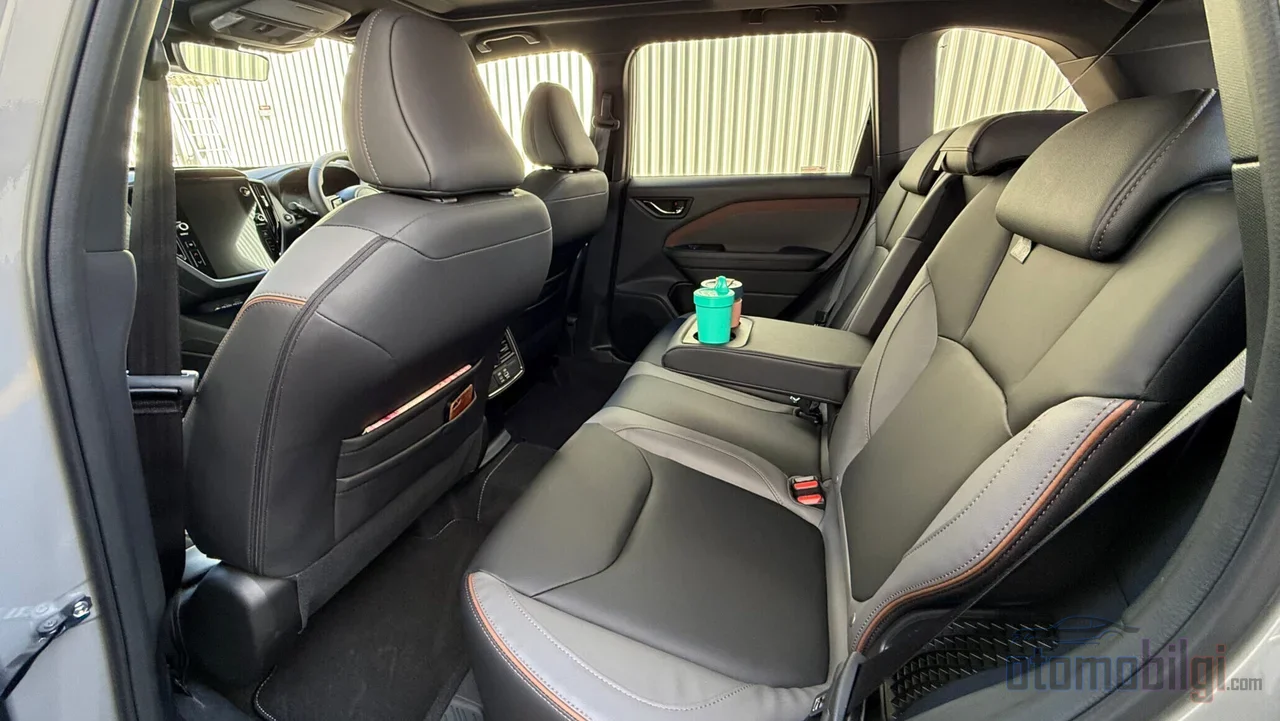
At the center of the C-HR's identity is bold design, and this choice has a measurable cost. Trunk volume is 388 liters (in GR Sport trim); in some markets and trims this figure drops to the 362-377 liters range. We are talking about a volume comparable to the compact hatchback class; the criticism of "too little for an SUV" and the assessment that "having a repair kit instead of a spare tire saves space" come from owners of the same model. Bulky items like a baby stroller fit, but since the body line is sloped, the loading angle and roof height can be limiting.
The picture is more interesting in the rear seat. Knee room is actually wider than in the Corolla; the problem is not the space itself, but the trim: aggressively raked glass and narrow rear windows make the cabin feel oppressive. The perception of light and width suffers, not the seating dimensions. The criticism of crampedness in the second row is also voiced as a fair point, since it is not compensated by extra cargo space.
The other side boasts rich equipment: a 12.3-inch digital gauge cluster and 12.3-inch multimedia screen, wireless Apple CarPlay and Android Auto, a JBL 9-speaker system, a head-up display (HUD), a panoramic glass roof, 64-color ambient lighting, Nanoe X air purification, heated seats and steering wheel, a power tailgate, and 60:40 folding rear seats. Minor quality inconsistencies, such as the prominent hard piano black trim not continuing onto the rear armrests, have also been noted by users.
Driving Character and Differences from the Corolla
The C-HR shares its GA-C platform with the E210 Corolla , but that doesn't mean the same driving experience. The second generation arrived with a noticeably more settled and responsive chassis tune compared to the previous generation, and was welcomed in test reviews as "an unprecedented Toyota experience." The front MacPherson and rear independent double-wishbone layout provides clear road holding on asphalt; the absence of instability in fast corners has been confirmed by long-distance drivers as well. On the other hand, finding the suspension too firm is the most frequently voiced criticism - its compact hatchback-derived tune can disappoint those expecting soft SUV comfort on broken asphalt.
Compared with the Corolla, the differences come down to three headings: seating position and visibility (the C-HR has a higher, more enclosed-feeling cabin), body rigidity and suspension response (the C-HR is sportier), and rear seat perception (the Corolla is brighter, the C-HR offers more knee room but feels more cramped). Consumption character is practically similar; the difference lies in the usage profile, equipment richness, and design preferences.
Equipment Levels and GR Sport
There are four equipment levels in the Türkiye lineup: Flame, Passion, Passion X-Sport and GR SPORT. Since the brand's official communications have at various times used the naming "Passion, Passion X-Sport and Passion X-Style," it is wise to confirm the package structure with the dealer. The starting price is 2,400,000 TL; a GR Sport-based configuration shows 3,307,000 TL in the configurator.
GR Sport takes on the head-turning role with 20-inch wheels and a sporty-looking body kit; but the technical picture is clear: 140 HP power output is retained, meaning the sporty identity is at the aesthetic and chassis tuning level, not at the level of increased power. In Europe, there are variants offered with the E-four AWD system at 145 kW (194 HP) and plug-in hybrid options; in the Türkiye lineup, the 1.8 hybrid is the main powertrain. On the safety side, the T-Mate package is comprehensive: a 360-degree parking camera, advanced automatic parking, adaptive cruise control, a pre-collision system, a driver monitoring camera, a smart lane change assist, a safe exit assist, and emergency driving stop are parts of this package.
C-HR or Its Rivals?
Three names in the same segment are frequently compared. The Honda HR-V e:HEV, with its 1.5 hybrid unit and 131 PS of system power, belongs to a similar school of thought as the C-HR's 1.8; the C-HR appears a step ahead in power and equipment. Nissan Qashqai e-Power offers strong performance and a different hybrid philosophy, while for users seeking purely urban economy and compact dimensions, the C-HR is considered the more sensible choice. Corolla Cross on the other hand, is more economical in terms of price, consumption, and annual motor vehicle tax; in return, you have to give up the C-HR's design identity and equipment level.
Conclusion: Who Is It For, and Who Is It Not?
The C-HR hybrid, provided you define your profile correctly, is a very strong proposition: for a user whose daily route is city and stop-and-go traffic, who considers design the primary criterion in choosing a car, and who uses the rear seats as a second priority, it is one of the most consistent packages in this class. Its measurable advantages are clear: 4-4.5 lt real city consumption, the efficiency of full hybrid without charging hassles, the fact that it is produced in Türkiye, and a comprehensive safety package. Its measurable drawbacks are also clear: the 388-liter cargo area, the rear window line that feels low, and the suspension found to be firm. If you travel fast on long journeys or set off with a full load of luggage every week, don't decide without also test driving the Corolla Cross at the same dealership.
Sources
- Toyota C-HR Hybrid Models and Price List 2026
- New Toyota C-HR Hybrid Specifications
- Toyota C-HR Hybrid GR SPORT Reinforces Its Sporty Identity
- Toyota C-HR Hybrid's New Generation Goes on Sale
- What Is a Hybrid? How Does a Hybrid Car Work?
- Toyota C-HR - Wikipedia
- Driving tips for the best fuel economy in hybrid vehicles - Toyota UK Magazine
- Toyota C-HR Hybrid Review: How Much Fuel Does It Use, Is It Worth Buying?
- How Much Fuel Does the Toyota C-HR Hybrid Use?
- Toyota C-HR 1.8 Hybrid Fuel Consumption
- Toyota CHR Hybrid User Reviews
- toyota c-hr - user opinions
- Toyota C-HR Interior, Cargo Space and Practicality
- 2025 Toyota C-HR review
- Toyota C-HR Technical Specifications 2026
- 2026 Toyota C-HR vs Honda HR-V
- Toyota C-HR Hybrid vs Nissan Qashqai e-Power Comparison
- Toyota C-HR vs Corolla Cross 2026