How Did Formula 1 Come to Be? From the Postwar Era to the World Championship
Share This Page
Formula 1, World War II-era European Grand Prix racing brought together under a single umbrella after the war, was born: The FIA standardized the racing rules in 1946, the formula came into force in 1947, and the first world championship race got underway at Silverstone on May 13, 1950. So how did a series with such a short history become the world's most prestigious motorsport organization? Let's go back to the beginning of the story, because this story is genuinely exciting!
Highlights
- The first F1 world championship race was run at Silverstone on May 13, 1950.
- The first champion was Giuseppe "Nino" Farina with the Alfa Romeo 158.
- In 1950, the winning driver was awarded 8 points; today the winner receives 25 points.
- Juan Manuel Fangio dominated the 1950s with 5 championships; the record stood unbroken for 46 years.
- The engine limit of the era was 1500 cc for supercharged and 4500 cc for naturally aspirated engines.
Before the War: The Grand Prix Tradition That Paved the Way for the Birth of Formula 1
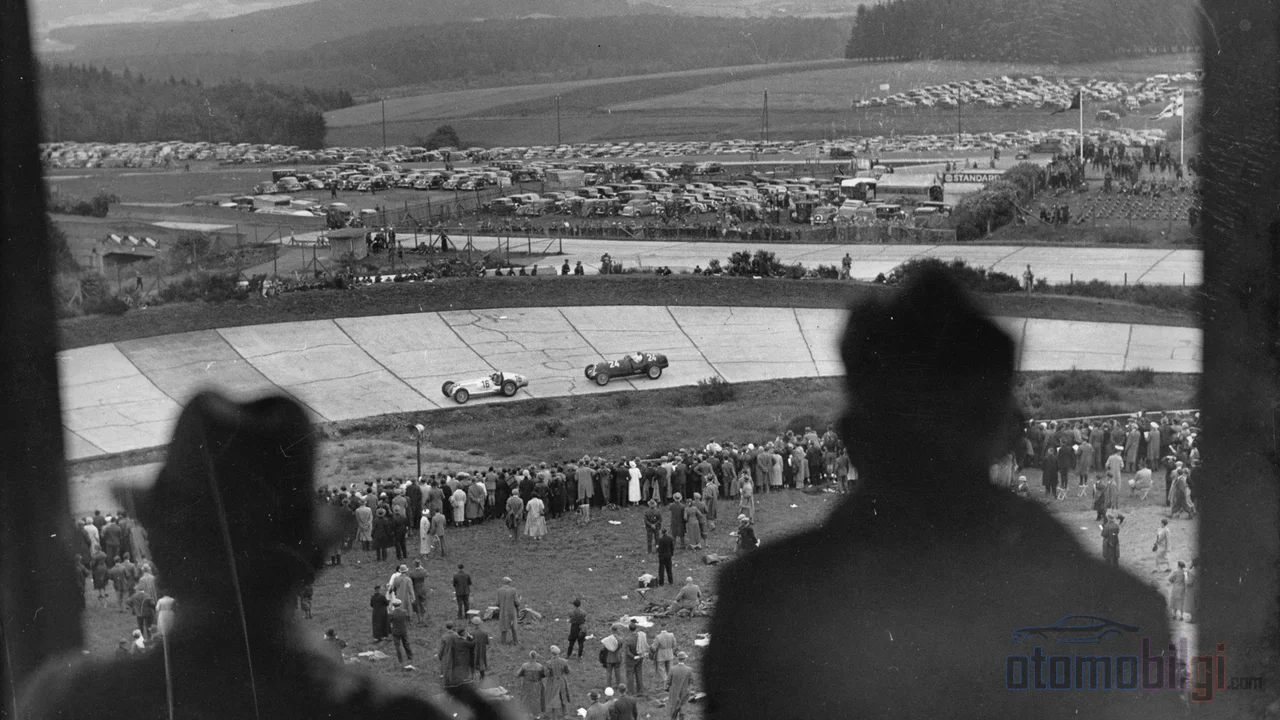
The story of F1 begins not in 1950, but much earlier. The Grand Prix races organized by the Automobile Club of France, the first of which was held in 1906, laid the foundations of single-seater racing. Then came, in order, the World Manufacturers' Championship (1925-1927) and the European Drivers' Championship (1931-1939). So when war broke out, Europe had already been running major races for years; what was missing was a single world championship.
So what does the word "formula" mean? It's very simple: the set of rules that all participating vehicles must comply with. Think of it like the rules of an exam - everyone should race under the same conditions so that the winner is truly the fastest. This logic had existed since before the war, but before the war multiple Grand Prix organizations had proposed a new championship to replace the European Championship, while the new International Formula prepared for the vehicles could not be formalized because of the war. In 1939, the European Championship ended with the outbreak of war, and the tracks fell silent for years.
1946-1950: Writing the Formula and the FIA's Big Step
The war ended, the dust settled, and the automobile clubs got straight to work. In 1946, the FIA (International Automobile Federation) standardized the racing rules; the agreed-upon formula officially came into force in 1947. The name "Formula One" also dates back to these years: the categories were defined by the FIA's International Sporting Commission, effective from 1947. In other words, F1 was not invented by a single person; it is a shared structure that emerged from a federation clarifying the rules.
The early years were not years when everything was ready. In 1946, only four races of post-war Grand Prix calibre could be organized. An interesting detail: the first Grand Prix run under the new regulations, before the formula's official start, was the 1946 Turin Grand Prix. The rules were being written while the cars were already on track - the kind of disorder we're not used to in engineering history, but one I absolutely love!
The real turning point came in 1949: The FIA confirmed that the Formula One World Championship would be launched in 1950, with a World Champion to be declared at the end of the season. Europe's scattered Grand Prix tradition was, for the first time, becoming a single, points-based championship series under one roof.
May 13, 1950: How Was the First Race at Silverstone Run?
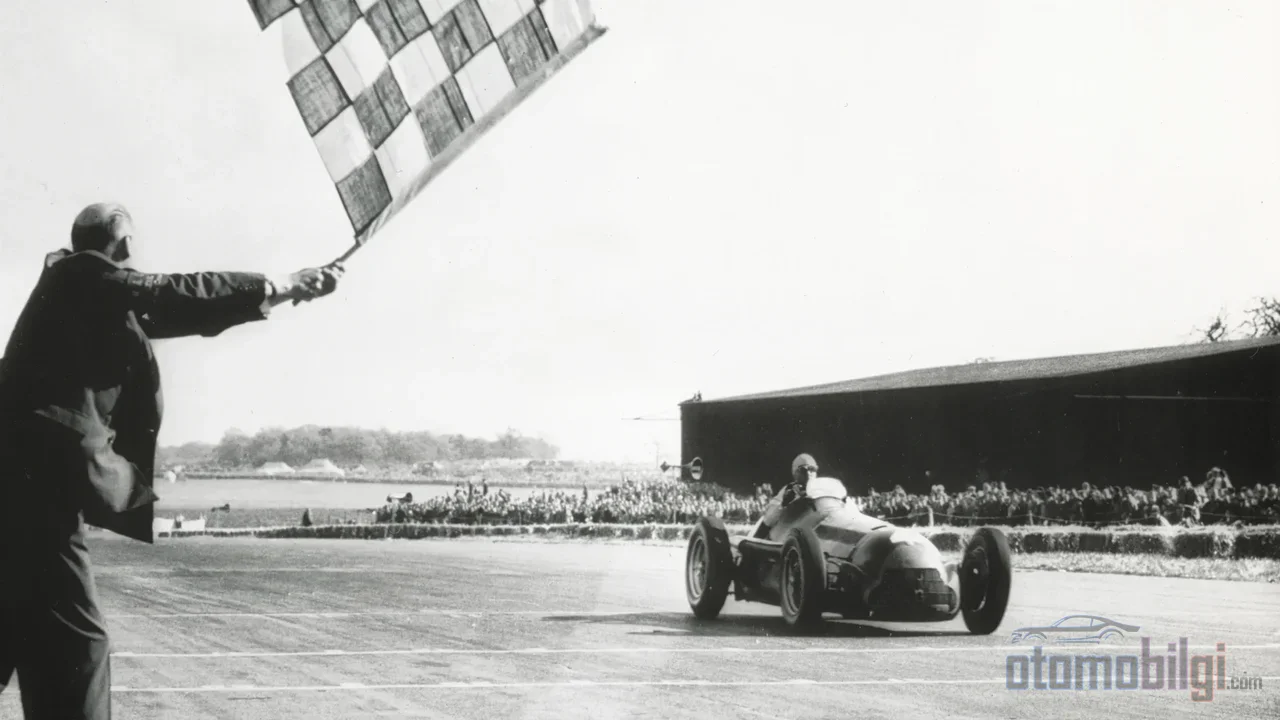
The first world championship race to go down in history was the 1950 British Grand Prix, held at the Silverstone circuit in England. The race was also known as the "Grand Prix of Europe" - a lovely detail showing just how special it was considered. The circuit, as a permanent racing facility, was 4.649 km long, and the race ran for 70 laps, a total of approximately 325.430 km. The weather was sunny, mild, and dry; you could say even the weather lent a hand for the first race.
Alfa Romeo driver Nino Farina, starting from pole position, dominated the race and won. Alfa Romeo completely swept the podium: second-place finisher Luigi Fagioli and third-place finisher Reg Parnell were also drivers of the Italian team. The last of the top four was Yves Giraud-Cabantous. Just imagine: a single team sweeping the top three positions in the very first race of a world championship. If such a result happened today, social media would be talking about it for days!
The First Champion Giuseppe Farina: How Did the 1950 Season End?
Farina won not only the first race but also the first F1 World Drivers' Championship in 1950. He clinched the title on September 3, 1950, by winning the season's final round, the Italian Grand Prix at Monza, in an Alfa Romeo 158. That season, he had three race victories. But there's an interesting detail here: he secured the championship only barely edging out his teammate Juan Manuel Fangio. So while Farina was the first champion, the truly enduring story of that era would belong to Fangio.
In the 1950 season, 24 teams competed: alongside names like Alfa Romeo and Ferrari, teams like Adams, Alta, Kurtis Kraft, and ERA - names most people have never heard of today - were also on the grid. The fact that the first season was so crowded shows how alive the pre-war racing tradition still was. A small terminology note: while some sources consider 1950 the series' first season, others count the FIA's earlier non-championship seasons and call it the 4th. season - the difference lies in how the non-championship years are counted.
Fangio and Ascari: The Championship's First Great Stars
Juan Manuel Fangio, nicknamed "El Maestro", made his debut in the first season of 1950 and then became champion in 1951, 1954, 1955, 1956, and 1957. His five titles stood as the record for the most world championships by a single driver for 46 years - until Michael Schumacher won his sixth championship in 2003. Even more striking is this: Of the 52 races he entered, Fangio won 24, which remains the record for the highest F1 win percentage by a driver. Put in percentage terms, we are talking about a driver who won roughly half of his races - an unimaginable ratio in today's competitive environment.
Fangio faced another giant: Alberto Ascari. Racing for Enzo Ferrari's team, Ascari won back-to-back titles in 1952 and 1953, becoming the first driver in F1 history to win consecutive championships. He is also remembered as the first Ferrari driver to win a championship with Ferrari. On August 23, 1953, at the Swiss Grand Prix in Bern, he defied team orders to lead a 1-2-3 finish for Scuderia Ferrari and clinched his title there. Ascari also proved that a team could build a dominant, season-long championship; in 1951 he had the upper hand over Fangio with 5-2 in race starts, 3-2 in wins, and 31-25 in points.
This era also has a tragic hero: Stirling Moss. Although considered one of the best drivers of the 1950s and 1960s, he never became champion; between 1955 and 1961 he finished runner-up four times and third three times. Though he remained in the shadow of the champions, his name is spoken among the legends.
How Did the Cars and Rules of That Day Differ From Today's F1?
Here is my favorite part, because the difference is genuinely comically vast. In the first formula, turbocharged or supercharged cars had an engine capacity limit of 1500 cc, while naturally aspirated cars had a limit of 4500 cc. In other words, massive engines, larger than even today's compact cars, were out on the track. Today, cars have 1.6 -liter twin-turbo V6 hybrid power units with a rev limit of 15,000 rpm. The rules have of course also changed: in 1950 the points system awarded points to the top five, with the winner receiving 8 points; over time the winner's points rose to 9, then 10, and from 2010 onward to 25. Between 1950 and 1957, drivers who shared their car with another driver or set the same fastest lap even received an equal share of the points - a crazy detail when viewed from today.
| Feature | 1950 First Season | Today's F1 |
|---|---|---|
| Engine capacity limit | 1500 cc (supercharged) / 4500 cc (naturally aspirated) | 1.6-liter twin-turbo V6 hybrid |
| Points awarded to the winner | 8 | 25 (since 2010) |
| Positions awarded points | Top 5 | Top 10 |
| Team orders | Legal | Banned since 2002 |
| Rev limit | No limit | 15,000 rpm |
Team orders had been allowed since the championship's early years; the practice was only banned in 2002. The first great leap in technological evolution was Bugatti introducing its mid-engined car; by 1961 all teams had switched to mid-engine layouts - placing the engine closer to the driver became the standard that everyone accepts today. According to the FIA's official narrative, the championship has grown since its founding in 1950 to become the pinnacle of single-seater racing. Liberty Media's purchase of F1's commercial rights in 2017 for approximately $8 billion also demonstrates the scale of the series' commercial power.
Why Does Knowing F1's Origins Make It Easier to Understand Today's Series?
Now let me ask you a question: have you ever wondered why we govern today's race weekend format, the points madness, and even teams' championship strategies with such detailed rulebooks? Most of the answer lies in those early years. The concept of the "Formula" - that is, the idea of a set of rules everyone must follow - was laid down in 1946-47 and is the ancestor of today's technical regulations. The points system changed four times in 75 years, but the fundamental logic remained the same: the one who performs consistently throughout the season becomes the champion.
From Alfa Romeo's sweep at Silverstone in 1950 to Fangio's five titles, from Ascari's back-to-back championships to Moss's championship near-miss, this first decade established the series' identity: a world of technology, strategy, legendary drivers, and a story behind every race. The series millions watch today is, in fact, the grown form of the shared dream of a group of engineers and drivers emerging from the ashes of war. I think next time you watch an F1 race, keep this in mind - because you are part of a story that came from 1950 to today.
Sources
- Formula One
- 1950 British Grand Prix
- 1950 British Grand Prix - Race Result
- History of the Grand Prix
- FIA Formula One World Championship
- Why is it called Formula 1
- Who was Giuseppe Farina
- Alberto Ascari - F1 Drivers' Hall of Fame
- Giuseppe Farina
- Juan Manuel Fangio
- List of Formula One points systems
- F1 Points System Evolution
- Grand Prix History - The Post-War Racing Years
- 1950 British Grand Prix: The First World Championship
- 1950 Formula 1 season
- Everything You Need to Know About Formula 1
- Formula 1: How did it become a global sport?
- What Does F1 Mean? The Meaning of the Name Formula 1
- Formula 1: Technical Information and Systems
- 1950 F1 Teams and Drivers