India Is Moving to Real-World Emission Testing with BS-VII
Share This Page
India is planning to phase in BS-VII emission norms starting from April 2029 through draft notifications published by the Ministry of Road Transport and Highways. The new regulation does not merely tighten exhaust limits; for the first time it imposes limits on particulate pollution from brake and tire wear, defines battery durability thresholds for electric vehicles, and makes real-world driving tests part of type approval. The proposal is structured to be fully aligned with Euro 7, and the timeline extends to April 2035.
Highlights
- BS-VII is phased in for passenger vehicles April 1, 2029 starting from.
- Real-world driving (RDE) testing for passenger vehicles will be mandatory April 1, 2030 starting from.
- Brake particle limits April 1, 2031 arrive: for electric vehicles 3 mg/km, for others 7 mg/km.
- The particle counting threshold 23 nm from 10 nm is being lowered to.
- A uniform brake particle limit for all vehicles becomes 3 mg/km : April 2035.
A Three-Phase Timeline: A Transition Extending from 2029 to 2035
Through draft notifications amending the Central Motor Vehicles Rules of 1989, the Ministry structures the transition in three phases. In the first phase, new cars and SUVs produced from April 2029 onward will have to comply with BS-VII exhaust emission limits; evaporative emission and fuel-related obligations will also begin in this phase. The second phase marks 2030: small load delivery vehicles and pick-up vans fall within the scope of the limits that year, and for passenger vehicles, real-world driving testing will be applied in type approval from April 1, 2030 onward.
The third phase comes into effect in April 2031, bringing new standards for buses and heavy vehicles while also triggering the start of brake particle limits. The timeline does not end there; it extends to April 2035, and from that date onward a uniform limit of 3 mg/km is envisaged for brake particles across all vehicles. Two-wheelers will have a separate timeline; it is stated that new standards for that segment will be notified later.
What Makes BS-VII Different from BS-VI?
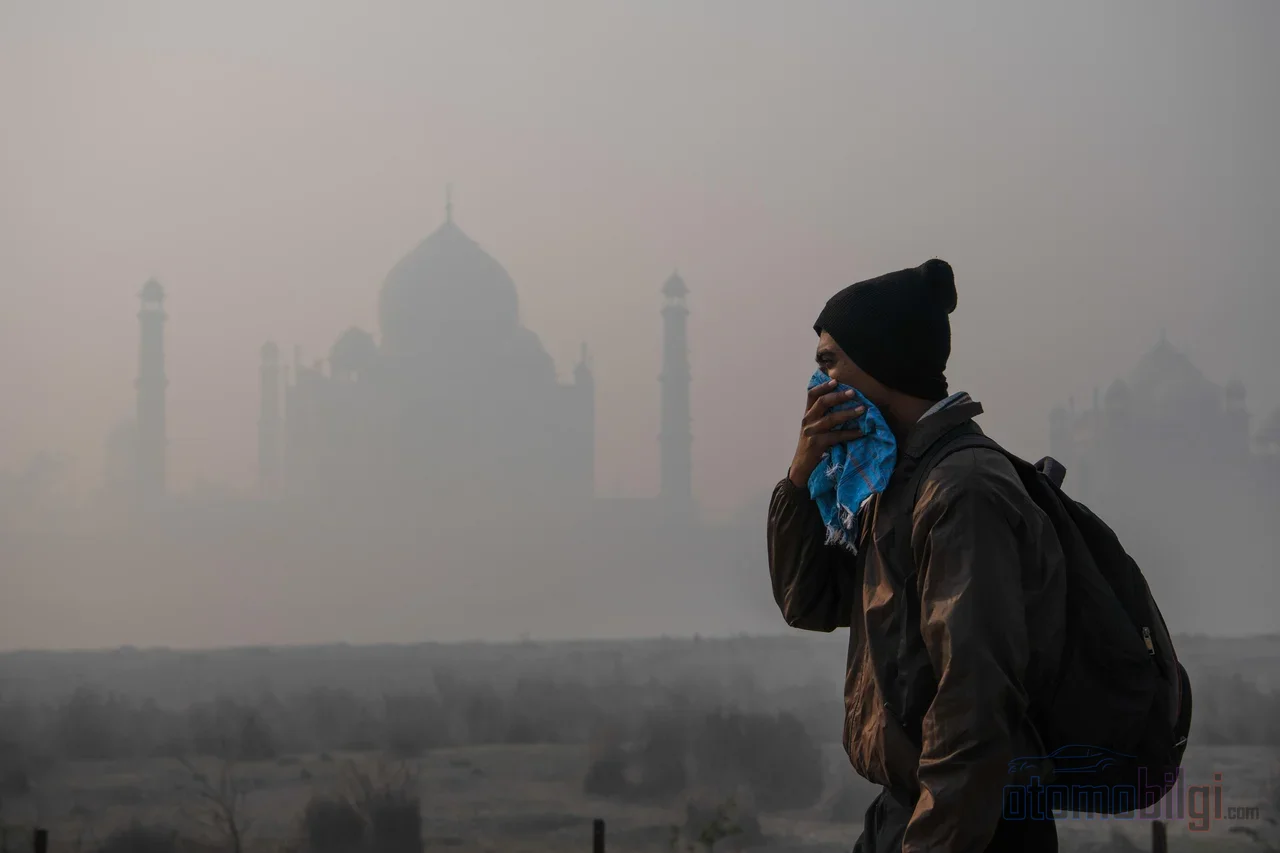
There is something that anyone familiar with this field will notice right away: the draft does not automatically tighten the current exhaust limits. The NOx baseline limit remains at 60 mg/km for gasoline vehicles and 80 mg/km for diesels; the particulate matter (PM) limit is also fixed at 4.5 mg/km. The real emphasis has been placed on how measurement and monitoring will be carried out. In short, rather than lowering the limits further, the regulation aims to ensure that the limits are also valid in real life.
Real-World Testing and the Conformity Factor
From April 1, 2030 onward, passenger vehicles will be tested under real traffic conditions with portable emission measurement systems during type approval. The critical detail here is the proposed 1.0 conformity factor for NOx and particle number: meaning a vehicle that emits above laboratory limits will fail the test. The era of vehicles that look clean in the lab but behave differently on the road is coming to an end.
On-Board Monitoring and Environmental Vehicle Passport
New vehicles will come with an On-Board Monitoring (OBM) system that continuously monitors NOx and PM exhaust emissions and can detect situations exceeding at least 2.5 times the limit, as well as an OBFCM system that monitors real-world fuel or electricity consumption. In addition, the Environmental Vehicle Passport (EVP) will come into force: users will be able to access information such as fuel consumption, the health status of the traction battery and pollutant emissions, and displaying the passport inside the vehicle is also among the provisions. The draft also includes anti-tampering and cybersecurity provisions that guarantee the operation of emission control systems throughout the vehicle's lifetime.
Why Are Brake and Tire Particles Subject to Regulation?
In the history of emission regulations, the exhaust was everything; now the picture is changing. The wear of brake components and the friction of tires on the road release particles independently of the vehicle's exhaust. Even if an electric vehicle has zero exhaust emissions, it can continue to produce brake- and tire-related pollution. BS-VII is one of the first standards to bring this reality into regulation, and in this respect it represents the broadest expansion in India's vehicle pollution legislation since the day it was defined.
There is also a global wind behind the regulation. The United Nations adopted a global standard in March 2026 that measures and limits brake particle emissions. In the same period, it was reported that regulations targeting tire-derived microplastic pollution are expected to remove approximately 30 percent of tires in the European and Japanese markets from sale by 2028. Canada, the US, Australia and New Zealand are already operating systems that finance recycling through taxes on new tire sales. India is becoming one of the first major markets to join this wave.
What Do the Numbers Say?
For passenger vehicles, from 1 April 2031 the brake particle (PM10) limit will be 3 mg/km for fully electric vehicles and 7 mg/km for other powertrains including conventionally engined vehicles and hybrids. From 1 April 2035, a uniform 3 mg/km will apply for all vehicles. Another technical detail is the particle counting threshold: the current 23 nanometre limit is being lowered to 10 nanometres, with the aim of including ultra-fine particles in the count.
| Stage | Date | Scope |
|---|---|---|
| Phase 1 | 1 April 2029 | Exhaust limits, evaporative emissions and fuel obligations for new cars and SUVs |
| Phase 2 | 2030 | Small delivery vehicles and pick-up vans; RDE testing for passenger vehicles |
| Phase 3 | April 2031 | Bus and heavy vehicle standards; brake particle limits in force |
| Final threshold | April 2035 | Uniform 3 mg/km brake particle limit for all vehicles |
Battery Durability Requirement for Electric Vehicles
The fact that the norm also covers vehicles without exhausts is the most modern aspect of the regulation. The batteries of electric passenger vehicles and plug-in hybrids must 5 years or 100,000 km retain at least 75 percent of their initial energy capacity at the end of (whichever comes first), 8 years or 160,000 km and at least 67 percent at the end of. Officially documenting battery health in the second-hand market may also create a new criterion in vehicle valuation. Considering a sector where range loss has long remained in the dark, it would be no exaggeration to say this transparency obligation favors the buyer.
Why Does the Industry Want a Delay?
The draft is not yet final, and it is a fact that the industry is unhappy. It has been reported that the automotive industry organization SIAM may raise the possibility of postponing the norms and propose a two-phase implementation starting in 2032; this would be a notable deviation from the government's three-phase plan starting in 2029. On the other hand, the norms are expected to include stricter emissions monitoring, efficiency testing, anti-tampering measures, and the integration of cybersecurity technology; so the debate is about the length of the timeline, not the scope of the content.
The cost concern also has a historical precedent. The transition from BS-IV to BS-VI had led to cost increases of an estimated 10,000-20,000 rupees per gasoline vehicle and between 80,000 and 1.5 lakh rupees for diesels. In 2017, SIAM projected that the industry would need to invest approximately 1 lakh crore rupees to comply with emissions, safety, and fuel efficiency regulations. BS-VII will bring investments in emission control technology, test equipment, monitoring systems, and battery management; the cost will most likely be passed on to consumers, and the exact impact is assessed to depend on the final requirements and the manufacturer's technology choices. Add to this the amplifying effect in a market where a high share of vehicles are bought on credit. Given that India is now the production base for many global manufacturers, it is inevitable that the decision will affect not only local price tags but also global product planning.
Historical Context: Where Have We Come From Since BS-VI?
India once skipped BS-V and moved directly to BS-VI to accelerate pollution control; BS-VI came into force in April 2020. The distance covered needs to be seen in numbers: for diesel passenger vehicles, the particulate limit has dropped from approximately 0.36 g/km in the 1991 norms to 0.005 g/km with BS-VI, a reduction approaching 99 percent; for gasoline vehicles, the CO limit fell from 27 g/km to 1 g/km. While BS-VII may seem like a natural continuation of this line, its character is different: in the past it was a regime that tightened almost only exhaust limits, now it is expanding toward a framework that monitors all vehicle-related pollution sources and the vehicle's behavior throughout its lifetime.
According to officials, the norms are fully aligned with Euro 7 and structured similarly to Euro 7's phased implementation starting from November 2026. The fact that existing exhaust limits are not being lowered is a detail confirming that the regulation places its weight on the measurement and monitoring side. It should also be noted: the draft does not affect current vehicles, including BS-VI compliant vehicles, or their service lives; the regulation covers only newly manufactured vehicles.
What Does It Mean for Buyers?
There is more than three years until BS-VII takes effect, and it does not affect those buying a car from today. However, after 2029, three things will be felt in the market: more honest emission declarations based on real-world testing, a more transparent emission history thanks to continuous onboard monitoring, and defined battery durability thresholds under warranty for EV owners. The magnitude of the price increase will become clear once the final shape of the regulation and manufacturers' technology choices are settled. Until then, watching how the calendar dispute between the industry and the ministry plays out is the clearest indicator of whether the regulation will be delayed.
Sources
- What does Bharat Stage VII emission standards mean?
- From Tailpipes To Tyres and Batteries: How BS-VII Takes India's Clean Vehicle Journey Further
- Rollout of BS-VII in 3 phases from April 2029 to April 2035
- UN adopts global standard to measure and limit brake particle emissions
- SIAM may urge deferment of BS7 emission norms
- BS7 emission norms rollout proposed from April 2029: Report
- Planning to buy a new car? India's BS-VII emission rules to kick in by April 2029