Why Did Toyota License Its Hybrid Technology?
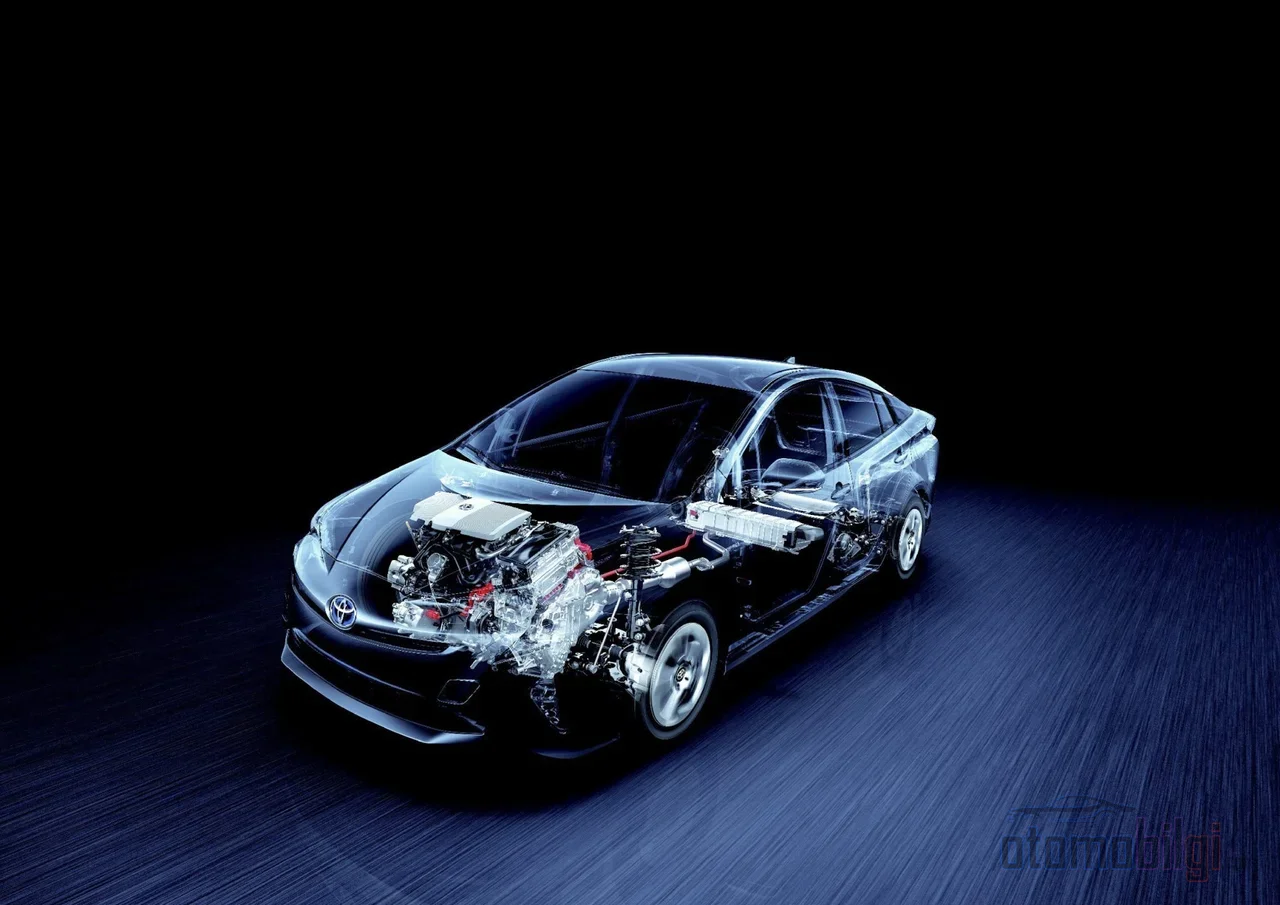
Share This Page
Toyota licensed its hybrid system to its competitors because the vehicles it sold on its own could not cover the development cost of this technology; making the technology an industry standard both grew demand and increased the return on investment. The agreements made with Nissan in 2002, Ford in 2004, and later BMW and Mazda transformed the hybrid from a niche solution into an architecture embraced by the entire industry. This page examines the history of those licensing decisions and the business logic behind them.
Highlights
- March 9, 2004: Toyota and Ford announced licensing agreements for hybrid system and emissions patents.
- Ford licensed about 20 hybrid patents of Toyota's; with its own 100 hybrid patents, it made the system uniquely its own.
- Toyota, opened roughly 24,000 hybrid and electric vehicle patents royalty-free until 2030 in April 2019.
- Ford produced and sold approximately 1.3 million hybrid vehicles in the U.S. over the past 20 years.
Why does Toyota sell its hybrid technology to its competitors?
The answer lies more in economics than in engineering. Despite its $19,995 price tag, the second-generation Prius had limited sales projections and was not enough on its own to cover the high development costs of hybrid technology. A Toyota spokesperson summarized the rationale in two sentences in 2004:
"We strongly believe hybrids will become an industry standard. The more well-known they become, the more demand there will be. Economies of scale, of course: if you license the technology, there is a greater return on the investment."
This chain of logic is consistent. The components of a hybrid - the high-voltage battery, the power-split transmission, the control software managing the two motors - are an investment with high fixed development costs and low marginal costs. As production volume increases, unit costs fall; licensing revenue feeds into the same pool. There is a nuance Toyota emphasized: the company did not take the technology to others' doors to sell it; each time, the competitors approached Toyota themselves.
The shared patents generally came from the first-generation Prius, launched in Japan in 1997, and its derivatives. The newer and more complex Hybrid Synergy Drive patents remained outside the scope of licensing for a long time - it was a rational strategy to share the mature layers without opening up the company's most valuable intellectual property. It should also be added that the sharing philosophy was not as altruistic as claimed; without demand and licensing agreements, the profit potential in hybrids would have remained limited.
The Ford deal: the turning point of 2004
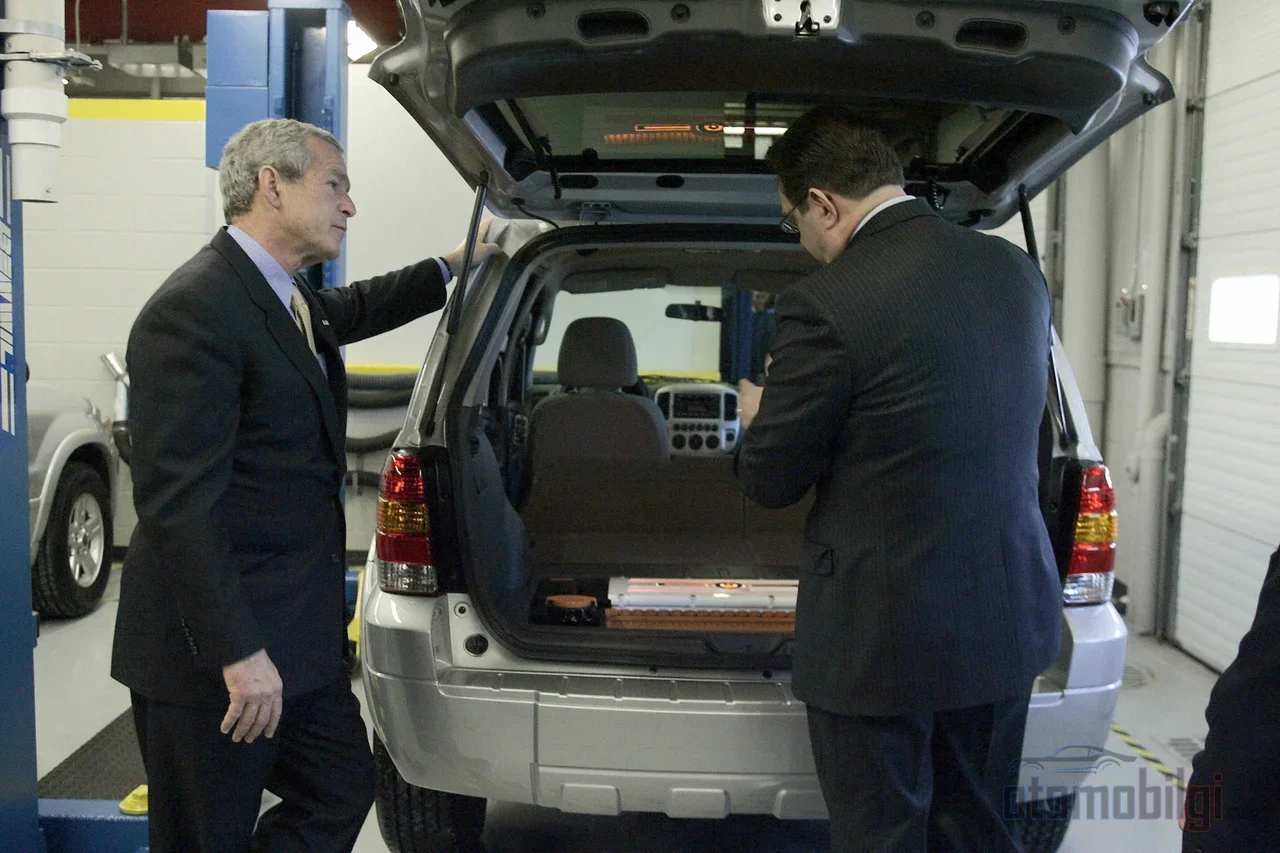
Toyota's first major licensing move had actually come with the basic agreement signed with Nissan in 2002; this agreement formed the basis of the Nissan Altima Hybrid, sold in the U.S. market between 2007 and 2011. But the deal that truly drove the transformation was the one signed with Ford on March 9, 2004. Toyota licensed its hybrid system control technology and emissions cleaning patents to Ford; in return, it received Ford's NOx control and direct-injection spark-ignition (DISI) technology patents.
How Toyota was the Escape Hybrid?
The issue has been debated on forums for years and the answer is clear: Ford did not copy the vehicle from Toyota. Ford licensed approximately 20 Toyota patents - mainly transmission strategies and algorithms - solely to avoid intellectual property infringement. In reality, alongside Ford's own 100 hybrid patents, the system featured a battery pack from Sanyo Electric and major Toyota-independent roles from suppliers like Continental Teves. A Ford official stated the option as follows: either take the entire patent package or take a selected few needed to launch the program. Ford chose the latter.
The result, introduced at the end of the summer of 2004, was the Ford Escape Hybrid: the world's first full hybrid SUV, the first hybrid SUV in the North American market, and the first hybrid from an American brand. The press of the time described the project as Ford's most complex project in its history, and perhaps its most important product since the Model T. That was no exaggeration: instead of buying a ready-made system as Nissan did, Ford built its own engineering on top of the licensed patents - and that approach worked.
BMW and Mazda: licensing becomes the standard
After the Ford deal, Toyota's hybrid architecture became the industry's go-to reference. BMW parted ways with General Motors and chose Toyota as its partner in fuel cells and hybrids; the two companies agreed to cooperate on hydrogen fuel cells and hybrid technology. BMW's system, named "Global Hybrid Cooperation," was similar to Toyota's approach in combining the power of two motors in single-mode and dual-mode operation.
Mazda, on the other hand, went for a deeper integration. Toyota licensed the hybrid technologies used in its flagship Prius to Mazda; this license was used in the Mazda 3 Hybrid. The collaboration was formalized with a business and capital alliance signed on May 13, 2015, and Mazda still uses Toyota's hybrid technology today in the CX-50 Hybrid. The two companies' joint production facility increased production from two models to four.
2019: royalty-free opening of 24,000 patents
The logical endpoint of the licensing strategy came in April 2019: Toyota opened up royalty-free access to approximately 24,000 of its patents related to hybrids and electric vehicles until 2030. The aim was to accelerate the adoption of hybrids by making it easier for other manufacturers to embrace the technology. The move also reflected Toyota's strategic conviction: hybrids would remain an effective alternative to fully battery-powered electric vehicles.
This move shows the evolution of the strategy compared to the grudging start of the licensing era. In the 2000s, Toyota shared its matured patents selectively and in exchange; in 2019, it was putting everything on the table to expand the hybrid ecosystem as much as possible. The variable that remained unchanged in both cases is the same: volume. As demand grows, Toyota's component production, software accumulation, and efficiency advantage also grow.
Historical context: Toyota did not invent the hybrid
Contrary to popular belief, Toyota did not invent the hybrid. The first hybrid vehicle Produced in 1901 by Ferdinand Porsche, the Lohner-Porsche was a series hybrid - the gasoline engine only ran the generator, while propulsion came entirely from electric motors. Over the following century, Victor Wouk's 1972 Buick Skylark conversion, David Arthurs' 1978 regenerative braking prototype and Audi's 1989 and 1991 Duo plug-in experiments warmed up the stage; however, none of them reached series production.
Toyota's hybrid work dates back to 1968 and project general manager Kenya Nakamura. The company's pioneering effort materialized in 1997: Prius, the world's first mass-produced hybrid vehicle, went on sale in Japan. Honda, in 1999, Insight became the first gasoline-electric hybrid sold in the US. As of 2004, Toyota's hybrid sales had exceeded 200,000 - precisely this threshold of confidence was where licensing talks began.
What the license brought: today's picture
The long-term return of the licensing decision is visible in the competitors' numbers. Hybrids are today the fastest-growing segment in the US; in the first eight months of 2024, industry-wide hybrid sales rose 35% and hybrids made up 9% of the US market. Ford's hybrid sales in the same period rose 49% to reach 125,462 vehicles ; the Escape Hybrid recorded 13,645 sales. Toyota's RAV4 Hybrid achieved 111,526 sales in the first quarter of 2024, while Honda's CR-V Hybrid became the US leader in 2023 with 197,317 sales.
| Manufacturer | Hybrid strategy | Notable result |
|---|---|---|
| Toyota | The center that licenses and sells its own product | Hybrid sales exceeding 200,000 (as of 2004) |
| Ford | Licensed ~20 patents, added its own 100 patents | Produced and sold ~1.3 million hybrids in 20 years |
| Nissan | Long-term supply agreement in 2002 | Altima Hybrid (2007-2011) |
| Mazda | License for Prius-based technology, 2015 alliance | Mazda 3 Hybrid, CX-50 Hybrid |
| BMW | Fuel cell and hybrid cooperation with Toyota | Toyota-like hybrid architecture |
| GM | Pioneered with the Volt, then withdrew from hybrids | Return to hybrids when EV expectations were not met |
The GM row in the table is a counterexample confirming how accurate a reading the licensing strategy was: GM, which cut the pioneering Chevrolet Volt in 2019 and announced it would not sell hybrids, was forced to return to hybrids when electric vehicle sales fell below expectations. Toyota, which saw the demand early, grew the market as it shared its technology - and, as the most experienced player in a growing market, preserved its share.
This story also has a controversial side. A criticism raised in 2009 argued that Toyota's patent power might prevent rivals from reaching the Prius's fuel efficiency level, that the patents effectively "held back competitors." The two readings do not exclude each other: patents were on one hand a protective shield, on the other a bargaining chip. Toyota's 2010 licensing of Paice's patents - Paice had previously made a similar deal with Ford as well - shows that the intellectual property map is not one-directional.
Summary: sharing as the engineering form of winning
If we were to sum up Toyota's licensing decision in a single word, it would be scale. A single manufacturer's sales volume was not large enough to justify the development cost of hybrids; opening the technology to rivals both shared the cost and grew the market. Ford's Escape Hybrid, Mazda's Mazda 3 Hybrid, and BMW's hybrid architecture were all products of this decision. The royalty-free release of 24,000 patents in April 2019 was the final link in the strategy: the goal of making hybrids an industry standard followed the same logic, first with a licensing agreement in 2004, and then with all patents opened up in 2019.
Sources
- Toyota and Ford Conclude Licensing Agreements for Hybrid System and Emissions Purification Patents
- Toyota Technology 'Kick-Started' Ford's Hybrid Escape - WardsAuto
- Ford to Use Toyota's Hybrid Technology - The New York Times
- TMC and Mazda Agree to Hybrid System Technology - Toyota
- Toyota and Mazda Enter Business and Capital Alliance - Toyota Pressroom
- BMW To Dump GM, Chooses Toyota As Fuel-Cell, Hybrid Partner - Green Car Reports
- Toyota Sharing 24,000 Patents Worth of Hybrid Vehicle Knowledge - The Drive
- Toyota to give royalty-free access to hybrid-vehicle patents - Reuters
- Toyota's Hybrid Patents May Hamper Competitors - Green Car Reports
- Escape (hybrid) plan is epic success for Ford - Phoebe Wall Howard
- Toyota Prius Wasn't the First Hybrid, Just the Most Successful - Car and Driver
- Milestones: Toyota Prius, the World's First Mass-Produced Hybrid Vehicle, 1997 - ETHW
- Development of Prius and Hybrid Strategy - Toyota 75 Years History