Why Does a Cold Engine Produce the Most Emissions in the First Minutes?
Share This Page
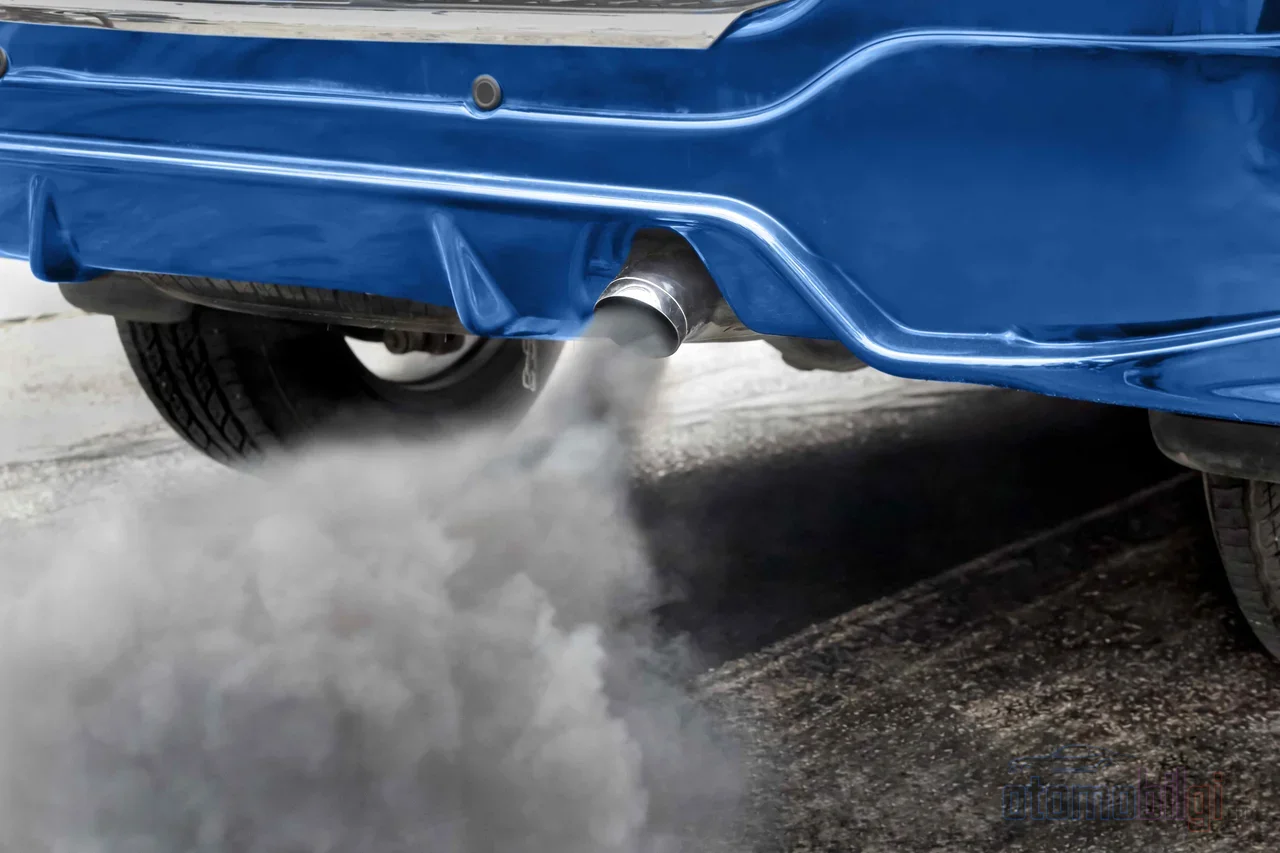
A cold engine produces many times more emissions in the first minutes after starting than a warm one; because the catalytic converter has not yet reached its operating temperature, the engine runs on a rich mixture to protect itself, and the fuel cannot fully vaporize. According to measurements, the majority of a trip's harmful gas emissions occur in the first one or two minutes after the ignition is turned. On this page, we examine the mechanism of those first minutes and the solutions manufacturers have developed, with the numbers.
Key Highlights
- A catalytic converter cannot convert harmful gases until it reaches its light-off temperature of approximately 200°C (400°F).
- More than 70% of the harmful gas emissions in an average drive occur at the moment of a cold start.
- A modern gasoline vehicle started at -4°F emits about 15 times more CO and 35 times more HC compared to 73°F.
- In a cold engine, CO emissions reach about 3 times those of a warm engine, and unburned hydrocarbons rise to about 4 times.
- In plug-in hybrid systems, the converter can become fully effective in about 90 seconds thanks to the strong exhaust flow.
Why does a cold engine produce more emissions?
The core of the problem is a heat problem. The catalytic converter, which converts carbon monoxide (CO), nitrogen oxides (NOx), and unburned hydrocarbons (HC) in the exhaust gas into harmless compounds, works like a chemical reactor, and these reactions only begin above a certain temperature. This threshold at which the converter starts working efficiently is called the light-off temperature, and the typical value in gasoline vehicles is around 200°C, or 400°F. In the first few minutes after a cold start, the converter is below this threshold; every gram of pollutant leaving the exhaust passes into the atmosphere with almost no conversion.
It gives a clear example of the numerical dimension: a modern gasoline vehicle started in mild weather emits about 15 times more CO and 35 times more HC when started at -4°F. In the same direction, CO emissions measured in a cold engine rise to about three times those of a warm engine, and total hydrocarbons to about four times. It should also be added to the picture that every 20°F drop in ambient temperature is estimated to roughly double cold-start particulate emissions per mile.
This first phase's share of the trip's total budget is striking. According to measurements from the manufacturer side, more than 70% of the harmful gas emissions in an average drive occur at the moment of a cold start; in conventional vehicles, the 30-40 second window in which the warmed-up converter kicks in can account for 80-90% of total cycle emissions. This is also where the most well-known comparison on the subject comes from: the time it takes to get into the car on a cold winter day, fasten the seatbelt, and adjust the mirrors can produce more harmful gases than a 200-mile highway trip.
What happens in the first minutes? The mechanical causes of the emissions peak
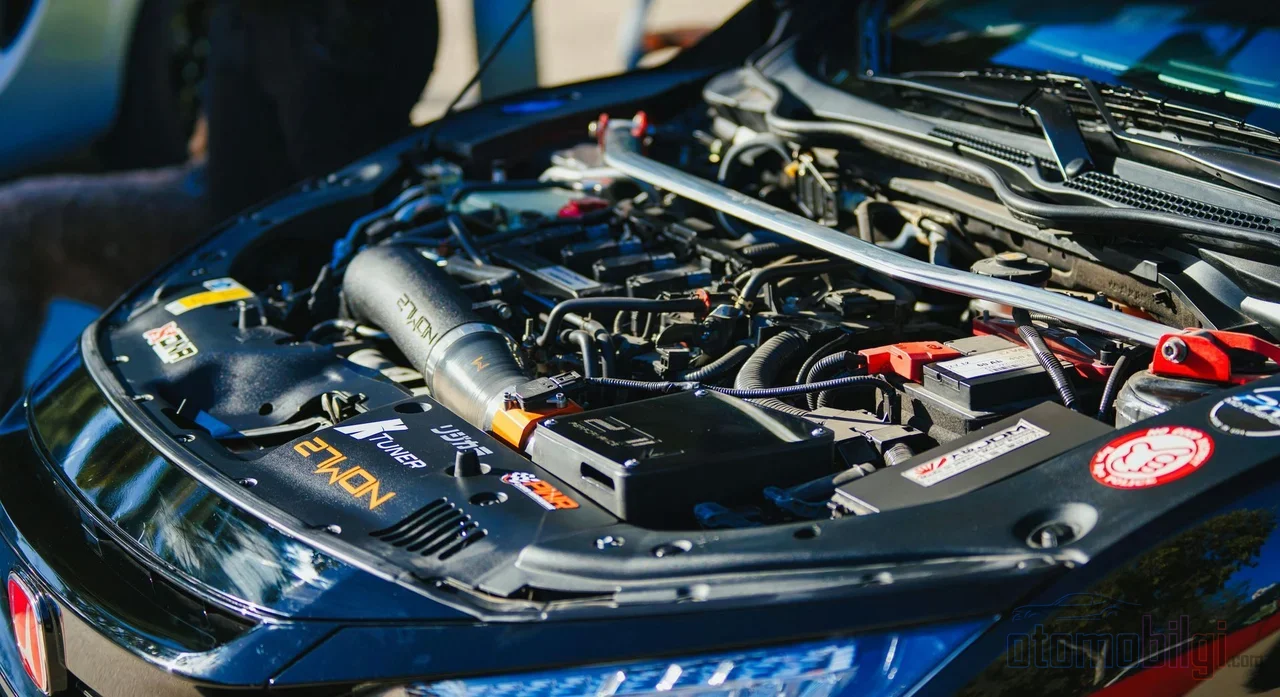
The emission peak of a cold start arises not from a single cause, but from several mutually reinforcing mechanisms overlapping one another. If we are to break them down one by one:
Rich mixture and incomplete combustion
In a cold engine, when fuel hits the cylinder walls it cannot vaporize; remaining in liquid form weakens combustion and can cause the engine to stall. To prevent this, the ECU injects more fuel than normal during the first minutes, in other words it deliberately enriches the mixture. The natural consequence of a rich mixture is that part of the fuel, unable to burn completely due to the lack of oxygen, exits the exhaust as CO and unburned hydrocarbons. After the engine and coolant have warmed up, the computer pulls the mixture back to its nominal value, but by that point the damage has been written into the emissions budget.
The friction and leakage effect of cold oil
The viscosity of oil is strongly dependent on temperature. Cold oil is thicker; internal engine friction increases, and the sealing around the piston rings and valve guides weakens. The result is a less efficient and dirtier combustion during the first minutes. That is why, before the engine reaches full operating temperature, combustion quality cannot reach the standard of a warmed-up engine.
Vaporization delay and cold surfaces
Another item on the emissions table is vaporization delay. For the fuel to fully vaporize, sufficient heat is required inside the cylinder; in a cold engine this heat is absent, and a portion of the fuel is sent to the exhaust without burning. Moreover, the exhaust manifold and converter body are also cold, so the incoming gases cool further with heat loss, and the already low converter efficiency drops a little more.
How long does a cold start last? Why does the definition of duration vary?
An interesting technical detail: there is no common definition in the literature of how long the cold start phase lasts. In different measurement studies, the cold phase is defined as 120 seconds, 165-230 seconds, an average of 1 km (up to 3 km), or an average of 5.2 km. Another common approach counts the phase until the coolant reaches 70°C. The reason for the difference is the definition: some studies take the light-off of the converter as the criterion, some take the warming of the coolant, and others the return of fuel cut-off to normal.
The waiting time also matters. The engine can take up to 12 hours to cool completely, but most of the heat loss occurs within the first 2 hours. After a 45-minute stop, the converter cools down considerably; CO and HC emissions return to half of their cold-start levels, and the NOx difference to more than 85%. Even a short 15-minute stop is enough to raise start emissions. In practice, this means that vehicles making frequent short-stop trips during the day visibly inflate their total emissions budget.
How do manufacturers solve this problem?
The engineering goal can be summarized in a single sentence: to bring the converter to its light-off temperature as quickly as possible and to reduce the emissions produced during that time. The paths to this goal break down into several complementary strategies.
Close-coupled converter
The most direct solution is geometry: moving the catalytic converter from under the chassis to the exhaust manifold, that is, as close to the engine as possible. Hot exhaust gas reaches the converter with less heat loss and light-off time is shortened; a converter located near the engine can reach much higher temperatures than one under the chassis. The cost of this approach is packaging and heat management: having the converter close to the engine creates the risk of unwanted heat transfer into the passenger compartment, and the heat insulation of the exhaust line becomes critical.
Electrically heated catalyst (EHC)
The second path is to heat the converter actively rather than waiting for it. In electrically heated catalysts, a heating element similar to a resistance brings the catalyst to light-off temperature right after start-up. First-generation applications failed to become widespread due to concerns over energy efficiency and durability; but the strengthening of electrical architectures in vehicles, especially the large batteries in hybrid and plug-in hybrid vehicles, has made this technology feasible with very little additional fuel consumption. Today, Bosch's Rapid Catalyst Heating system and Eberspächer's Lamella Heater solution aim to reduce emissions in the cold-start phase by accelerating catalyst activation. On the diesel side, too, the combination of close-coupled SCR with EHC has serious potential for emission reduction. Corning's FLORA substrate structure approaches from a different angle: since the catalyst reaches light-off temperature with less energy, the additional fuel requirement during cold start is reduced.
Heat management and HC traps in hybrid systems
Hybrid vehicles solve the cold-start problem from two directions. First, the powerful battery feeds the EHC; second, when the engine kicks in, the stronger exhaust flow heats the converter quickly. In plug-in hybrid measurements, the converter becomes capable of cleaning all exhaust gases after about 90 seconds; whereas a cooled converter needs three minutes to fully warm up, even if its residual heat is around 90°C. Heat storage is also an effective lever: with phase-change materials that retain the converter's heat, a prototype converter was able to maintain its high temperature for 17 hours instead of 25 minutes; 500 seconds of pre-heating in this system achieved a 64% reduction in CO and 15% in HC.
There is also a separate technology for eliminating the emissions produced until the converter lights off: hydrocarbon traps. These structures, which use a mixture of silver and zeolite, temporarily capture the hydrocarbons that increase in a cold engine; when the converter warms up, they release the trapped hydrocarbons and hand conversion over to it. On the engine side, a retarded ignition timing, which raises exhaust gas temperature and speeds up converter warm-up, is evaluated alongside electric heating as a classic lever. Every approach has a trade-off: electric heating is fast but adds extra components and a failure point; a close-coupled converter needs no extra energy but makes heat management harder.
What is the second lambda sensor for?
A question drivers often ask concerns the role of the second oxygen sensor in the exhaust. The upstream sensor, that is, the lambda sensor before the converter, has fuel control as its basic job: by measuring the oxygen in the exhaust, it ensures the ECU keeps the mixture at the stoichiometric value. The second, downstream sensor monitors the area after the converter, and its primary task is to measure the catalytic converter's efficiency. By comparing the signals of the two sensors, the converter's oxygen storage and conversion capacity is evaluated; if efficiency falls below the defined limit, the ECU lights up the check engine light. In the cold-start context, this second sensor is the auditing mechanism that verifies whether the converter is actually doing its job after the light comes on.
What should you do as a driver? Why is warming up at idle wrong?
One of the most common mistakes is warming the car up at idle in cold weather. Measurements suggest exactly the opposite: in mild weather, idling produces higher emissions than a warm-up drive and does not heat the emission control equipment as quickly as driving does. Since exhaust flow and engine load are low at idle, the converter warms up slowly; whereas with gentle driving, both the engine and the converter reach operating temperature much faster. The only situation where warming up at idle remains reasonable is in extreme cold such as freezing temperatures, when there is a need to de-ice the windows and protect the engine.
Other practical takeaways rest on the same logic:
- Combine short stops during the day as much as possible; after stops of 15-45 minutes, start emissions rise noticeably.
- Set off immediately after starting the car, at low revs and with gentle throttle; eliminate long idle waiting times.
- If the check engine light comes on especially in cold weather, have the coolant temperature sensor checked; this sensor provides the ECU with the information it uses to set cold-start fuel and timing, and its failure can upset the mixture.
Why is the cold start becoming more critical in the Euro 7 era?
Emissions legislation touches the cold-start problem directly. Euro 7 introduces tightenings such as a nominally 25% lower limit for diesel vehicles and reducing the conformity factor from 1.43 to 1; the latest emission control technology can reduce truck NOx by 75-96% and petrol vehicle NOx by 40-64% compared with the previous standard. As the limits tighten, shortening the cold-start phase, which makes up a large portion of total emissions, inevitably moves to the center of engineering. The spread of hybrid vehicles is also changing the picture: it is estimated that hybrid cold-start emissions could account for 14%, 25% and 13% of total CO, HC and NOx emissions respectively in 2035; in other words, electrification does not eliminate this problem, it reshapes it.
The conclusion is a simple equation: the vehicle cannot run clean until the catalytic converter warms up, and that first minute determines the emissions fate of the entire journey. Close-coupled converters, electric heating, heat storage and HC traps are all solutions locked onto the same target; the driver's contribution comes down to avoiding idling and pulling away gently.
Sources
- The problem of cold starts: A closer look at mobile source emissions levels (Reiter & Kockelman)
- Cold Start Emission Reduction (Corning)
- The cold-start dilemma (Empa)
- Review of thermal management of catalytic converters (Gao et al., 2019)
- Bosch Rapid Catalyst Heating
- Reducing emissions through shorter cold-start phases (Eberspächer)
- Impacts of cold starts and hybrid electric vehicles (Jiang et al., 2024)
- Close-coupled Catalytic Converters (Pfalzgraf et al., SAE 960261)
- Monitoring Emission Efficiency With O2 Sensors
- Euro 7 emission standards (Infineum Insight)
- Euro 7 factsheet (AECC)
- Comprehensive experimental analysis of diesel engine ccSCR + EHC (Li et al., 2025)
- Contribution of Cold Starts to Real-World Trip Emissions (Hu et al., 2022)