Where Does the Money Go in Rallycross? The Cost of a Supercar Season
Share This Page
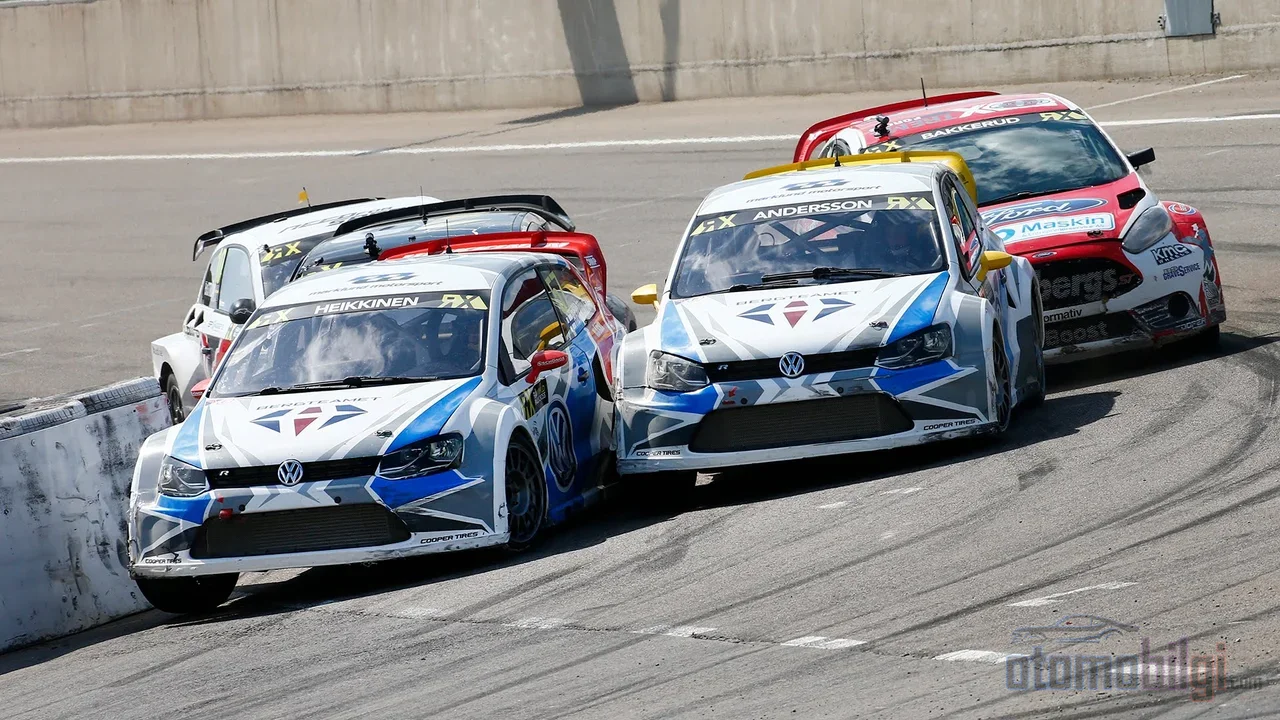
The seasonal budget of a World RX Supercar team is one of motorsport's most closely guarded subjects: while 600-horsepower monsters race each other by fractions of a second on the track, decisions worth thousands of Euros are being made behind the garage. There is no precise and official total figure; but the known items, from entry fees to logistics, clearly show why this sport is not just fast, but also an expensive art of balance.
Highlights
- The entry fee of a World Rallycross driver in 2020 was at a level of 50,000 Euros.
- Former Supercar cars had turbocharged 2.0-liter engines producing approximately 600 hp of power.
- In the budget of similar categories, the biggest item is personnel and team operations: 36-39% of the total.
- In the 2026 season, electric vehicles were removed; the series returned to internal combustion cars running on sustainable fuels.
- The FIA's 2026 goal: faster, safer, and more cost-effective cars.
Now let me ask you something: Have you ever wondered how much a rallycross car's tire costs? Or how does a team transport hundreds of parts all across Europe throughout the season? When I first thought about these questions, the only answer in my head was "it must be very expensive, I guess." But when I dug into the subject a little, a much more interesting picture emerged. If you're ready, let's take a look together at the flow of money behind the track.
Why Is Rallycross Such an Expensive Sport?
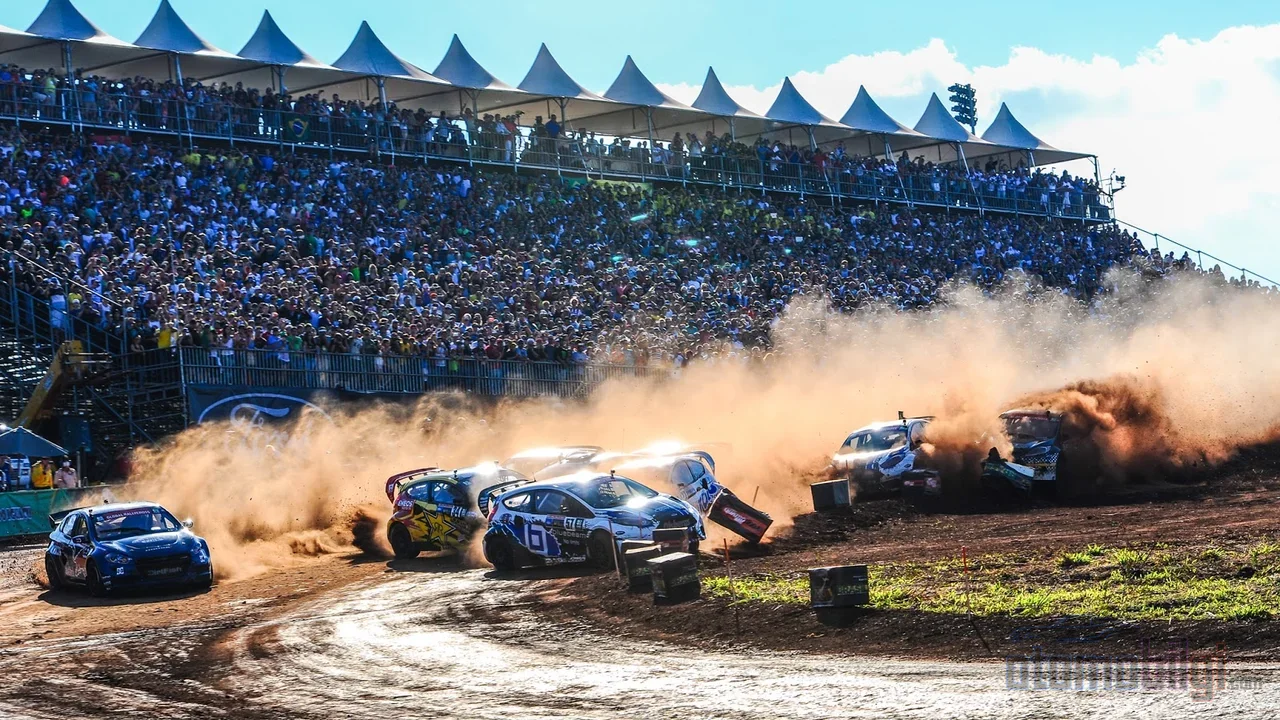
The rallycross format has a direct relationship with cost. As you know, a race weekend goes through qualifying heats, semi-finals, and finals; every run means one more load on the car. In this intense tempo, where gravel, asphalt, and the joker lap come together, the cars are used harder than in rallying but don't work with parts as long-lasting as those on classic race tracks. In other words, doing one more lap always means a set of tires and a few renewed parts.
The cars in the former Supercar class summarize the scale of this well: turbocharged 2.0-liter four-cylinder engines producing approximately 600 hp. Controlling this power on dirt and gravel takes a heavy toll on both the car and the budget. Even in the electric RX1e era, the tires had to be made from more durable materials in order to withstand the torque; each tire was lightened by 400 grams but durability was not compromised. So the tire is as much an expense item as it is an engineering problem.
The Expense Items of a Season: Where Exactly Does the Money Go?
Here is where I need to be honest: A World RX Supercar team has no official,, and verified total season budget. This information is one of motorsport's best-kept secrets; teams don't put their budgets on display like a trophy. But the distribution in similar categories and the items known to be specific to rallycross tell us a lot. Let's go through them one by one.
Personnel and Team Operations: The Quietest but Biggest Item
In the season budgets of GT3, a comparable top category, personnel and team operations account for 36-39% of the total it. To put this into everyday terms, think of it like this: the team is like a family. Engineers, technicians, tire and air conditioning specialists... Everyone has a salary, travel, accommodation, and meals covered. A similar picture exists on the Rallycross side; even the job postings of top-level teams betray this structure. One posting called for a technician to handle both spare parts production and the stocking of service trucks. In other words, two separate specialties were expected from a single person - living proof of how small teams thin out their rosters.
Parts, Maintenance, and Repair: The Bill of the Collision
In GT3 data, parts, maintenance, and repair expenses make up about 26-28% of the total. It is not hard to guess that for Rallycross this ratio is at least as high: first-corner battles, outer lines close to the wall, and contact during the joker lap extend the repair list every single weekend. Teams even factor the winter months into this item; some crews spend the off-season building an entirely new Supercar from scratch, both refreshing their cars and keeping the costs in their own hands rather than buying a car externally.
Logistics: A Team's Most Dynamic Expense
Logistics accounts for 11-13% of the total expense in similar series, and it is not hard to see how close to reality that figure would be for Rallycross in its international era. During the electric FIA World Rallycross era, a single logistics company taking over the entire logistics of an event shows just how large a transport operation the series represents. To expand with an example known from the WRC: in a transcontinental operation, not only reconnaissance vehicles but also a kitchen, two workshops, and a spare parts container are shipped by sea. Rallycross teams carry a similar load from track to track - even if there is no kitchen, there is the service truck, generators, sets of wheels, and a spare nose cone standing by just in case.
Entry Fees, Tires, and Fuel
The final link of the budget, item by item: the organization side. In a 2020 competition format, the entry fee paid by each driver was 50,000 Euro and the prize was a full World Rallycross season. Since the figure dates from 2020, it does not exactly reflect today's level, but it explains the scale well: there is a serious upfront payment before you even get onto the track. Add tire supply and fuel to that, and each of the three days we call the "race weekend" finds its place in the calculation.
| Expense Item | Size | Note |
|---|---|---|
| Personnel and operations | 36-39% | The largest item in similar categories |
| Parts, maintenance, repair | 26-28% | The bill of contact and gravel surfaces |
| Logistics and travel | 11-13% | Service trucks, parts, and equipment transport |
| Entry fee | 50,000 Euro | Per-driver cost in the 2020 format |
| Tires and fuel | Variable per race | Consumption close to one set of tires per run |
One caveat when reading this table: the percentages are not Rallycross-specific but come from the distribution in similar categories. Still, the ranking of the items - personnel taking the top spot for the largest expense and parts coming in second - is a very familiar arrangement in Rallycross garages too.
What Did the Electric Era Do to Budgets?
When World RX switched entirely to electric RX1e cars around 2022, it was presented as a sustainability move; a top team had even made a multi-year commitment to the electric future. But the other side of the coin was cost. Electric race cars come with expensive components like batteries and power transmission; developing and maintaining them requires a different and young expertise compared to conventional engine vehicles. Even the tires were redesigned to keep up with this new torque. Over time, it began to be said that the electric era was struggling commercially, and former champion names made comments that the series needed a transformation.
The result is the picture we have all seen: in 2025, the World Rallycross Championship was cancelled and for the 2026 season its place was taken by the European Rallycross Championship. In the new structure, electric vehicles were completely removed; the series returned to internal combustion cars running on sustainable fuels, and an FIA Rallycross World Cup was added alongside it. The FIA's rationale is clear: to attract new competitors with faster, safer and more cost-effective cars. So the money talk became decisive enough to change the structure of the sport. In my opinion, this is the biggest proof of how serious the budget issue is.
How Do Small Teams Survive?
So what do small teams do amid million-dollar operations? The answer: creativity and focus. The FIA had already approved a series of cost-cutting measures for the championship at the end of 2017; the 2026 regulations are a continuation of the same goal. On the team side, three classic strategies stand out:
- Building your own car: Some teams spend the winter season building a new Supercar from scratch; this way they keep parts costs and development speed under control. There are also vehicle initiatives on the market designed to run at Supercar speed but at a much lower cost, which are products of this need.
- Roster flexibility: In structures where technicians both produce spare parts and stock the service truck, everyone does more than one job; the roster is kept small but versatile.
- Adapting to simplified formats: In the 2026 World Cup format, there are 8-car semi-finals and finals, two mandatory joker laps in each race and a new Superpole arrangement. Fewer cars, tighter format; meaning teams can also travel with a smaller spare parts load.
These strategies work but they don't save anyone. The gap between big-budget and small-budget teams in the sport is still real; and it is currently not possible to fully measure this gap because there is no open data. This brings us to the most honest sentence of the conclusion: The biggest deficiency of the rallycross economy is that almost none of the figures are transparent.
So Where Does Türkiye Stand in This Picture?
Türkiye is in an interesting position in this economic picture. The FIA World and European Rallycross Championship season finals on September 20-21, 2025 TOSFED ran a double-header at Istanbul Park; the 2024 season finale was also in the same universe, in Istanbul. So we are not just spectators - we are a country that hosted the financial and sporting peak of the season. This final operation, moved to Istanbul by international teams, is a perfect scene for observing just how massive the logistics department is.
As for the budgets of local rallycross teams in Türkiye, we have no clear figures; this actually confirms the global picture: Team economics are transparent almost nowhere. But we do know this: New teams and new drivers cannot be attracted to this sport unless costs are reduced worldwide. The FIA's targeting of cost-effective vehicles for 2026 is, for that very reason, a promising signal for enthusiasts like us.
Conclusion: The Garage-Price of Victory on the Track
Analyzing the economics of rallycross is like spreading the pieces of a puzzle onto the board: There is no exact total figure, but the line items are in plain sight. Personnel is the biggest expense, parts come second, and logistics is a constant weight that wears the team down every weekend. The electric era's failure to balance its costs triggered the return to internal combustion in 2026; meanwhile, new formats and low-cost vehicle initiatives are seeking breathing room for small teams. My question to you: Will the day come when this transparency is applied to rallycross, like the cost cap in Formula 1? I am waiting - because behind every second won on the track, there is a budget spent.
Sources
- Drive a fast heat and win a full World Rallycross Championship season
- The True Cost of Racing: A Comprehensive Breakdown
- New FIA Rallycross Structure Announced for 2026 Season
- FIA announces cost-cutting measures for World Rallycross
- 2026 FIA RX Sporting Regulations
- The beginner's guide to World Rallycross
- Will Electric Car Racing Be Better? World Rallycross Thinks So
- World Rallycross Went Back To Combustion: Is Electric Racing Failing?
- Marcus Gronholm on the end of the road for electric rallycross
- EVs binned in major rallycross overhaul by FIA
- FIA World Rallycross reverting to European championship for 2026
- The FIA Rallycross World Cup Sporting Format is revealed
- Our team is using the racing off-season to build a brand-new Rallycross Supercar
- Job alert for a top class rallycross team
- Kuehne+Nagel fully charged to support the all-electric World Rallycross Championship
- What it takes to move a WRC operation across continents
- Spotlight on 2021 FIA WEC logistics
- Hansen Motorsport commits to multi-year future in World RX's electric era
- Rallycross Stars Gather at TOSFED Istanbul Park for a Double Final
- 2025 FIA World and European Rallycross Championship Türkiye