How Did Rallycross Transition to the Electric Era?
Share This Page
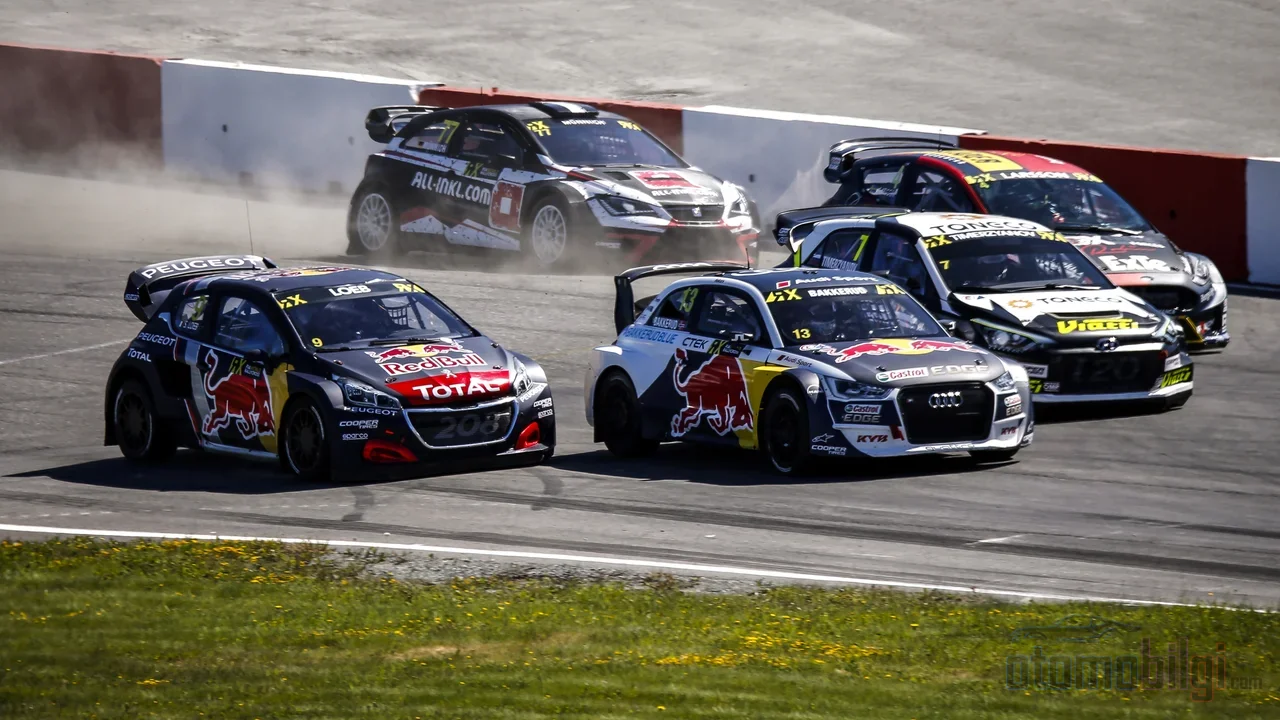
World Rallycross made the most radical change in its history by handing the top class over entirely to electric RX1e machines in mid-2022; two years later it reopened the door to combustion cars and returned in 2026 to an EV-free European championship. In other words, the electric era arrived in rallycross, took the stage, and lowered the curtain - all within a mere four years. So how exactly did this transformation unfold, what did the machines promise, and why did the story end in an unexpected place? Here is the full story of rallycross's electric adventure.
Highlights
- 680 hp and 880 Nm of torque: the RX1e crushed the peak of the gasoline era
- 0-100 km/h in ~1.8 seconds - allegedly a faster launch than a Formula 1 car
- 52 kWh battery, weighing approximately 330 kg and cooled with dielectric fluid
- The first fully electric race was held in August 2022 in Norway; the winner was Johan Kristoffersson
- In 2026, the championship returns to the European series without EVs, with sustainable-fuel cars
Where Did the Electric Plan Come From? The FIA's 2018 Decision
It all started in 2018. The FIA initially planned the entry of electric cars into World RX for 2020; then in August 2018 it pushed the target back to 2021 to give manufacturers development time. The plan was quite ambitious: the cars would be built on carbon fiber monocoque chassis with dedicated batteries, and each car would carry two 250 kW motors to be developed by the manufacturers themselves. The logic was actually spot-on - rallycross's short, explosive race format shook hands perfectly with the strengths of an electric car.
But in real life, plans rarely work on the first try. Manufacturer commitments were delayed, and then COVID and supply chain issues sent car production into disarray. While the first races were planned for July 30-31, 2022 at the Nürburgring, teams were given two extra weeks of preparation, and the debut finally took place on August 13-14, 2022 in the town of Hell, Norway. Yes, rallycross's electric era was officially born in Hell - the name was a coincidence, but that's another layer of the story's charm.
A rehearsal before the main show: Projekt E
Before the big transition, there was a rehearsal too. Projekt E, run in 2020, was a parallel series set up to test electric rallycross. Running on powertrains supplied by STARD, the car that left its mark on the series was the producing 450 kW (600 hp) STARD ElectRX with three motors, wearing a Ford Fiesta body. In other words, by the time the RX1e took the stage, preliminary data on what electric rallycross could do on track had already accumulated. A small footnote: at the time, the Turkish automotive press was also covering this wave with headlines like "The World Rallycross Championship Is Going Electric Too."
What Kind of Monster Is the RX1e Technically?
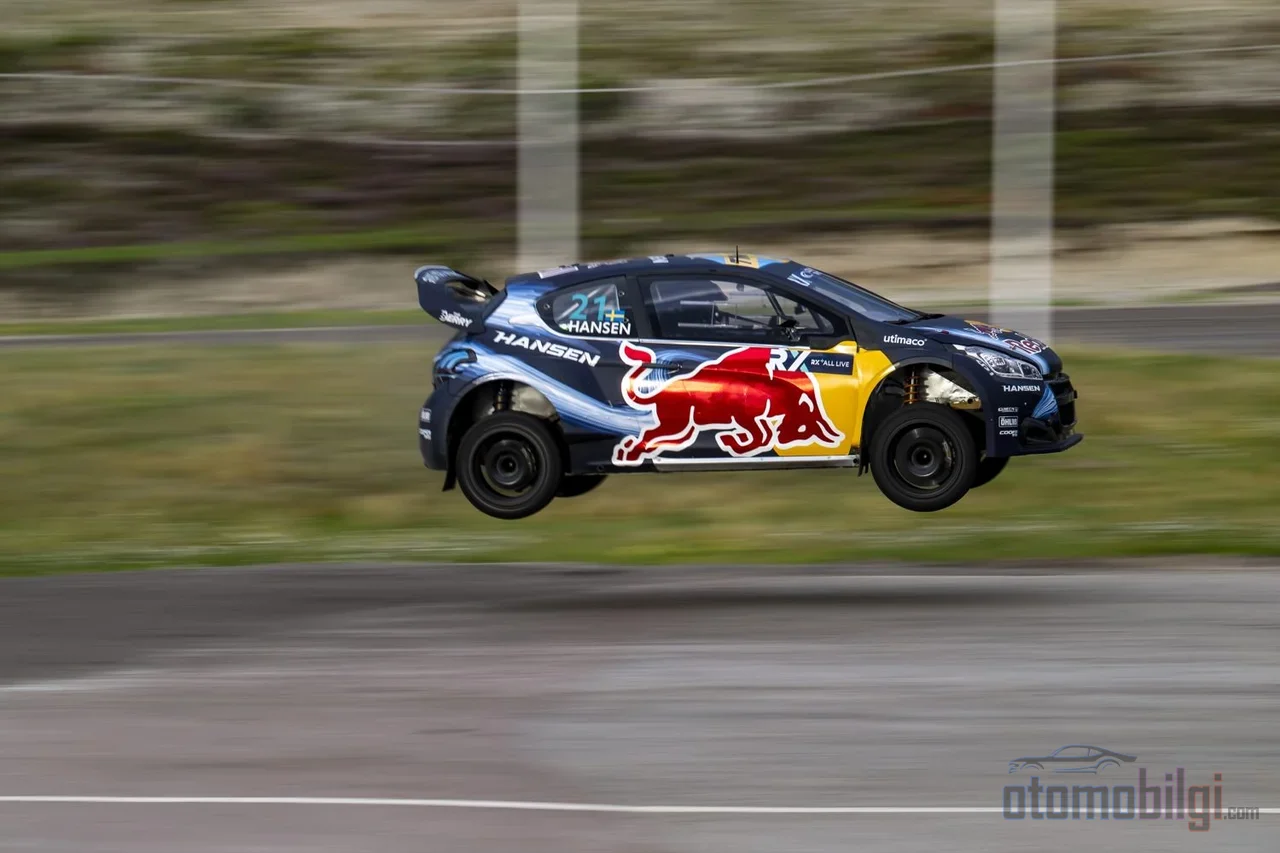
Now let's get to the main point, because the RX1e is a seriously intimidating machine on paper. The powertrain was supplied by Austria's Kreisel Electric; the company had been selected as sole supplier through an FIA tender in October 2019. At the heart of the car lies a 52 kWh capacity unit weighing approximately 330 kg a battery weighing. The cooling side is also interesting: a dielectric - i.e. non-conductive - fluid is flowed over the cells. You can think of it like a cooling system that washes the car from the inside; the battery cells cannot come into contact with water but escape the heat. At the front and rear, one each 250 kW (340 hp, 440 Nm) motor is running, and in total 680 hp of power and 880 Nm of instant torque are produced.
The acceleration is straight out of science fiction: 0-100 km/h in approximately 1.8 seconds. The claim of "faster acceleration than a Formula 1 car" was even used in the presentation. As for weight, it is in the 1,300-1,330 kg range - very close to the gasoline RX1, but with a few extra kilos brought by the battery.
| Specification | RX1e (electric) | RX1 (gasoline Supercar) |
|---|---|---|
| Power | 680 hp (500 kW) | 570-600 hp |
| Torque | 880 Nm | 840-920 Nm |
| Motor | 2 x 250 kW electric motor | 2.0L turbo |
| 0-100 km/h | ~1.8 seconds | slower |
| Weight | 1,300-1,330 kg | ~1,300 kg |
And there is a spec-series detail that is the key to the cost story: all RX1e cars use the same electric powertrain. The only things that differ are the body designs and liveries. That was exactly the FIA's aim - to keep teams' costs under control and make the series sustainable. One supplier, the same parts, lower development burden. Makes sense, doesn't it? As we will soon see, the logic on paper did not always work on the track.
Electricity where oil once was
The logistics side was also an engineering spectacle in its own right. GCK Energy was chosen as the sole supplier of the charging infrastructure for 2021-2024, and it was delivered to each event in containers. The cool part is this: these containers set off charged with 900 kWh from solar panels and the local green energy grid in France. So even the electricity for the races came from as clean sources as possible - a detail consistent with the project itself.
First Race, First Victory: Hell 2022
On August 13-14, 2022, the first fully electric World RX race in history was held in Norway, and that historic victory was won by Sweden's joker card, Johan Kristoffersson. It was not hard to predict on that day that he would later become the most dominant name of the championship's electric era. At the start of the same season, Hansen Motorsport unveiled its first electric car, the Peugeot 208 RX1e, and presented the 500 kW setup as a "power source" rather than simply a "battery" - even the marketing language showed that respect was paid to this technology.
What the drivers said is just as striking as the numbers. Andreas Mikkelsen's reaction after testing the new electric Skoda Fabia RX1e has been etched into the sport's lore:
Another level - completely crazy.
The teams' transition to the new era also went more smoothly than expected. Since chassis rules stayed the same, teams could continue with their existing cars; in other words, instead of starting from scratch in the garage, it was enough to keep the body and fit the heart with an electric one. Even with the 14-car grid plan announced in 2024, the series was small in scale but ambitious.
2024: The Petrol vs Electric Kingdom
Here is the most interesting twist in the story. The full electric transition lasted only two seasons: In 2024, the FIA readmitted internal combustion cars to the top class. Drivers could decide for themselves whether to run RX1 or RX1e - an official "petrol vs electric" war began on track. For the spectators, no better scenario could have been written; two technologies battling it out on the same grid, in the same corners.
Those driving the electric side did not neglect to praise the technology's beauty: in 2024, RX1e pilots described their cars as "much more powerful, a much bigger challenge for braking, incredible torque, speeds that cannot be compared to anything." In other words, those who tried the car were impressed; the problem was not in the performance, but in the rest of the story. Meanwhile, the little brother of the electric initiative, the RX2e class, was also discontinued at the end of the 2024 season.
Türkiye took its place in the final act of the stage
One of the last examples of this rivalry before spectators, unfortunately, came to us: the Türkiye round of the FIA World and European Rallycross Championship, run at Istanbul Park on 20-21 September 2025 with TOSFED organization, openly pitted electric cars against petrol cars under the "Battle of Technologies" concept. It is a source of pride that rallycross in our country hosted such an ambitious technology showcase - but it should also be read as the closing night of an era, because it had long been clear that the following year the top series would move to an EV-free format.
Why Did the Electric Era End?
Let's admit it: fans were never fully convinced. Most World RX fans opposed the full electric transition in 2022, and fan forums openly voiced the view that "the full electric transition killed the discipline." The counterargument was not empty either: rallycross's short, intense race format was technically suitable for electric cars, and RX1e was thought to be able to bring back manufacturers and top drivers. There was support on the corporate front as well; Paul Bellamy of IMG described rallycross in 2018 as follows:
Rallycross is the perfect platform to showcase the incredible performance capabilities of electric vehicles in a fun, competitive and cost-effective environment.
But the results spoke. In September 2025, the FIA announced that the World Rallycross Championship had ended and that the championship would return to the FIA European Rallycross Championship from 2026. Moreover, this European championship will be entirely EV-free: sustainable-fueled internal combustion cars will be used. On top of that, to an 8-car semi-final format a separate FIA Rallycross World Cup is also planned. The championship's final drivers' champion was Johan Kristoffersson, and the final teams' champion was Kristoffersson Motorsport - in the electric era, the first winner and the last champion were the same name, a symmetry of sorts.
Marcus Grönholm signed off on a "the end of the road" assessment for electric rallycross, and as of January 2026 the question "is electric racing becoming a failure?" is on the motorsport press agenda. One possibility is still up in the air: a return of the world championship in 2028 is being discussed. So the door is not completely closed, but the reality on the agenda right now is that the pinnacle of rallycross has returned to the petrol era.
What Lesson Does the Transition Leave Behind?
In my opinion, reading the RX1e story as a failure would be unfair. The technology genuinely worked: 680 hp, 880 Nm of torque, and acceleration that made F1 jealous - a remarkable machine was born on the track. The drivers were impressed, the format fit well, and even the logistics were built around green energy. What broke was the bigger picture: fan interest, grid size, and the series' sustainability. The electric era answered rallycross's question about speed but could not answer the audience question. Today's system, with sustainable fuels in play, may be the first serious attempt to combine the best of both worlds. What do you think - silent 1.8-second monsters, or petrol engines screaming with sound? Whichever your answer, these four years went down in motorsport history as a chapter with the quality of a lesson.
Sources
- World RX - Electric Rallycross set for introduction in 2021 - FIA
- The electrification of Rallycross is around the corner - rallycross.com
- Delayed All-Electric World Rallycross RX1e Category to Debut in Hell, Norway - Autoweek
- FIA World Rallycross Championship - Wikipedia
- FIA World Rallycross Championship goes electric - 50to70
- Video Feature: World Rallycross goes electric! - whichev.net
- Hansen Motorsport reveals new RX1e car - Hansen Motorsport
- Petrol vs electric: World Rallycross is putting EVs against ICE cars - Top Gear
- World Rallycross 2024 season preview - Car Magazine
- Johan Kristoffersson wins first all-electric World RX race - Red Bull
- FIA sets bold new course for rallycross from 2026 - FIA
- FIA World Rallycross reverting to European championship for 2026 - Racer
- EVs binned in major rallycross overhaul by FIA - Dirtfish
- World Rallycross Went Back To Combustion: Is Electric Racing Failing? - Forbes
- Marcus Gronholm on the end of the road for electric rallycross - EV Powered
- World Rallycross has gone to Hell and switched to full electric power - Move Electric
- Rallycross Stars Gather at TOSFED Istanbul Park for the Double Final - TOSFED
- FIA Rallycross World Cup Sporting Format is revealed - FIA Rallycross