How Did the Mazda 787B Become the First Japanese Car to Win Le Mans?
Share This Page
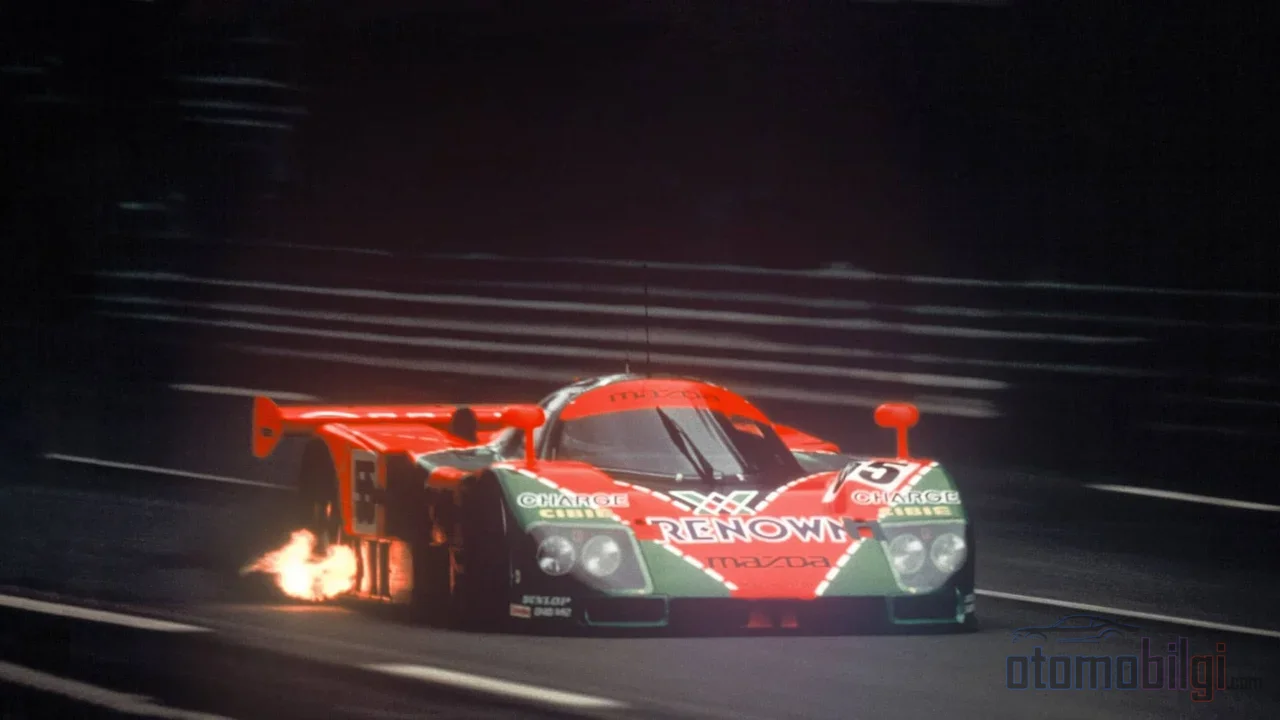
The Mazda 787B, winner of the 1991 24 Hours of Le Mans, is the only car in history to win that race with a Wankel rotary engine - and it still holds that title to this day. With its four-rotor engine, 830-kilogram lightweight body and cleverly crafted fuel strategy, the #55 orange-and-green Mazda made history exactly like this at 4:00 PM on Sunday, June 23, 1991. So how did a Japanese car emerge from among such powerful European rivals and win motorsport's toughest endurance test? Let me tell you, because this story is truly legendary.
Highlights
- June 23, 1991: The #55 Mazda 787B became the first (and only) Japanese car to win the 24 Hours of Le Mans.
- R26B engine: The 2.6-liter four-rotor Wankel was restricted to ~700 hp @ 9,000 rpm for endurance.
- 362 laps, 4,932.2 km: Both figures are records for the modified Circuit de la Sarthe.
- 830 kg: While rivals raced at 1,000 kg, Mazda was granted a C2-class weight allowance.
- 1992: With the new 3.5-liter formula, rotary engines were excluded from endurance racing.
What Kind of Car Was the Mazda 787B?
First, let's get to know the car. Mazda 787B, a sports prototype that raced in the Group C class: an improved version of the 787 that raced in 1990. Its design was done by Nigel Stroud, and the kevlar-carbon composite monocoque chassis was built in England. Two 787s were built in 1990, and three new-specification 787Bs in 1991. So this car was no experiment or accident; it was a project Mazda had been refining for years for its Le Mans assault.
The color scheme of the winning #55 car is as iconic as the car itself: bright orange and green. The sponsor that gave the car these colors was Renown. Three names sat at the wheel: Johnny Herbert, Volker Weidler and Bertrand Gachot. And the most striking part: the 787B entered a total of 21 races over its career, and that single victory came exactly at Le Mans. Sometimes all you need to become a legend is a single night - truly.
| Specification | Value |
|---|---|
| Engine | R26B, 2,616 cc four-rotor Wankel, naturally aspirated |
| Maximum power | 700 hp @ 9,000 rpm |
| Maximum torque | 608 Nm @ 6,500 rpm |
| Engine weight | 180 kg |
| Transmission | Porsche-built 5-speed manual |
| Brakes | 14-inch (360 mm) carbon discs |
| Total weight | 830 kg |
| 1991 result | 362 laps, 4,932.2 km, 1st place |
Why Was the Rotary Engine Suited for Le Mans?
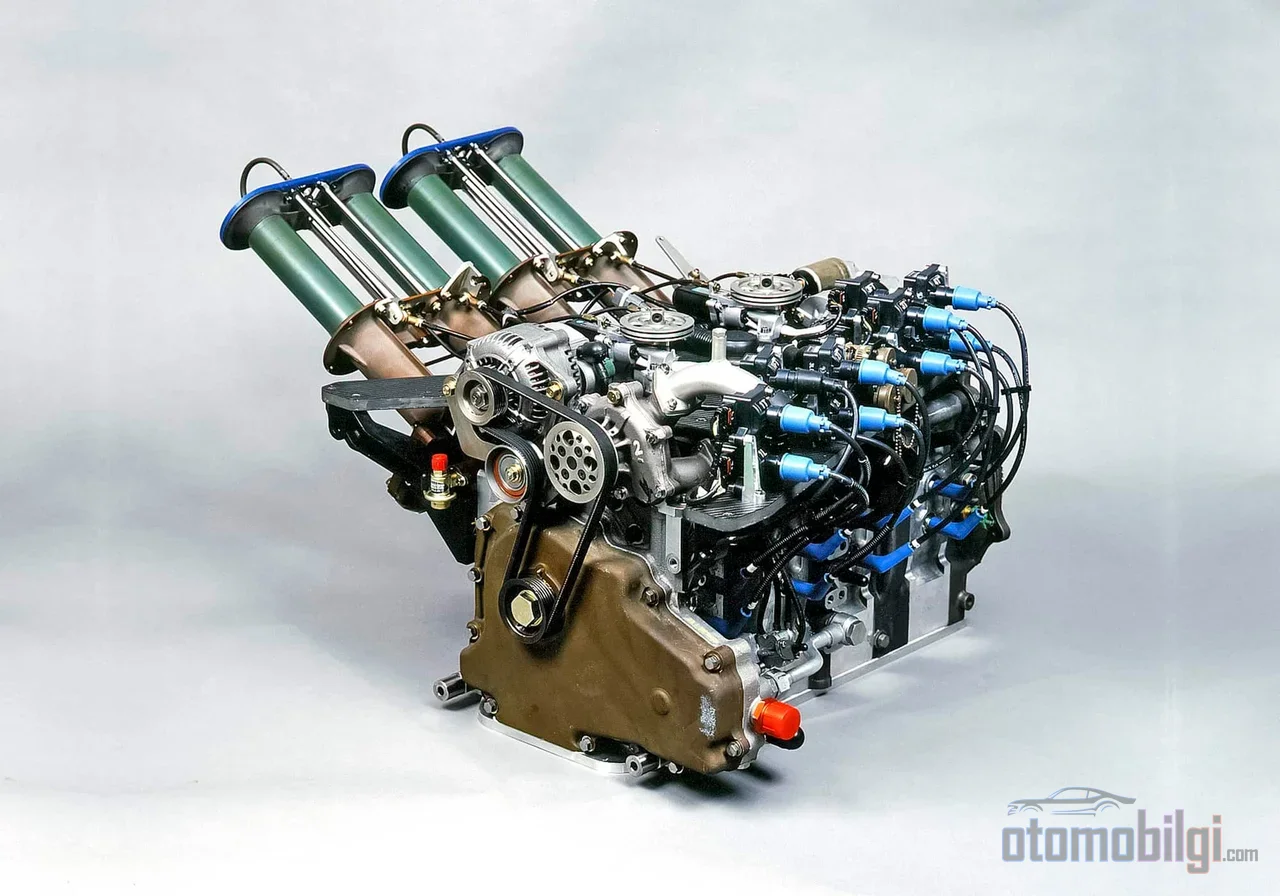
If you don't know the Wankel rotary engine, think of it this way: instead of pistons moving up and down as in conventional engines, there are triangular rotors spinning around. Fewer parts, less vibration, and a smooth operation that can rev high. It has next to nothing in common with a piston engine - and that is exactly why, as of 2026, this is still the only Le Mans victory won with a non-reciprocating (non-piston) engine.
But how did this engine manage to endure for 24 hours? The secret lies in a few clever details. Ceramic apex seals, the parts that cover the rotor's triangular edges, were incredibly resistant to wear. Each rotor was fired by three spark plugs, meaning combustion was far more efficient. Peripheral port intake, variable-length telescopic intake manifolds, and a dry sump lubrication system were also on the list. Mazda's engineers also resisted the temptation for more power: they restricted power in favor of durability by lowering the engine's redline. The engine could theoretically reach up to 900 hp at 9,000-10,000 rpm, but in the race it was limited to around 700 hp - according to some sources, roughly 650 hp with an 8,500 rpm limiter. Smart, right? If you're going to win a marathon, not a sprint, you play the game with reliability rather than maximum performance.
Where Did the Power Go? Into Cornering Speed!
Here's the second pillar of the strategy: Mazdaspeed engineers focused on high cornering speeds rather than top speed on the long straights. A slower straight and higher cornering speed meant the tires and aerodynamics did their work in a different way. The result? Even in single-lap pace, they were ahead of Mercedes, Jaguar, Porsche, and Japanese rivals like Nissan and Toyota. The car weighed 830 kilograms, and that provided a huge advantage in corner exits.
And that 830 kilograms was no coincidence. At the insistence of Oreca and advisor Jacky Ickx, FISA granted Mazda permission to race at 830 kg instead of the 1,000 kg standard of the C2 class. So the rivals were carrying 170 kilograms more. This also planted the seed of a controversy - I'll get back to that shortly.
How Did a Fuel Strategy Bring Victory?
The rotary engine's silent hero was fuel economy. Because the engine ran at lower revs and efficient settings, the race car consumed fuel with serious savings. Let me explain with an analogy: the rivals were gas-guzzlers draining their tanks at the end of every stint, while Mazda was an efficient runner covering the same distance with less fuel. In terms of pit strategy, this was a massive trump card - you make fewer pit stops, or you don't wait in the pits for refueling.
When team boss Ohashi saw this balance, he made a bold move: he abandoned Mazda's usual cautious strategy and told the #55 crew to drive the car "like a short sprint race." His reasoning was solid: reliability had been proven in the tests at Paul Ricard, and fuel savings were no longer a critical part of the strategy but had become a free advantage. Jacky Ickx joining the team as an advisor also strengthened the experience side. So the victory was no coincidence; it was the sum of engineering + strategy + courage.
Le Mans 1991: How Did the Race Unfold Hour by Hour?
The situation at the start was not as bright as it seemed. In 1991, a new 3.5-liter, Formula 1-inspired engine formula was coming to Group C, and cars with these engines filled the top grid positions. The Mazdas started from 19th, 23rd, and 30th places - despite being 12th, 17th, and 24th fastest in the actual qualifying sessions. Let's also remember that rivals couldn't rely on the new 3.5-liter engines: Jaguar raced with its old XJR-12, and Sauber raced with the old C11 instead of the new C291. So everyone was trying to safeguard reliability.
The critical turning points of the race unfolded as follows:
- The problems of the Mercedes C11s: With Michael Schumacher, Karl Wendlinger, and Fritz Kreutzpointner retiring due to a transmission problem in their car, the #55 Mazda moved up to 2nd place.
- The leader slows down: When the car in front reduced its pace to conserve fuel, the door opened for the Mazda that had been closing in from behind for hours.
- The 22nd hour: Alain Ferté's Mercedes C11 went to the pits with a mechanical problem, and the #55 finally took the lead.
- The finish: Johnny Herbert drove his third stint all the way to the end, bringing the car home.
The car's reliability was incredible: the only problems it experienced during the entire race were a blown headlight bulb and a driver-side rear wheel bearing replaced as a precaution. That's it. The other two Mazdas also finished: #18 in sixth and #56 in eighth. The second through fifth positions were filled by three Jaguar XJR-12s and a single Mercedes - meaning Mazda checkmated its rivals not just with one car, but with its entire team.
Johnny Herbert's Final Stint Drama
Here is the most human moment of the story. At the final pit stop, Herbert didn't want to get out of the car - he drove three stints back to back and stayed at the wheel until the finish. The problem is that after a twenty-four-hour marathon, your body sends you the bill. Herbert was severely dehydrated; he was barely lifted out of the car and taken to the medical center. The result? He couldn't make it to the podium. Weidler and Gachot did the celebrating on the podium, while Herbert later shifted the blame to "suspicious spaghetti he had eaten before the gear change." Let's call it a bittersweet victory.
Was the Rotary Engine Really Banned?
After the victory, this was the most talked-about topic, and it has two sides - you should know both. The popular narrative goes like this: "The rotary was too fast, so the FIA banned it to protect European manufacturers." This rumor spread so widely that many fans still believe Mazda was punished because its speed was feared.
So what's the truth? Actually, the picture is a bit more sober. The FIA's decision had been made in advance: from 1992 onward, Group C would switch to Formula 1-style 3.5-liter engines, and Wankel-type rotary engines fell outside this new formula. In other words, no separate "rotary ban" was declared; the existing rule change affected the rotary. Mazda continued racing in 1992 as well, but this time with the MXR-01, based on the Jaguar XJR-14 and powered by a Judd engine. Of course, this doesn't entirely invalidate the question "was it a move to protect Europe?" - that suspicion is still debated. But the narrative of "mercilessly banned after the victory" is a somewhat dramatized version of the technical reality.
What Doors Did This Victory Open?
Mazda's victory was the first ever win for a Japanese brand at Le Mans. That day opened the door to Japanese manufacturers' rise in endurance racing - but the door did not swing open all at once: Toyota, which crowned the Japanese flag with the next Le Mans victory, had to wait until 2018. In other words, that orange-and-green car single-handedly carried a nation's endurance racing prestige for a full 27 years.
The drivers' careers also took interesting turns. Herbert later won three Formula 1 races. Gachot was sentenced to 18 months in prison for attacking a taxi driver with pepper spray in August 1991 and was released after two months - he had not given up his seat to anyone for the Belgian GP, but it was Michael Schumacher who took the seat. Weidler, meanwhile, was forced to retire from racing due to a tinnitus diagnosis. Three separate stories emerged from a single podium.
The winning car itself is a cult object: it was retired immediately after the race and spent many years touring museums. In 2011, after a lengthy restoration, Johnny Herbert drove it again at Le Mans for a demonstration lap; in 2022 it took part in demonstration runs at the Le Mans Classic. Today you can find the car at the Mazda Museum in Hiroshima. Concepts carrying the spirit of the 787B also followed: the 2008 Mazda Furai used the same #55 number, the 2014 LM55 Vision Gran Turismo was a continuation of that triumph, and in 2016 the Mazda Prototype team took to the track at Watkins Glen in those legendary colors to mark the 25th anniversary. The rotary passion never quite ended either: RX-7 sales ended in 1995 (2002 in Japan), and in 2003 the Renesis-powered RX-8 arrived. The rotors are still spinning in our hearts.
So Was the 787B a Deserved Victory?
This debate cannot be skipped, because fans are still split down the middle. Critics say this: Mazda won thanks to its rivals' retirements and a clear weight advantage; the car is still loved mostly for that legendary sound. The supporters' argument is more layered: reliability, fuel economy, lightness and bold strategy were all present at once. Moreover, the rivals were playing their own reliability gambles - Jaguar and Sauber racing with older cars is proof of that.
My answer is this: the rules of endurance racing already say "the survivor wins." If Mercedes' gearbox could not hold up, and Mazda's rotary endured for 24 hours, that is exactly where the difference lies. The rivals retired because they were not prepared enough to race against Mazda's strategy. And 4,932.2 kilometers and 362 laps are numbers that leave no room for debate. That is precisely how legends are born: a bit of engineering, a bit of courage, and a bit of the rival's bad luck - but above all, the roaring sound of rotaries.
Sources
- Mazda 787B - Wikipedia
- LE MANS VICTORY COMMEMORATIVE SITE - Mazda
- MAZDA 787B WINNING DRIVERS & TEAM - Mazda
- How Mazda won 24 Hours of Le Mans - Mazda Stories
- Mazda 4-Rotor Rotary Engine for the Le Mans 24-Hour Endurance Race - SAE
- Mazda 787B That Won Le Mans in 1991 Returned This... - Car and Driver
- Was it really that fast? The Mazda 787B - Car Throttle