Where Do Electric Car Batteries Go When They Reach the End of Their Lifespan?
Share This Page
Electric car batteries don't end up in the trash when a vehicle's life is over: Those whose capacity is still sufficient start a second life in stationary energy storage, while the rest are converted back into raw materials with lithium, nickel, and cobalt recovered at rates of up to 95%. But are both of these two paths really as bright as they are made out to be? That is exactly the right question to ask.
Highlights
- Worldwide in 2026, more than 120 GWh of EV batteries complete their vehicle life.
- Second-use batteries are roughly 30–70% cheaper than new ones; but the economics for homes are still marginal.
- In hydrometallurgical recycling, lithium 95%, cobalt 95%, nickel 97% is recovered.
- In the EU, from February 18, 2027, batteries over 2 kWh will carry a digital battery passport .
- Second-use capacity is expected to rise to 330–350 GWh by 2030.
Where does a battery go after it leaves the vehicle?
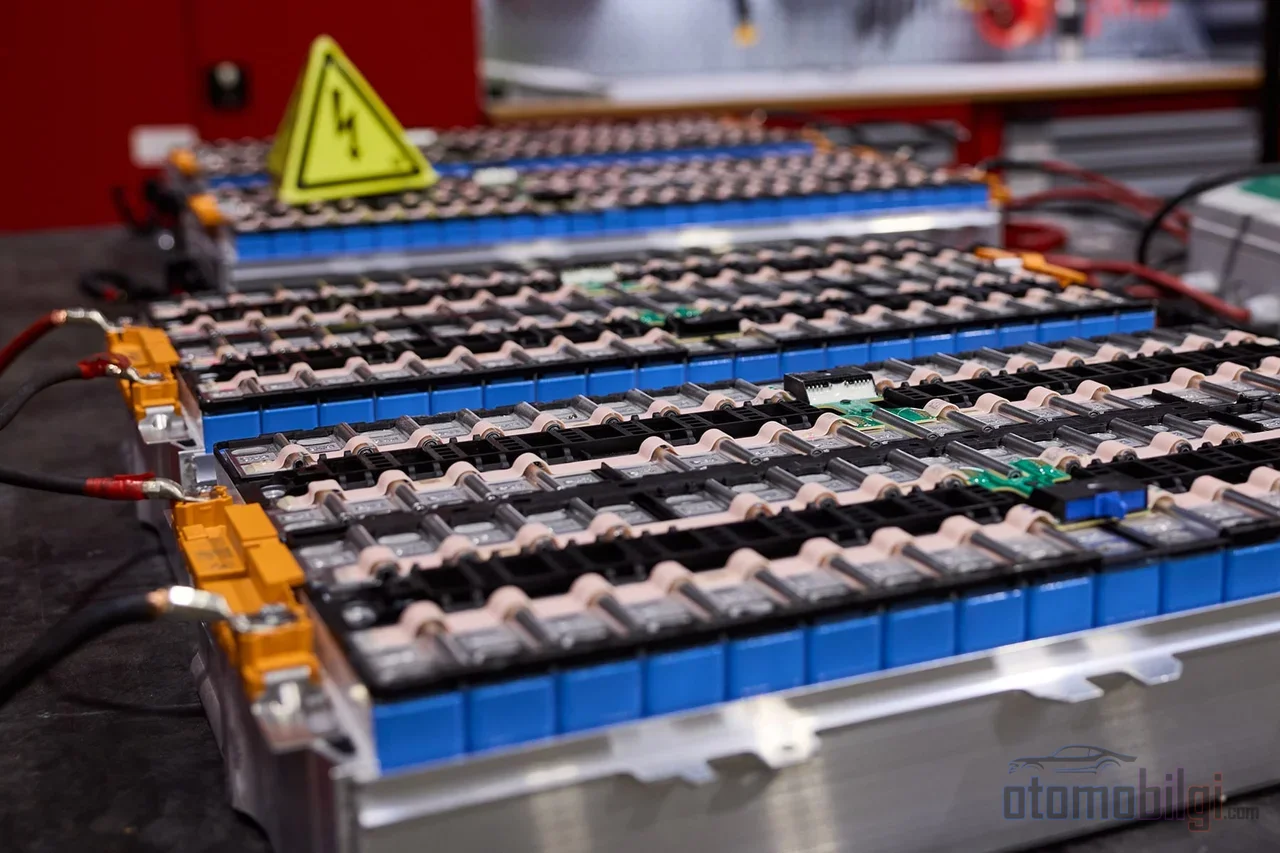
First, a basic fact: An EV battery loses at most 2.3% of its capacity per year on average. So after ten years it is still confident, but no longer performing at its former level for the car. The industry threshold is generally 70–80% state of health (SoH): Packs above this threshold can be refurbished and stay in the vehicle, while those below go down one of two main paths. Second use, meaning stationary storage for homes, telecom infrastructure, microgrids, or charging stations; or material recycling.
Think of it this way: When your phone's charge drops to 80%, you don't bury the phone, but it still works. You can put that phone on your nightstand as an alarm clock, or take it apart and separate its valuable components. There is exactly this kind of dilemma for batteries. And the economic side of this dilemma is not as simple as it is made out to be.
The volume, however, is frightening in scale. Globally in 2026, more than 120 GWh of batteries complete their vehicle life, and more than half of these packs still have usable capacity between 70–80%. By 2035, the supply of retired batteries is expected to exceed 300 GWh. You have to put that much energy somewhere - the question is which path really works.
The second-use promise: Why doesn't a 50% discount go far enough?
On paper, second use still looks sweet. The sale price of a repurposed battery ranges between 44–180 USD/kWh, while a new EV battery is at the 150–250 USD/kWh level. That means an advantage of 30–70%. Simulation studies show a reduction in storage costs (LCOS) of 40% compared to new battery systems. When you run an LFP pack retired at 80% capacity down to 50%, the achievable value is approximately 116 USD/kWh. In commercial and industrial applications, the present value of the investment is generally positive. For an average pack, the pack-level repurposing cost in the Tesla Model S example is ~12 USD/kWh; but if you go down to module level, this figure jumps to ~41 USD/kWh. This difference alone tells you how mechanical and costly the job is.
So why is there still no explosion? Here comes the pessimistic side. The International Energy Agency's 2026 global EV assessment says that reusing EV batteries in energy storage remains challenging due to safety and warranty requirements. An independent energy efficiency organization also emphasizes that the biggest obstacle is clearly cost. Two technical bottlenecks stand out in the peer-reviewed literature: advanced battery diagnostics are required, and open standards for sharing the pack's design and condition information still do not exist. Performance, reliability, and safety uncertainty severely constrain the market.
Second-hand living in the shadow of cheap new batteries
The real blow comes from elsewhere: new batteries themselves are rapidly getting cheaper. In 2026, cell prices are expected to fall below 100 USD/kWh . Imagine you are going to diagnose a second-hand pack, repair it, offer a warranty - then you look back and see that brand-new cells cost almost the same. Another widely acknowledged reality in the industry is this: sellers often silently opt for direct recycling for operational simplicity, even if repurposing retains value. This is exactly where the gap between promise and practice lies. On the residential side, the economics are still marginal; where the business makes sense is large-scale commercial and industrial storage.
How much metal is actually recovered in recycling?
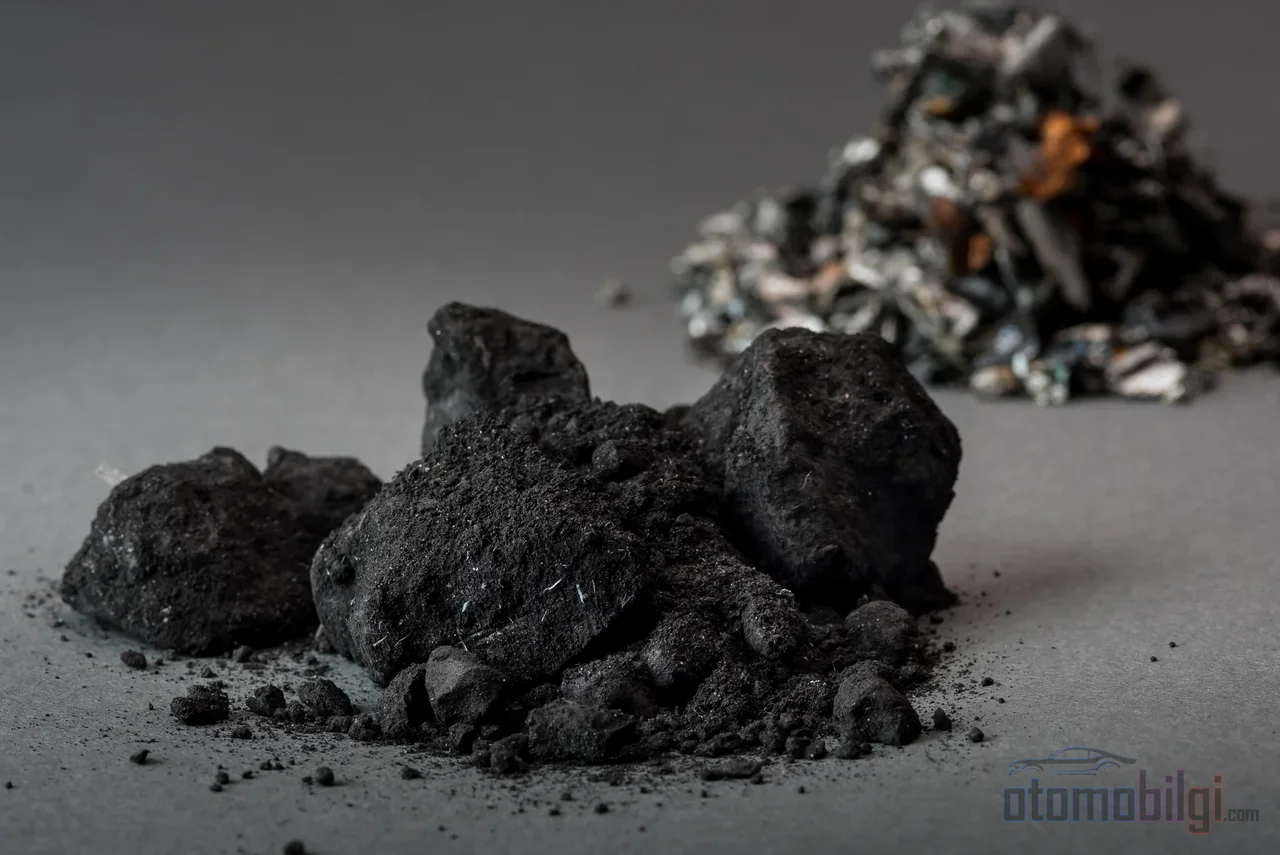
The figures on the recycling side are truly impressive. Through hydrometallurgical processing, that is, the method of separating metals with chemical solutions, lithium 95%, cobalt 95%, nickel 97% is recovered; hydrometallurgy already accounts for about 70% of global recycling capacity. In some studies, the recovery rate for nickel and lithium included can reach up to 98%. Leaching efficiency above 99% and 90% recovery for lithium-cobalt have been reported in the lab. For comparison, the benchmark is clear: in North America, about 99% of lead-acid batteries are already recycled. Reaching this benchmark is the goal for lithium-ion.
And this is not just an environmental story. Compared to primary mining, recycled materials can reduce greenhouse gas emissions by up to 75% ; hydrometallurgical recycling can lower the carbon footprint of cell production by 39%. A review scanning 113 articles also says that second-use batteries reduce emissions by 25-56% . And let's not forget to ask the price: the total recycling fee for high-power batteries, before deducting the recovered metal credit, is 10-15 USD/kg (approximately 60-90 USD/kWh). So recycling is not free, but when metal value is high, the books can balance.
Three methods, three different headaches
- Pyrometallurgy: Established and efficient; but it loses lithium. The century-old method does not fully fit the new chemistry.
- Hydrometallurgy: Higher recovery, less energy, lower carbon; but it requires more processing steps and hazardous chemicals.
- Direct recycling: It promises to reuse the material without destroying the cathode structure - but commercialization is still limited. Even at a Fraunhofer conference dated 2026, direct recycling is positioned as complementary to established future methods, meaning there is no scenario where it will replace them.
There is also the matter of chemistry. NMC/NCA packs containing cobalt and nickel reward recycling thanks to their metal values. LFP packs, by contrast, lack those precious metals; that is why LFP recycling is economically less attractive, while second-life use is more suitable. In other words, there is no single right path - the battery's chemistry itself determines the most sensible end for it.
After 2030: Will the raw material cycle close?
The long term is where things get really interesting. According to the World Economic Forum, by 2030 the supply of major battery raw materials will need to increase 4-fold for cobalt and by an incredible figure of 24-fold for class 1 nickel. The EU's joint research centre predicts that China will remain the leading supplier of battery-grade raw materials even after 2030. About 70% of cobalt coming from a single country (the Democratic Republic of the Congo) also creates supply chain and ethical sourcing risks. This is exactly where the promise of second-life use lies: reducing mining pressure in the face of projections that lithium demand will increase 40-fold by 2040.
Unwritten rules are also coming. The EU Battery Regulation imposes a 16% cobalt, 6% lithium, 6% nickel content requirement for new batteries by 2031; in 2036 these figures rise to 26% cobalt and 12% lithium. Recovery targets are also clear: by 2027, 90% for cobalt, copper, lead and nickel, and 50% for lithium; in 2031, lithium rises to 80%. On the US side the picture is different: there is no comprehensive federal regulation, the structure is incentive-driven, and the IRA credit requires that 70% of the critical mineral value be extracted, processed, or recycled in the US or a free trade partner by 2026. Recycled content counts toward this threshold - meaning recycling is now not only environmental policy, but industrial policy. Why don't the market figures add up? To be honest, estimates of the size of the lithium-ion recycling market differ significantly from one another. The reason for this contradiction is a difference in definition: some analysts count only EV packs, some the entire lithium-ion market, and some only a specific region.
Estimate
2026 (billion USD)
| Horizon | Most conservative estimate | ~6.9 |
|---|---|---|
| 2035: 37.5 billion USD | Most optimistic estimate | 16.44 |
| 2035: 114.66 billion USD | Mid-band estimate | 18.6 |
| 2033: 50 billion USD | Narrow-scope estimate | 7.3 |
| 2033: 31.8 billion USD | The estimate for the second-life market is more consistent: from 1.20 billion dollars in 2025 to 22.60 billion dollars in 2035, annually | 34% |
The forecast for the second-use market is more consistent: from 1.20 billion dollars in 2025 to 22.60 billion dollars in 2035, an annual 34% growth. But remember, growth rates and today's realities are not the same thing. The clearest point of consensus in the industry is this: the current scaling gap for end-of-life batteries is the fundamental problem, and the prediction of a shortage of old EV batteries, along with the need for efficient collection systems, tops the list of main challenges.
Promise or reality: The industry's honest report card
Let's draw our summary report card. On the recycling side, the promise is largely real: 95-97% recovery rates, an emissions advantage of up to 75%, and EU mandates taking effect from 2027 show the seriousness of this path. On the second-use side, the picture is mixed: while McKinsey positions it as "a new pool of value in energy storage," the IEA and peer-reviewed studies emphasize that the lack of cost, diagnostics, and standards means the promise has not yet been fulfilled. The prediction that cell-level material and production emissions could fall 90% by 2030 per kWh is also a sign of something: the industry is leaning on several paths improving at the same time, without waiting for any single magic solution.
And one last question for you: If a battery's first life lasts about ten years, then maturing its second life and recycling takes ten to fifteen years. The first big wave of retirements in 2026 will be the moment commercial operators and old stationary storage systems confront this reality for the first time. So this story is still in its first chapter - and the most honest answer so far is this: recycling is doing the job, while second use is still studying. Which one do you think will graduate first?
Sources
- Electric vehicle batteries - Global EV Outlook 2026
- Second-Life Batteries Can Play a Vital Role in the Clean Energy Transition
- EV Battery Recycling for Investment Recovery: The 2026 Playbook
- Second-Life EV Battery Applications: Complete Guide
- Techno economic and environmental evaluation of second-life batteries
- The sustainability potential of second-life electric vehicle batteries
- Battery 2030: Resilient, sustainable, and circular
- Glossary | Lithium-ion Battery Recycling
- Sustainable Manufacturing and Recycling of Lithium-Ion Batteries
- Highly Efficient Recovery and Recycling of Cobalt from Spent LIBs
- How to build a circular economy for EV batteries
- EV Battery Second Life 2026: Home Storage & Grid
- EV Battery Recycling Is Growing Into a Critical Clean Energy Industry