Why Is James Dean's Porsche 550 Considered Cursed?
Share This Page
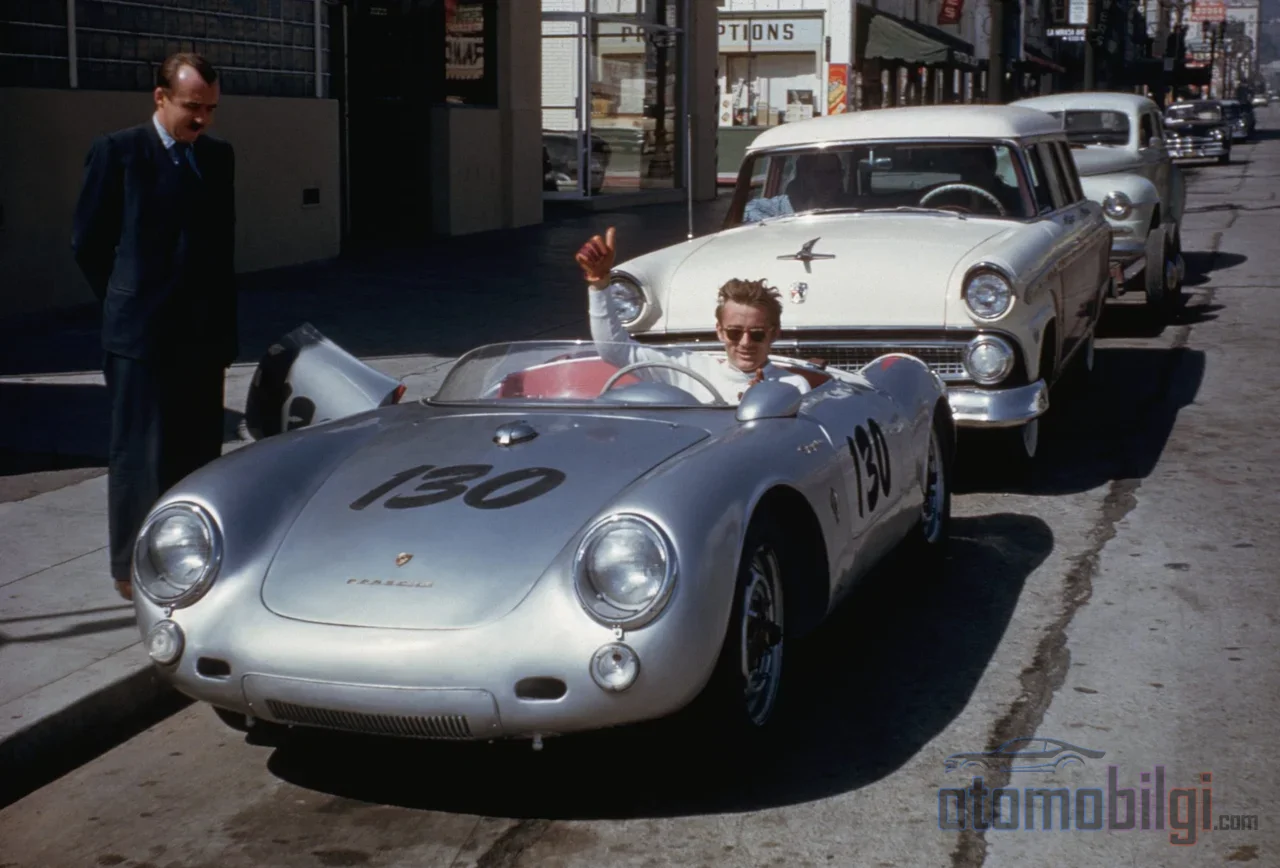
A silver sports car glides slowly down a crowded Hollywood street. Behind the wheel is a young man, the most handsome rebel cinema has ever known: James Dean. Someone standing by the roadside looks at his car and whispers something to him - and a week later, Dean dies in that very car. Sounds like a movie scene, doesn't it? But this story is real, and even though exactly seventy years have passed, it is still being debated. So why is the Porsche 550 Spyder considered "cursed"? Where do the claims come from, which ones are true, and which are Hollywood inventions? Let's start from the beginning.
Nine Days of Ownership: The Birth of "Little Bastard"
James Dean bought the 550 Spyder from Porsche's US dealer on September 21, 1955, trading in his old Speedster. With chassis number 550-0055, this car was a serious machine for someone who wanted to race at the time - light, low, and fast. It was a move much like deciding to drive super karts on a gaming console today and then racing on a real track.
The car's nickname is famous: Little Bastard. Dean adopted this name, inspired by something Warner Bros boss Jack Warner had used for him. The name was handwritten on the cockpit by painter Dean Jeffries. Jeffries also painted the number 130 on the doors and hood with washable black paint. So from the moment it was first seen, this car was no ordinary sports car; the moment it appeared on stage, it was already a character.
But interestingly, the car was not flawless to begin with. Dean had already had at least two minor accidents with it before racing; it had touched a ditch on Mulholland Drive, leaving dents on the front hood and rear fender. The silver paint was also applied hastily, without even masking. The bond between Dean and the car lasted a total of only 9 days. By the end of those nine days, everything had changed.
September 30, 1955: The Real Story of the Crash on Route 46
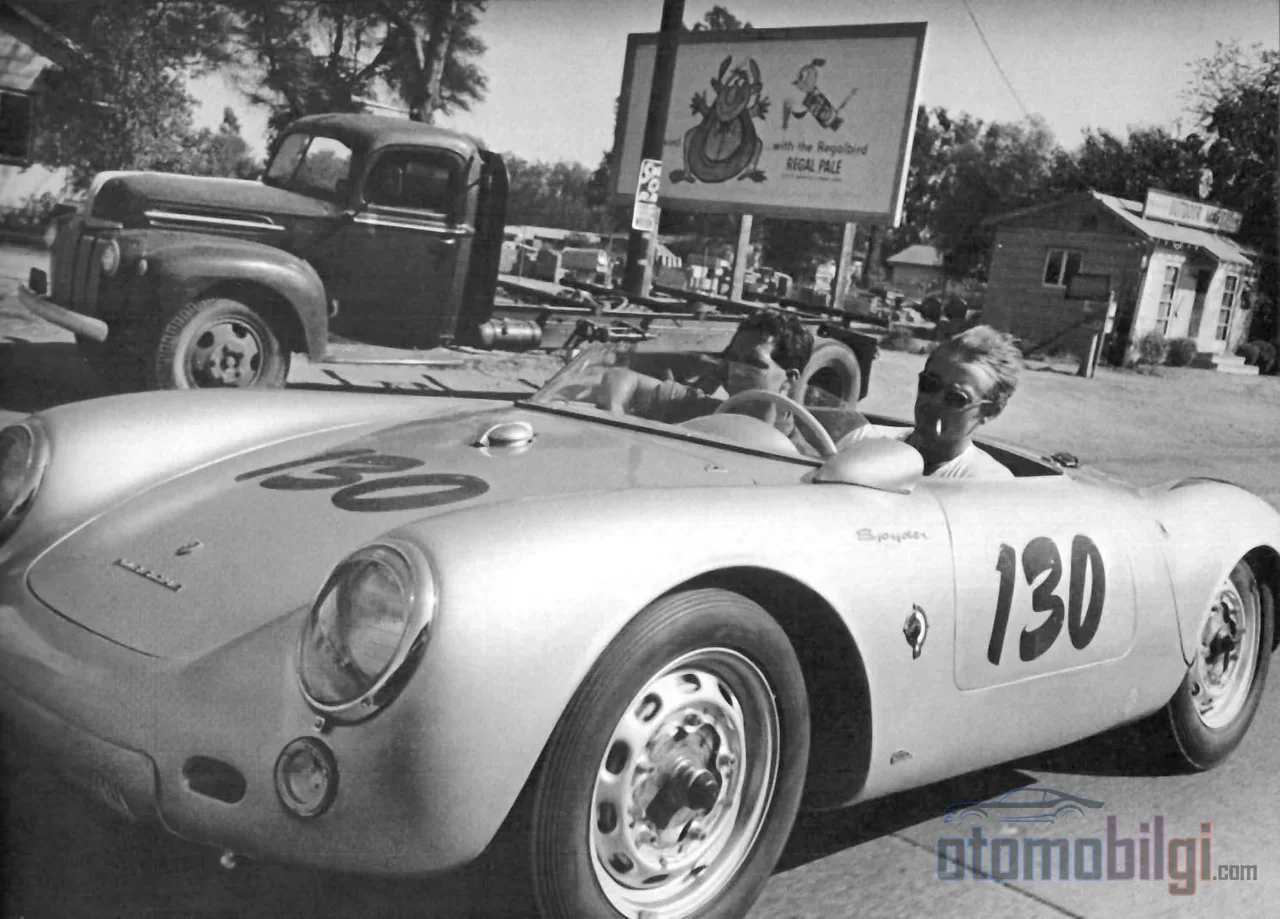
Dean set out from Competition Motors in Hollywood, along with factory-trained Porsche mechanic Rolf Wütherich, heading for the races in Salinas. Behind them, Bill Hickman and Sanford Roth followed in a Ford station wagon with a trailer. The convoy was stopped by police outside Bakersfield; they received a speeding ticket. So the speeding problem was clear from the very start.
The crash occurred on Route 46/466. While Dean was traveling at an estimated 85 mph, Donald Turnupseed, a student at California Polytechnic State University, was turning his 1950 Ford Custom onto the road. The two cars collided, and the Ford was thrown about 12 meters. Dean, in the car where the driver's side took the most damage, was critically injured with a broken neck and was pronounced dead at the hospital in Paso Robles at 8:20 p.m.. He was only 24 years old. Wütherich was thrown from the car but survived with a broken jaw and leg; Turnupseed was slightly injured and no charges were filed against him.
Highlights
- Dean bought the 550 Spyder on September 21, 1955; his crash happened on September 30, 1955 - just 9 days later.
- The nickname "Little Bastard" was written on the cockpit in Dean Jeffries' handwriting; the car bore the number 130.
- After the crash, the engine was fitted into another race car; that car's driver was killed during a race in 1956.
- The car vanished in a train car in 1960; in 2005 a $1 million reward was offered for its discovery, but it is still missing.
The First Spark of the Curse: Alec Guinness's Bad Feelings
This is where the story's suspense scene begins. About a week before the crash, Dean met the British actor Alec Guinness and showed him his new car. Years later, Guinness recounted that seeing the car gave him a deep sense of foreboding, and that he wrote in his diary that he should not ride in this car, or else he would be found dead in it within a week. The crash happened exactly within that week, and Dean lost his life inside the car.
This prophecy is also repeated in Guinness's autobiography and in interviews recorded on video; so it is not seen as a completely made-up story. But the other side of the coin is this: did this story start being told after the crash, or was it really written down beforehand? That question is the first and most famous bone of contention in the curse debate.
The Parts Changed Hands Like a Glove and Things Got Complicated
After the crash, the insurance company declared the car a total loss, and it was purchased from a scrap dealer in Burbank by Dr. William Eschrich. Eschrich mounted the Porsche type 547 engine into the front of a Lotus IX race car; and lent parts such as the gearbox, steering, and brakes to the doctor-racer Troy McHenry. It was like taking a laptop apart and giving the screen to one person and the keyboard to another - but each part touched a human life.
At the 1956 Pomona races, both cars took the start. Eschrich survived in the Lotus, but McHenry lost his life in the same race after crashing into a tree. It was exactly at this point that the "Little Bastard curse" began to be taken seriously by the public: drivers of a car that had been split into parts were meeting the same fate in different vehicles. According to the claim, the sale was made for exactly a small fortune, $1,092 - meaning "fate" changed hands very cheaply.
George Barris and the Showmanship of a Wreck
One of the key figures in the story is George Barris, known as the "King of Kustomizers". Barris bought the wreck, promising to rebuild it; but when the chassis turned out to be beyond salvage, the plan changed and Barris turned the notoriety into an opportunity. In 1956, he began exhibiting the wreck to the public and spread the curse narrative like a campaign. Between 1957 and 1959, the car went on a "terrifying tour" taking it to auto shows, movie theaters, and even bowling alleys.
The events told from those years are quite eerie - and just as unverifiable:
- It is said that two tires sold by Barris blew out simultaneously and pulled their owner off the road.
- In March 1959, the car mysteriously caught fire in a warehouse in Fresno; it suffered almost no damage apart from two melted tires and blistered paint.
- It is said that at an exhibition in Sacramento, it fell off the platform and broke a spectator's hip.
- A story circulates that carrier driver George Barkus died trapped under the vehicle.
- There are also extra tales like a truck whose handbrake slipped crashing into a shop and damaging parts.
But now here's the real point: most of these tales are baseless, as researchers who work with period records clearly state. In other words, the scarier the story, the more spectators showed up - and that was exactly Barris's business. So how did the curse grow even bigger after the car vanished?
The Vanished Wreck: Where Is Little Bastard Now?
In 1960, the car disappeared inside a sealed freight car traveling from Miami to Los Angeles while returning from a road safety exhibition. It was never seen again. Yes, you read that right: the most famous car in cinema history evaporated inside a train car. Years later, in 2005, a $1 million reward was offered to anyone with information about the car, but it is still missing.
Some think this vanishing story itself may have been invented by Barris - could the best way to keep the car's mystery alive be to make it disappear completely? Then in September 2020, news broke that a major piece of the car had surfaced, 65 years after the crash. It is also claimed that components were sold and fitted to other cars, and that the chassis was scrapped. So the story is still breathing.
So Is There Really a Curse, or Is It a Myth?
Now we've come to the heart of the question. Researchers focused on Dean and Porsche history agree that the "curse" narrative largely consists of exaggerated stories created by Hollywood - and especially George Barris - by blending fact with fiction. Most of the alleged injuries and deaths involving the car's parts cannot be documented; even events like the Fresno fire, though frightening, ended harmlessly.
On the other hand, the concrete facts at hand are these: Dean really did die, the racer who took the engine after the crash really did die, and the car really did vanish. Every new misfortune that fell onto this chain only made people's minds inflate the story further. In the social sciences, this is something like what's called the "demonized object" effect: once a bad reputation starts swirling around an object, every accident gets attributed to it. Just like in a classic horror movie - but in the real world.
In my view, the most honest answer is this: there is no separate force called a curse; but there is a real tragedy and a perfect folk tale that make the curse believable. A star's death, a prophecy claim, what happened to the parts, and a vanished wreck... If you took this material, you could build the best horror script ever written. That's why James Dean's Porsche 550 Spyder is still talked about today - because the truth is a better script than fiction.
Do you think believing in the curse is more fun, or explaining everything with logic? I think both are necessary - but when you read the next race car story, I suggest you take another look at what you left behind.
Sources
- The curse of James Dean's Porsche 550 Spyder
- Little bastard
- Death of James Dean
- James Dean's Porsche: Was The 'Little Bastard' Cursed?
- Sixty-Five Years After The Fateful Crash, A Large Piece Of James Dean's Porsche Has Surfaced
- The haunting story of James Dean's Little Bastard
- Mystery of James Dean's Long-Missing Porsche Spyder