How Many People Does a NASCAR Team Prepare for Race Day With?
Share This Page
In preparing a NASCAR Cup Series team for race day up to 100 people can be involved; but not all of them go to the track. On the track-going road crew, alongside the driver, there are roles like the five-person pit crew, the crew chief, the race engineer, the car chief and the spotter. The rest prepare the car at the shop, load the haulers, and plan this entire massive operation weeks in advance. So that 12-second pit stop you see on TV is actually just the tip of the iceberg of an organization resembling an army.
Highlights
- On a Cup Series team up to 100 people can work; only a limited road crew goes to the track.
- During a pit stop, over the wall no more than 5 people can go; the crew can expand to up to 8 members in total.
- The target pit stop time, completed flawlessly, is approximately 12 seconds.
- Each hauler is loaded with two cars : one primary and one backup car.
- Hendrick Motorsports and Joe Gibbs Racing field the maximum permitted four-car teams .
What Does Each Member of the Pit Crew Do?
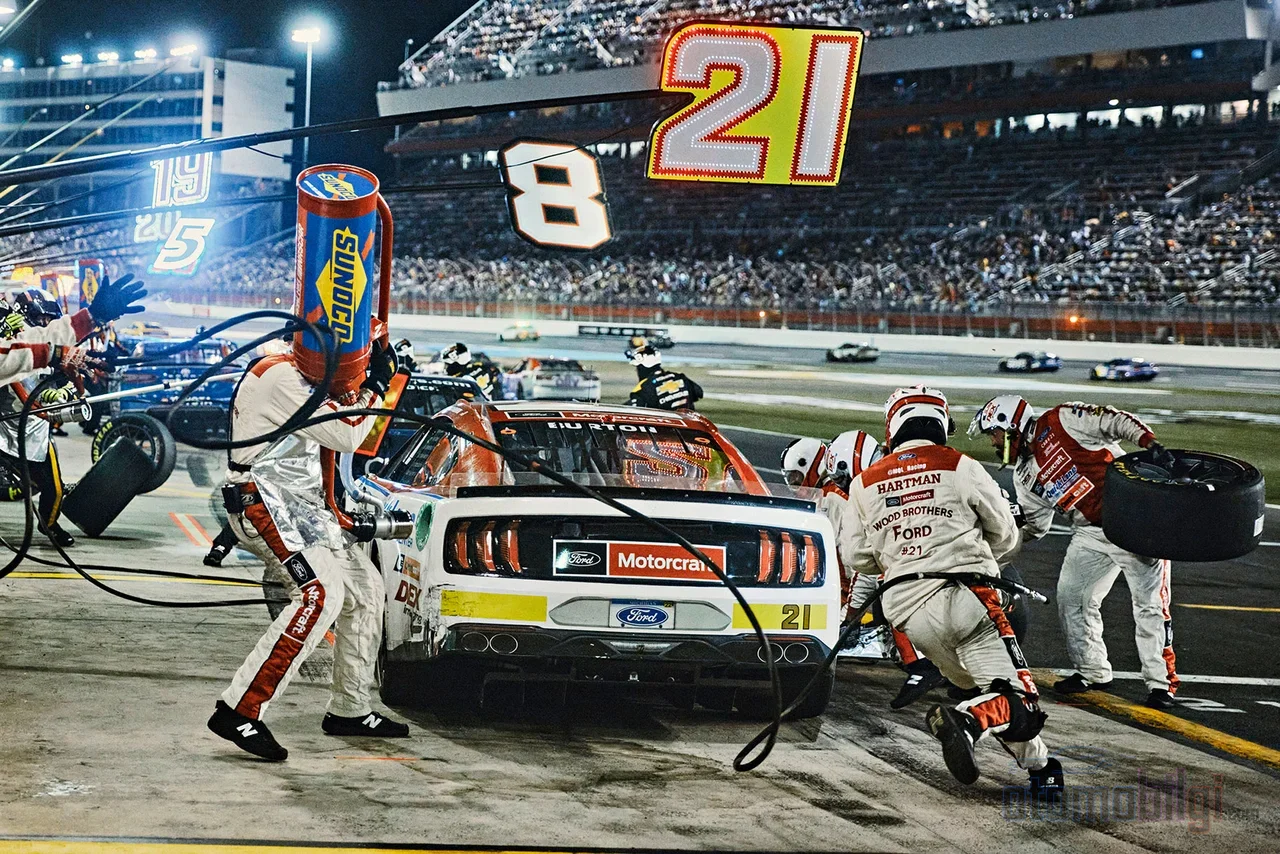
The pit crew is NASCAR's most dazzling part. The moment the car enters the pit, a choreography begins and everyone has a single task. Under a rule NASCAR tightened in 2018, the number of people who can go over the wall during a pit stop dropped from six to five. The crew can grow to up to eight members in total, but the right to cross the wall stays at five.
- Jackman: The first person to touch the car. He lifts the roughly 1,600-kilogram car with a hydraulic jack, then runs to the other side of the car and repeats the same task. A man like a marathon runner, seriously.
- Front and rear tire changers: They remove five lug nuts per second with pneumatic tools. Yes, five per second.
- Tire carriers: They bring the new tires from behind the wall. The front carrier can add tape to the grille to increase downforce when needed; the rear carrier can adjust the track bar.
- Fuel man: With two 12-gallon tanks, each weighing 81 pounds, he fills the car's 18-gallon fuel cell at a rate of 2 gallons per second. That's 12 times faster than a local gas station!
Alongside these, utility man there is also an unofficial seventh member called a. If NASCAR permits, he can join only in the second half of the race and his job is limited to assisting the driver and cleaning the windshield - he cannot make any other adjustments. Behind the wall stands the support crew: they roll the spare tires, carry the pneumatic tools and fuel tanks to the barrier, but during pit stops they never cross to the safe side of the wall.
So why are these guys so fast? Because most of them are real athletes! Just look at Joe Gibbs Racing's No. 11 team: jackman Joel-Alexandre Bouagnon 7 years of NFL running back experience, front changer Austin Maloney played wide receiver at the D1 level, rear changer Deven Youker did football and wrestling. NASCAR builds its pit crews almost like a second sports league.
Who Is the Crew Chief and Why Is He Considered the Team's Brain?
If the pit crew is the muscle, the crew chief is the brain. From flat screens mounted in the pit box, he watches the television broadcast of the race, consults constantly with the driver, manages the movements of the team on both sides of the wall, and is responsible for safety. Pit strategy - that is, when the car will take fuel and which lap it will change tires - is decided largely at his desk. He also decides who works on the team and in what focus areas; he carries the communication between the shop and long-term car development.
Did you know that every driver has his own crew chief? This rule actually makes a lot of sense: even if the car number changes, the duo learns together, makes mistakes together, and wins together. For example, Kyle Larson and crew chief Cliff Daniels are in their sixth season at Hendrick Motorsports, and the duo is aiming for a third Cup championship. In Joe Gibbs Racing's No. 11, meanwhile, is Denny Hamlin's boss Chris Gayle: known as a senior engineer and race strategist, he is famous for his data-driven approach and calm decisions in the pit box.
Engineers and the Shop Crew: The Unsung Heroes of the Track
The roots of everything that happens on the track are actually planted in the shop. Each car's setup is calculated by an engineer - how each shock absorber will be built, which springs will be used, the optimal tire pressure for track conditions. Think of it like a recipe: not everyone makes the same dish with the same ingredients; the secret is in the measurements. In NASCAR, it's the engineer who sets those measurements. Even in performance engineer job postings, tasks like setup development, simulation support, and interpreting tire models stand out.
Car chief is the crew chief's right hand. He ensures the car passes NASCAR inspections and plans most of the daily preparations ahead of the race weekend. Technicians who assemble, disassemble, and maintain the cars are also being hired constantly in the shop - all of the team's effort before it hits the track comes from these people.
The career ladder is also interesting: Luke Lambert, crew chief of Spire Motorsports' No. 77, graduated from NC State in 2005 with a mechanical engineering degree, started as a shop engineer at Richard Childress Racing, then became Jeff Burton's race engineer and got his first crew chief job in 2011. From shop engineering to race engineering, and from there to leading the team - a classic NASCAR rise story.
How Are Race Cars Transported Between Cities?
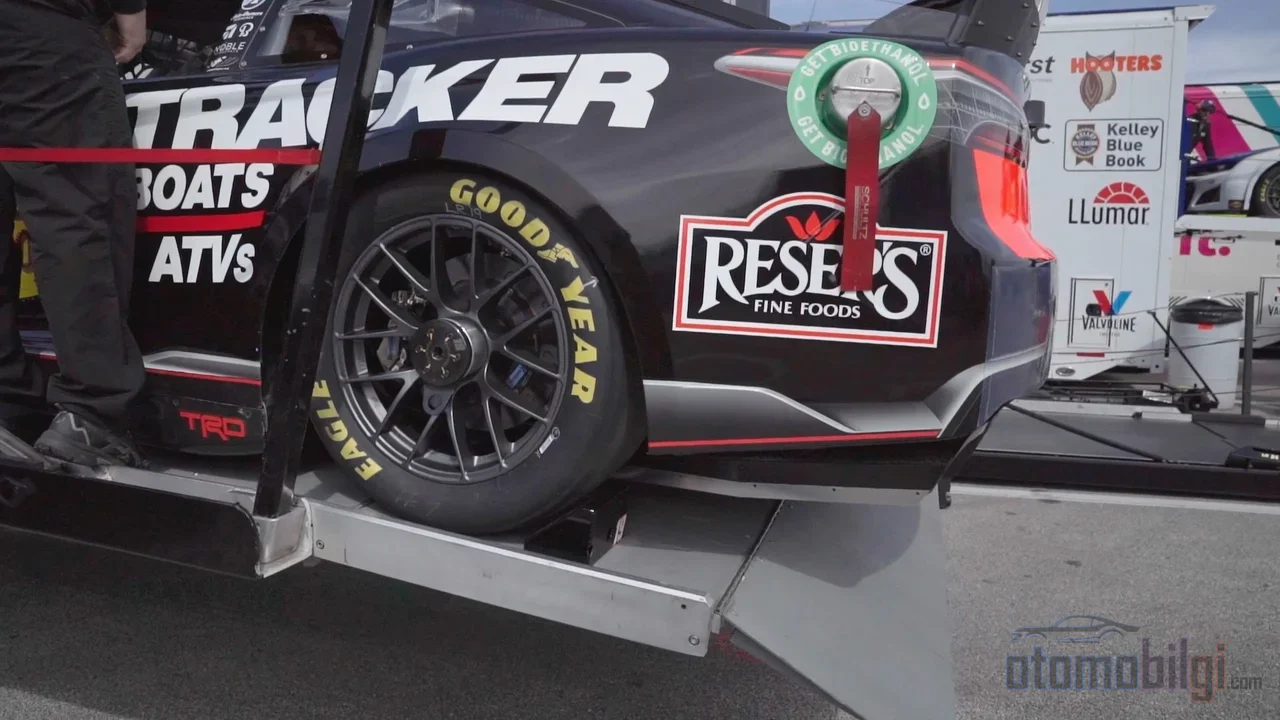
Now let's get to the most mind-boggling part of the job: logistics. Throughout the season, teams travel the country from end to end, and they do it with giant tractors called haulers . Two cars are loaded onto each hauler: the primary car the team believes will be fastest, and a backup. On top of that go the race car's parts, pit equipment, and everything the team needs to work.
These haulers aren't ordinary trucks; they are massive vehicles equipped with climate-controlled storage areas, workspaces, and safe loading systems. It's no coincidence that they're called the nerve center of a modern race team - they carry the cars and equipment to every track. Seeing the haulers travel in convoy on public roads in Joe Gibbs Racing's videos is actually enough to describe the scale of motorsport logistics. Next time you watch a race, think about this: behind every car on stage, there's a convoy moving along the highway that night.
How Are the Big Teams Organized? The Hendrick and Joe Gibbs Example
There are 15 full-time organizations in the Cup Series, and the two biggest of them field the maximum allowed roster of four cars each: Hendrick Motorsports and Joe Gibbs Racing. Hendrick's four Chevrolets are in the hands of Kyle Larson, Chase Elliott, William Byron, and Alex Bowman. The team's owner, Rick Hendrick, is also the chairman and CEO of a major automotive group - meaning there's a serious business structure behind the racing operation.
Joe Gibbs Racing's management is also like a classic corporate chart: founder Joe Gibbs, co-owner Heather Gibbs, president Dave Alpern, and separate executives in areas such as finance and human resources. The single manufacturer rule comes into play here too: teams generally choose one of Chevrolet, Ford, or Toyota, and a different car number and crew chief are designated for each driver. In fact, Hendrick's No. 5 road team job descriptions list positions such as specialist, engineer, mechanic, tuner, and hauler - meaning even the team that goes to the track has its own internal hierarchy and division of labor.
In organizations this large, competition doesn't end on the track. Information leakage between teams is such a serious matter that Joe Gibbs Racing filed a lawsuit against a former employee over allegations of stealing confidential information, and Hendrick Motorsports was also involved in that case. Trade secrets are talked about even in pit crew techniques - you understand how serious the business is.
How Does the Race Week Schedule Actually Work?
When you bring all these roles together, the official race week emerges. The engineer calculates the setup in the workshop, the car chief prepares the car for inspections, and the technicians renew the parts. Then the primary and backup cars are loaded onto the hauler, and the convoy hits the road. Upon arrival at the track, the road team sets up in the garage: the crew chief goes to the pit box, the engineer to the data screens, and the pit crew to their rehearsed choreography. On race day, the driver enters the teepee guided by the spotter on the radio, and the 12-second pit stops become the final scene of weeks of preparation.
This is what American racing culture is all about: it lives not only on the track, but also in the garage and on thousands of kilometers of road. Next time you watch a pit stop, think of the hundreds of people behind the wall - those seconds are their victory too.
Sources
- How Do NASCAR Teams Work, How Many People?
- On pit road, more emphasis returns to the athletes
- Chapter 2: Structure of Race Car Pit Crews
- How NASCAR pit stops work: Crew roles and key rules
- How a NASCAR Pit Stop Works
- No. 11 Cup Series Team
- No. 77 Cup Series Team
- Kyle Larson / No. 5 Cup Series Team Page
- NASCAR Cup Series Teams
- NASCAR and Logistics
- How NASCAR Teams Coordinate Vehicle Logistics Across the Season
- What's inside a NASCAR semi car hauler?