The Cars That Are the Centerpiece of TV Series and Advertisements
Share This Page
Cars beloved by TV series and commercials are the most enduring stars of screen culture: Knight Rider's talking supercomputer KITT, The Dukes of Hazzard's orange monster General Lee, and models captured by legendary directors' cameras who turn even a commercial into art. In short, a car can sometimes be the hero of a screenplay, and sometimes a brand's most expensive makeup.
Highlights
- 1982 Pontiac Firebird Trans Am, Knight Rider immortalized as KITT.
- A total of 23 KITTs were produced for the series; today only 5 of them survive.
- General Lee is an orange 1969 Dodge Charger and still sparks controversy.
- Honda's "Cog" (2003) is a two-minute masterpiece shot with real Accord parts.
- The deal between GM and Netflix skyrocketed the visibility of electric vehicles in TV series.
A question for you: has your heart ever raced because of a car you saw on screen? Mine has, and I think the same thing happens to all of us. We already talk plenty about the cinema and video game side; but TV series and commercials are two rich, though rarely discussed, stages of the automobile in popular culture. On this page, we dive right into that territory. Buckle up, because we're setting off on a journey that runs from under KITT's hood all the way to the glitzy commercial seats of the Super Bowl.
KITT: How Was the Talking Car of Television History Born?
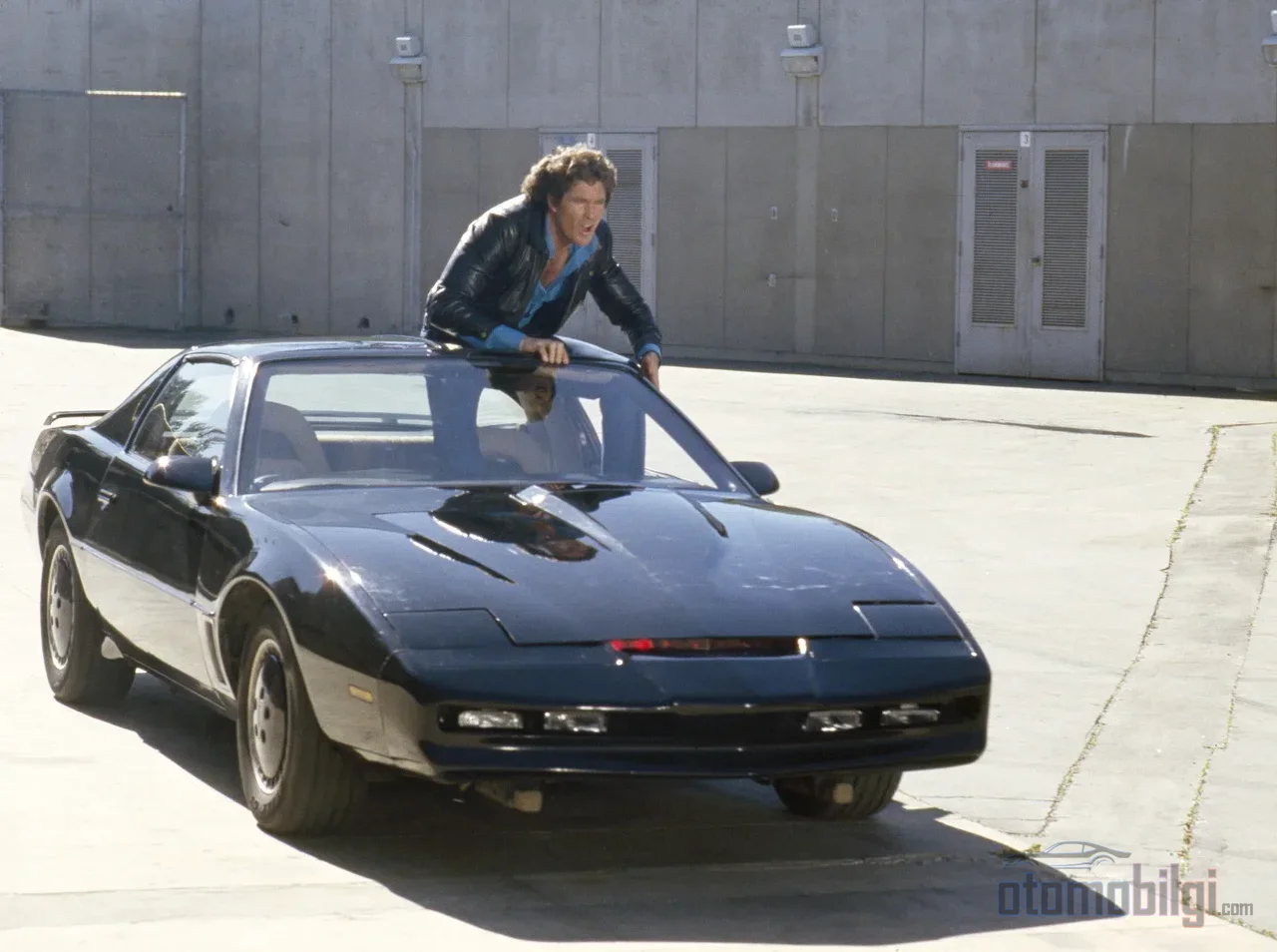
Aired on NBC on September 26, 1982, Knight Rider proved to the whole world that a car could be a leading actor. Michael Knight's partner, played by David Hasselhoff, KITT - short for "Knight Industries Two Thousand" - appeared on screen as a 1982 Pontiac Firebird Trans Am . The series was created by Glen A. Larson, and the speaking voice of that iconic red-lit "face" belonged to William Daniels. Yes, the car's voice was a real person, and that voice was etched into the memory of a generation.
So what was this car really? The real engine was a 5.0-liter V8 with 145 horsepower; some stunt cars used a 3.8-liter turbo V6. The story in the series was far more ambitious, of course: according to the script, KITT accelerated from 0-60 mph in 2 seconds, flew over walls with a rocket boost called "Turbo Boost," and was bulletproof thanks to its armor called "Tri-Helical Plasteel 1000 MBS." On top of that, it also had a laser, an oil sprayer, and CO2 sprinklers. In reality, 145 horsepower; on screen, superhuman - I think that's why this series is still talked about today. Even the car's production cost was announced as 11,400,000 dollars in the series' own fiction.
The People and Scenes Behind It
KITT's exterior design was created by Pontiac designer John Schinella, while the character's special model was designed by customizer Michael Scheffe. The open-top and "Super-Pursuit" versions were built by legendary vehicle maker George Barris. In the early episodes, the panel that lit up when KITT spoke was a single flashing red square, but in episode 14 ("Heart of Stone") it transformed into a three-segment vertical bar - a small detail, but fans know it!
Added in the show's 4th season, "Super-Pursuit Mode" promised acceleration 40% above the previous top speed, a retractable spoiler, and an emergency braking system. And a bitter truth: a total of 23 KITTs were built for the series (some estimates go up to 25) and most were smashed to pieces during filming. Only 5 of them survive to this day. One of them is the right-hand-drive example used in David Hasselhoff's "Jump In My Car" music video.
There's also a dark side to the collectors' market: the number of KITTs put up for auction as "original" exceeds the total number ever produced. In 2007, one car was listed for $149,995; claims circulate that Michael Jackson and Joey Fatone bought an original KITT, but their accuracy is questionable. So when you see a KITT, I say think twice before swooning.
KITT's story returned in 2008 with a reboot: this time it was named "Knight Industries Three Thousand" and was 2008–2009 Ford Shelby GT500KR based; Val Kilmer took over the voice. The new KITT could change its shell color with nanotechnology and transform into different vehicles ranging from the Ford F-150 to the Crown Victoria Police Interceptor. And let's not forget: KITT's evil prototype KARR first appeared on screen on November 19, 1982, in the episode "Trust Doesn't Rust," and its popularity grew so much that it returned in 1984 in the episode "K.I.T.T. vs. K.A.R.R." How cool is it for a car to have an evil twin, admit it!
General Lee: The Orange Charger That Jumped and Became a Cult Icon
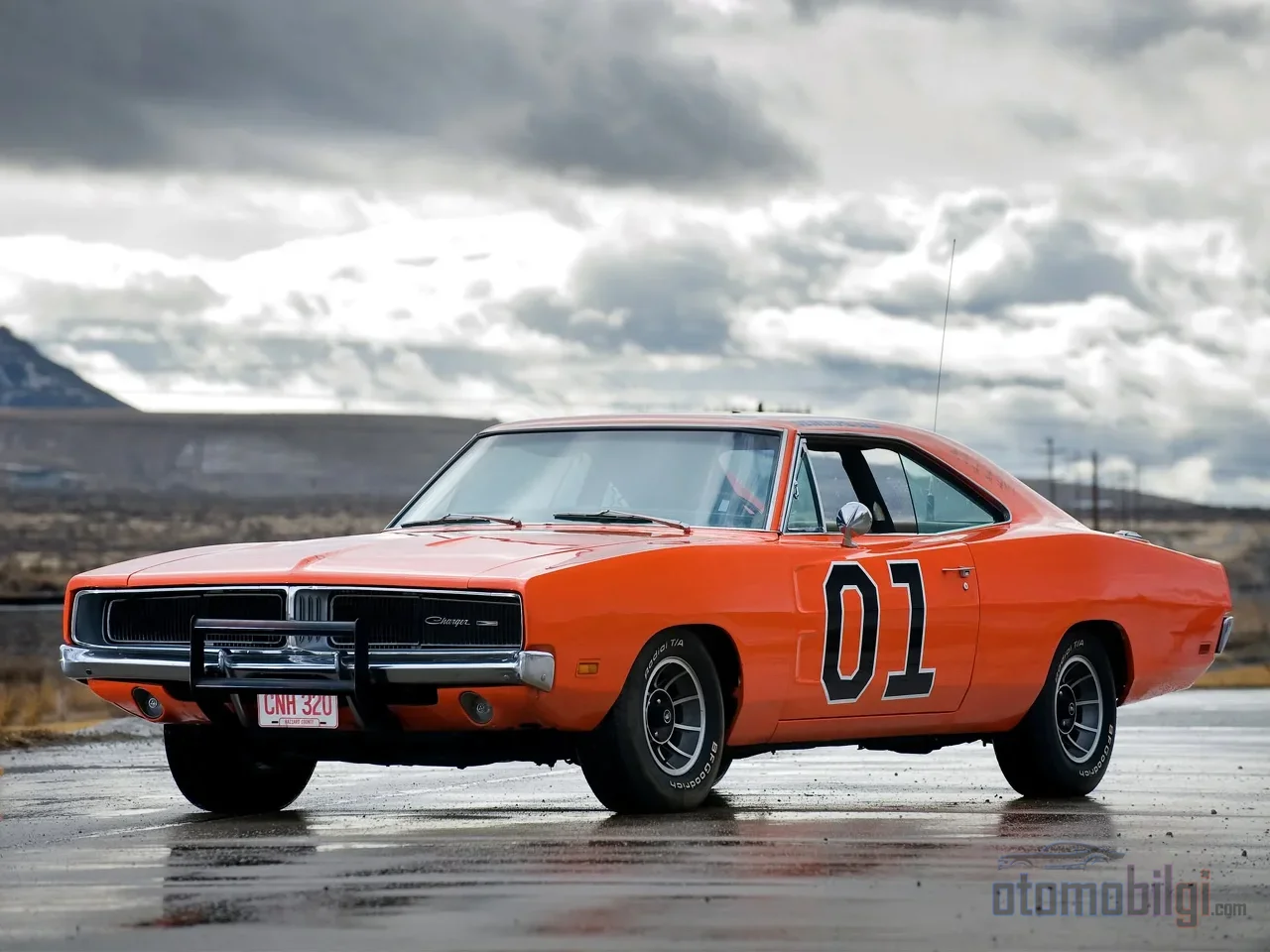
The Dukes of Hazzard's heart is the orange 1969 Dodge Charger driven by Bo and Luke Duke: the General Lee. This car became famous for its high jump scenes and turned into "a symbol devoted to rebellion and adventure" on American television. Watching it glide over a fence or a canyon in every episode was like a holiday for the kids of that era. Even toy giant Ertl's General Lee models still circulate in collections; I think this is one of the best things that shows a car's trace in culture.
But when telling the story of the General Lee, one fact cannot be skipped: the Confederate battle flag on the vehicle has made the show a subject of controversy for years. Due to the racist history it carries, the flag disturbs many viewers; interestingly, some viewers still state that they don't find the car offensive. The car is a legend, but there is a serious debate in that legend's shadow. Both need to be seen together.
After KITT and General Lee: Other Legendary Cars on Screen
Television history is full of characters identified with their cars. My favorite part is this: these vehicles are sometimes more memorable than the actors. Here are the ones I remember:
- A-Team: The black GMC Vandura never gives up in any episode and has become a pop culture icon.
- Magnum P.I.: Under the Hawaiian sun, the Ferrari 308 GTS - red, open top, legendary.
- Miami Vice: In the pastel-colored city, the Ferrari Testarossa was the pinnacle of 80s aesthetics.
- Starsky and Hutch, The Rockford Files and Batman: each left behind vehicles that became icons of their generation.
Which one is the best? This debate has been going on in forums and magazines for years, and in my opinion it will never end. KITT fans, General Lee supporters, and the pickup truck crowd... everyone has a point, but since KITT could talk, I think it's a step ahead. Which one is your favorite?
Product Placement: Storytelling or Sales Technique?
Now let's move on to the slightly more cinematic but equally commercial side of things. Product placement, meaning placing a vehicle in a TV series like an advertisement but for a fee, is nothing new. One of the first striking examples Mister Ed (1961–1966): the series was sponsored by the Studebaker Corporation, and Studebaker vehicles appeared prominently on screen. The 1970s and 80s were the golden age of vehicle-focused placement; the most memorable hit was of course 1982's Knight Rider . Ford also supplied vehicles to series like "Charlie's Angels", "Cannon" and "Barnaby Jones" during those years.
Things Are Different Today
Modern examples are even bolder: in the 2008 Knight Rider, the Ford Mustang stands out, as does the Nissan Rogue in Heroes; models like the GMC Hummer pickup, Chevy Bolt and Cadillac Lyriq were planned to appear on series screens. The real big leap is the deal between GM and Netflix: this collaboration is enabling more electric vehicles to appear in Netflix productions. Think of a brand seeping into a platform's entire catalog - the scale is now something else entirely. Even the Ford pickup in Designated Survivor is considered part of this wave.
Of course, not everyone is happy about this. Viewers complain that some placements are "overly obvious" and done unnaturally - a character suddenly starts reciting the car's features, for example. In my opinion, good placement should feel like a scene change; bad placement is like a billboard hanging in the middle of the screen. Which one do you think we encounter more often?
Directors and Iconic Commercials: Is Advertising an Art?
Here's something very few people realize: behind car commercials there are often giants of cinema history. Sergio Leone directed a Renault 18 Diesel commercial; Ridley Scott signed Apple's, Martin Scorsese Dolce & Gabbana's, and Spike Jonze Ikea's commercials. Steven Spielberg was in the director's chair for BP's "Elevator" film, and Michel Gondry for John Lewis's "Under the Bed" commercial. On the automotive side, BMW's "The Hire" short film series turned into a feast of films shot by famous directors; "Hostage" is one of the best known of these. Names like Jeff Zwart, who has stood at the top of automotive advertising for decades, and directors like Martin Bennett, who specializes in launch films, are also masters of the field.
Honda "Cog": A Two-Minute Engineering Poem
My personal favorite is the 2003 Honda "Cog". In this two-minute commercial produced with Wieden+Kennedy, a disassembled Accord's real parts trigger each other like dominoes and the result locks you to the screen. The ad climbed to 3rd place on lists counting the best Super Bowl ads of all time - honestly, I hesitate to even call it an ad for Honda. A car being disassembled and reassembled to tell a story... I think this is the moment advertising turns into art.
Super Bowl: The Champions League of Car Ads
The biggest TV night of the year, the Super Bowl is also the world cup of car advertising. When the legends are ranked, some names always stand out:
| Ad | Year | Why Is It Memorable? |
|---|---|---|
| Volkswagen "The Force" | 2011 | The mini Darth Vader trying to use the Force; considered a classic |
| Jeep "Groundhog Day" | 2020 | A clever script saluting nostalgia |
| Budweiser "Puppy Love" | 2014 | Not automotive, but always on the list |
| McDonald's "Showdown" | 1993 | Jordan and Bird's impossible basketball game |
| Apple "1984" | 1984 | The cult message that changed advertising |
The automotive front was also busy at Super Bowl LX: Toyota's "Superhero Belt" and Toyota x NFL "Where Dreams Began" spots, Nissan's new ad, Volkswagen's new version with the "Drivers Wanted" theme, and the Ford truck with Bad Bunny hit the screen. While 2026's car ads didn't feature the biggest lineup, they carried character, nostalgia, and storytelling; nostalgic analyses paying tribute to model generations spanning over 30 years also stood out this year. Additionally, Honda released a 30-second TV ad called "40 Versions of Your Favorite Car" bringing together 40 versions of the Accord. Showing all the generations of a model in exactly thirty seconds - like a lesson in time management.
Looking at the overall picture, I see another interesting point: Kelley Blue Book, in its 100th year, examined the impact of car ads on American culture along a line stretching from 1926 to 2026. A hundred years of interaction - meaning advertising and car culture are almost the same age and have grown up together.
So Why Do the Cars on Our Screens Affect Us So Much?
I think the answer is simple: since cars can be the characters of stories, we treat them as friends rather than machines. We have all dreamed a little of being able to talk to KITT, of reaching for General Lee's steering wheel and soaring over a fence, or of gliding through corners like in the final scene of a commercial. TV series showed us that cars can have a story, and commercials showed us that even thirty seconds is enough to capture a car's soul. That is why these on-screen vehicles never grow old, even as the years pass.
Sources
- KITT - Wikipedia
- General Lee (car) - Wikipedia
- Product placement - Wikipedia
- List of Super Bowl commercials - Wikipedia
- How Knight Rider's K.I.T.T. Went from Napkin Drawing to Screen - Car and Driver
- KITT from Knight Rider stats - AutomotiveHistory.org
- The most egregious car product placements in TV and film - Driving.ca
- Super Bowl 60: The car ads of The Big Game in 2026 - Driving.ca
- Why you're about to see more electric cars in Netflix TV shows - Drive.com.au
- How Car Ads Impacted American Culture from 1926 to 2026 - KBB
- Best Super Bowl Commercials of All Time - GourmetAds
- Every Car Brand Ad You'll See at Super Bowl LX - Autoweek
- The Best Automotive Super Bowl Commercials of 2026 - Matador.ai
- The 7 Best Commercials Made By Famous Directors - PremiumBeat
- 20 Best Car Adverts of all Time - The Gentleman's Journal
- Jeff Zwart - Radical Media
- 12 Cool TV Cars and Trucks You Forgot About - MotorTrend
- Top 8 Vehicles from TV Shows - Valley Driving School