How Did the Batmobile Change Over the Years?
Share This Page
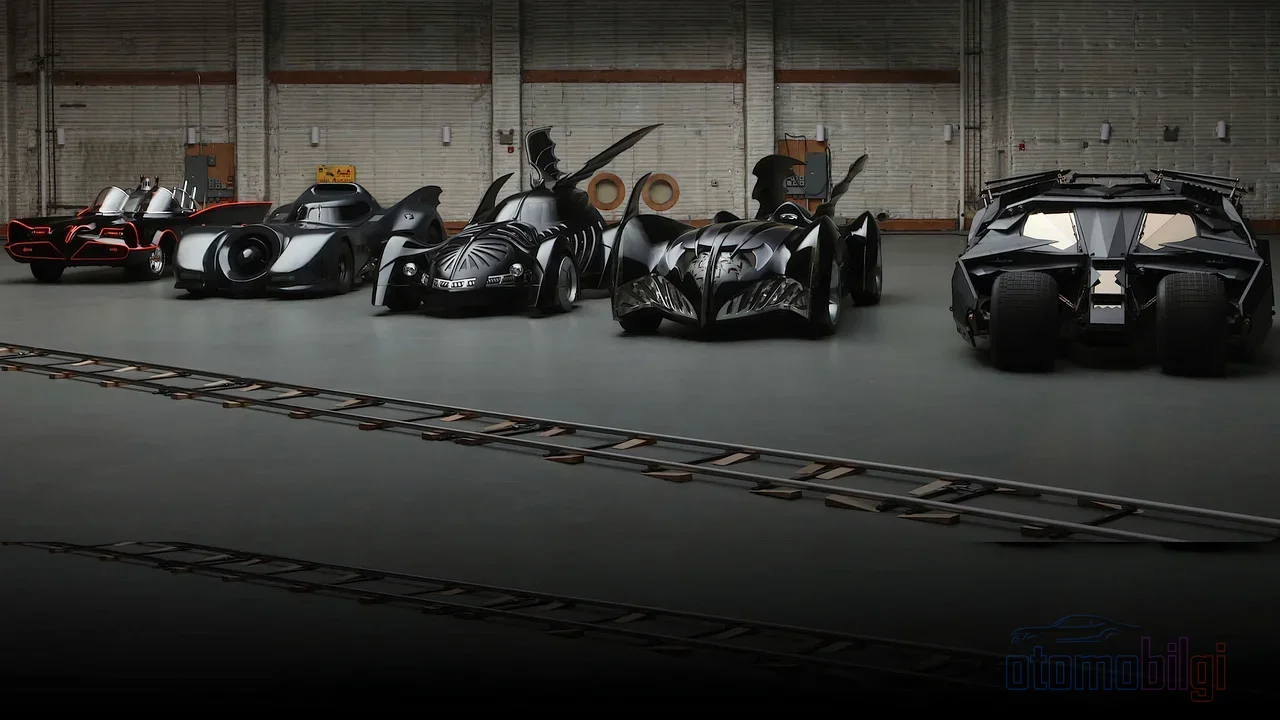
The Batmobile, redesigned from scratch with every new Batman era since 1939, is fiction's longest-running vehicle saga: From the pink-hotrod cartoon years to Tim Burton's gothic monster, Christopher Nolan's military tank, and Matt Reeves' raw muscle-car take, every generation reflects the design language and automotive technology of its own time.
Highlights
- The first on-screen Batmobile was an almost unmodified 1939 Cadillac Series 75 in 1943
- The 1966 TV series' car was built in three weeks from the unbuilt 1955 Lincoln Futura concept
- The 1989 Burton Batmobile accelerated from 0-60 mph in 3.7 seconds on a Chevrolet Impala chassis
- Nolan's Tumbler, with 500 horsepower and 160 mph, was a genuinely working stunt vehicle
- 2022's muscle-car Batmobile was designed with a 650 hp V8 engine and a hand-built feel
Just think about it: which fictional vehicle in cinema history has been recreated from scratch with every new interpretation for nearly 90 years? Even James Bond's Aston Martin lives on in a single iconic form. But the bat guy's car is different. Every time a director rebuilds Gotham, the car is drawn from scratch too, which makes the Batmobile practically a lesson in automotive design history. So how did this evolution begin? Let's go through it in order, because the story is crazier than you think.
How Did the First Batmobile Come About?
Here comes the surprise: When Batman first appeared in 1939 in Detective Comics #27, he had no special vehicle at all. The guy was getting around in ordinary sports cars! The name "Batmobile" was first used in 1941 in Batman #5, and that first vehicle was anything but what you'd expect: A red hotrod inspired by the Cord 812, with a supercharged V8. Yes, you read that right, not pink but red - and very shiny at that.
In the same issue, comic artist Jerry Robinson (who also created Robin and the Joker) completely overhauled the vehicle: a dark, gothic look, a tail fin like a bat wing, and a giant bat head on the hood. That head ornament also doubled as a battering ram, meaning Batman didn't knock on doors - he tore through wherever he landed. The seeds of the dark aesthetic we know today lie right here.
The Screen Journey: From Cadillac to Ford
When Hollywood got going, the designers took plenty of shortcuts. In the 1943 Columbia serial films, the first on-screen Batmobile was a 1939 Cadillac Series 75 convertible signed by General Motors' star designer Harley Earl - and it was almost completely untouched. There's a funny detail: with the top up, the car was the Batmobile; with the top down, it counted as Bruce Wayne's car. Because nobody was paying that much attention!
In the 1949 serials, a 1949 Ford Mercury convertible was used, but the car handled so badly that it had to be replaced six times during filming. Our hero's car being in the shop in the background... there's a lesson in that too, I think.
The 1966 West Mobile: Everyone's "Real" Batmobile
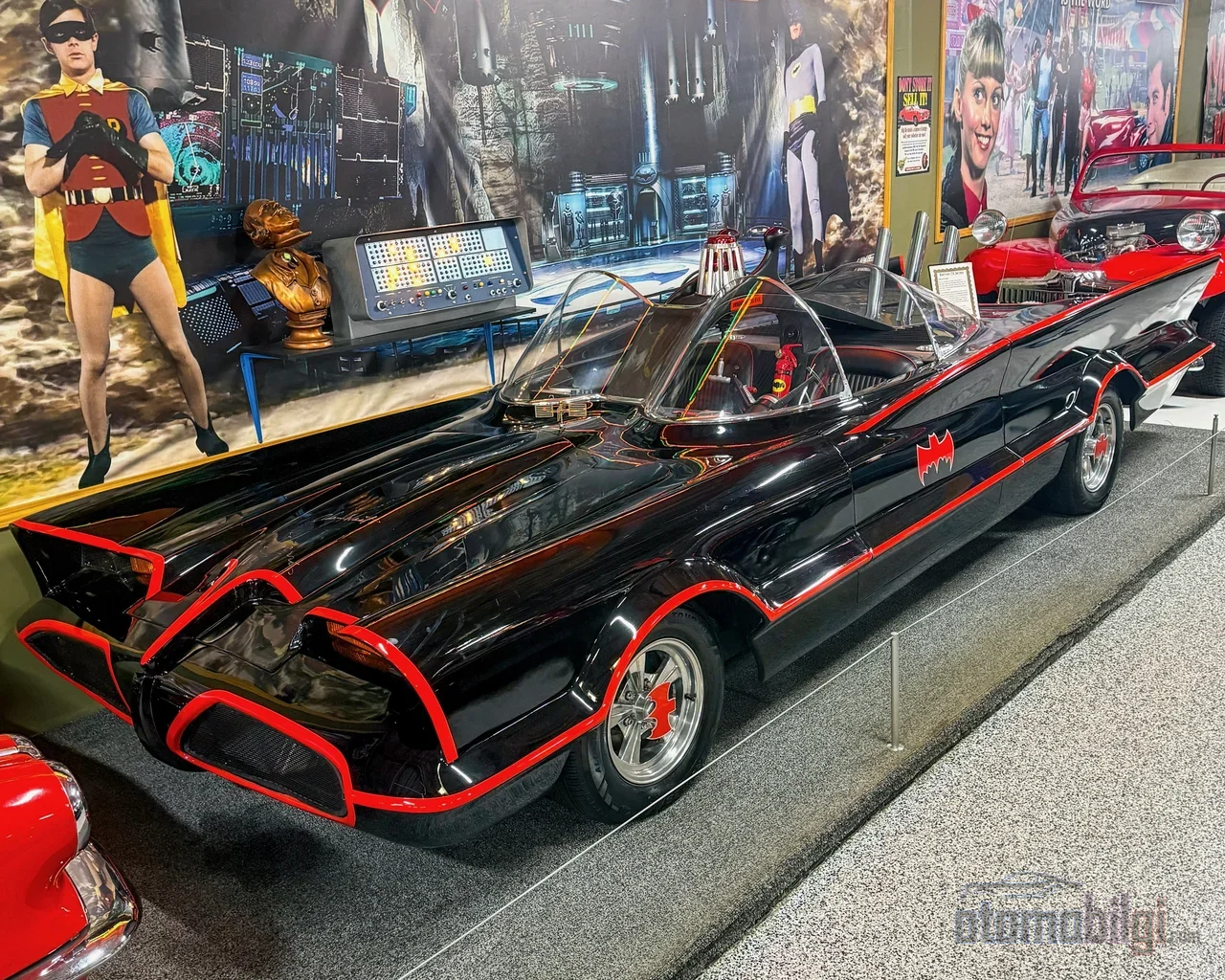
The real turning point came in 1966. George Barris, who created it for Adam West's TV series, realized he had an unpublished 1955 Lincoln Futura concept car on hand and transformed it into the Batmobile in just three weeks. Black body, red trim, red Batman logos on the doors and wheels. That long, red-finned silhouette that looked ready for flight...
But the real fun was in the gadgets: Bat-radar, Bat-scope, bat-car-phone (yes, a car phone, in the '60s!), "batzooka", smoke emitter, nail spreader and rear parachutes. Thanks to those parachutes, the vehicle could do a 180-degree turn in place. For many fans, this car is still the "real" Batmobile. Later comic books and the Super Friends cartoons were also influenced by this design, they just used a blue-yellow palette instead of red-black.
How Revolutionary Was Tim Burton's Gothic Monster?
And now we come to my favorite. In 1989, Tim Burton, together with designer Anton Furst and concept artist Julian Caldow, created a vehicle that went down in cinema history: A pitch-black gothic monster built on a Chevrolet Impala chassis, with a Chevy V8 engine, its rear looking like a jet engine. It had H.R. Giger influences and completed 0-60 mph in 3.7 seconds. It was voice-activated, came by remote control, opened its canopy in park mode, had machine guns and disc launchers - and it could also do a 180-degree turn in place.
The introduction scene? Legendary. When Vicky Vale looked at the car and asked "Which one?", we felt Gotham's new rhythm had been understood. In Batman Returns (1992), the same vehicle escaped the police by turning into the "Batmissile" in narrow streets, stripping everything around it.
The '90s: Neon, Sparkle and the "Toy-Like" Criticism
The '90s were colorful but painful. Batman: The Animated Series (1992) offered a more fluid cartoon version of the Burton design: smoke and tear gas dispensers, ejection seats, titanium alloy body panels. It was well done.
But in the movies, things got complicated. The neon-glowing, organic bat-looking vehicle of Batman Forever (1995) was Barbara Ling's design; the logos on the wheels stayed upright even while the car turned, it climbed walls and fired a grappling hook. The audience reaction remained lukewarm: the "looks like a plastic toy" criticism was widespread - and the car actually was a toy! The 30-feet long, open-cockpit roadster of Batman & Robin (1997), capable of 140 mph, was inspired by classics like the Jaguar D Type and was considered an improvement over its predecessor, but fans still called it "toy-like". Batman Beyond (1999), on the other hand, moved the bar elsewhere: the future Batmobile was actually a hovercraft, a hybrid of the Bat-wing and the Batmobile.
The Tumbler: Did Batman Really Use a Tank?
Partly yes! Frank Miller's The Dark Knight Returns from 1986 brought the "bat-tank" concept to comic books, and Christopher Nolan turned it into reality. The Tumbler, designed with Nathan Crowley for Batman Begins (2005), was conceived as a military-purpose prototype armored tank of Wayne Enterprises. Nolan's own description is great: "A cross between a Lamborghini and a Hummer."
The best part of it all: The Tumbler wasn't a fake mock-up, but a genuinely working vehicle. With 500 horsepower and a maximum speed of 160 mph, it could actually perform the stunts in the films itself. The fiberglass body was built with fake armor plating, but nobody on screen said "that's too much." In The Dark Knight, the Joker destroyed the vehicle and it was replaced by the motorcycle-like Bat-pod - perhaps the most dramatic exit of a Batmobile.
From Tank to Muscle-Car: The Return, from 2016 to 2022
Ben Affleck's Batmobile (Batman v Superman, 2016) became a sweet middle ground for fans: A combination of Burton's sleek '89 blackness and the Tumbler's armored military hardware. It stands like a sporty buggy with its massive wheels, and it's reported that one version was built on a Mercedes-Benz chassis with a V8 engine. Even in forums it's loved as "the exact middle ground between the tank versions and the classics" - we don't agree with everyone, but there's a common language on this point.
Matt Reeves' The Batman (2022), on the other hand, went in the exact opposite direction: Robert Pattinson's Bruce Wayne looked like he had taken the car apart with his own hands in his garage. The design is based on a modified 1970s American muscle car - it's described as a mix of a Plymouth Barracuda / Dodge Charger with the roof integrated into the body. Production designer James Chinlund said they wanted to highlight the car's DIY, handmade feel and its mechanical details like the air intake system. A 650 hp V8, steel exhaust, bulletproof glass, a ram-like reinforced front and an afterburn jet engine... It was filmed with a real vehicle, not CGI; a special V8 monster and an electric twin version were used. Fans say this simplicity recalls the Neal Adams and Jim Aparo comic eras - I think it's a very apt observation.
| Period | Vehicle | Design Language |
|---|---|---|
| 1943-49 | Cadillac Series 75 / Ford Mercury | Unmodified civilian cars |
| 1966 | West Mobile (based on the Lincoln Futura) | Space-age camp aesthetics, gadget generosity |
| 1989-92 | Burton Batmobile | Gothic darkness, jet-like rear |
| 1995-97 | Forever / & Robin vehicles | Neon, futuristic, "toy-like" |
| 2005-12 | Tumbler | Military realism, armored tank |
| 2022 | The Batman vehicle | Retro muscle car, handmade feel |
What Makes the Batmobile So Special?
I think the answer is this: every Batmobile reflects the automotive technology and design fashion of the era it came out in, like a mirror. The 60s space-age enthusiasm shows in the Futura-based car, the dark gothic vibe of the 80s in the Burton monster, the war-weary realism of the 2000s in the Tumbler, and the retro romanticism of the 2020s in a muscle-car interpretation. The bat motif and winged tail fins, meanwhile, have been the unchanged signature since the earliest eras.
There's also the crowd factor: fans generally consider the era they knew from their childhood to be the "real" one. Which one is your Batmobile - the parachute show of the West Mobile, Burton's gothic glide, or the ground-shaking roar of the Tumbler? There are favorites on the comic book side too: Neal Adams' simple black-and-blue sports car from the 70s remains a fan favorite; Norm Breyfogle's Mk III design was a mainstay of the pages from Batman #456 (1990) until 1995. A note for gamers as well: With Arkham Knight (2015), the Batmobile became fully playable for the first time.
This design journey of a single fictional vehicle spanning nearly a century is, in my opinion, the greatest gift of cinema and comic books to car culture. I don't know what the next director will draw, but I'm already excited. Which one is your favorite - tell us?
Sources
- The On-Screen Evolution of the Batmobile
- The Complete History of the Batmobile
- Every Batmobile Ever?
- Gotham's Greatest Ride: The Evolution of the Batmobile
- Batmobile (Burtonverse)
- Batmobile (The Batman Saga)
- Batmobile From Batman v Superman Revealed
- The Batman: What Car Robert Pattinson's Batmobile Is
- The Batman Designers Wanted the Batmobile to Be DIY
- Fast Facts - The Tumbler Batmobile
- Batmobile - Wikipedia