The Story of Bentley's Stamp on Le Mans in the 1920s
Share This Page
We all know the Ford-Ferrari feud and the Audi dominance by heart; but how many of us remember Le Mans' first dynasty? In the 1920s, Bentley won the 24 Hours of Le Mans five times in eight years, becoming the brand that gave birth to the race's commercial spirit and planted the flag of British automotive prestige in that small town near Paris. This story, written with big, heavy and noisy cars and a crew of combat-experienced pilots, dates back almost forty years before Ford entered the race to spite Hitler.
Highlights
- Bentley, the first British manufacturer to win Le Mans: 1924, 1927, 1928, 1929 and 1930
- Woolf Barnato, the first driver to win three consecutive Le Mans with three victories in three entries
- In 1929, Bentley cars swept the top four positions in the overall classification
- The brand was sold to Rolls-Royce in 1931 for 125,275 pounds
- The last overall victory only came in 2003 finally arriving
How Many Times and in Which Years Did Bentley Win Le Mans?
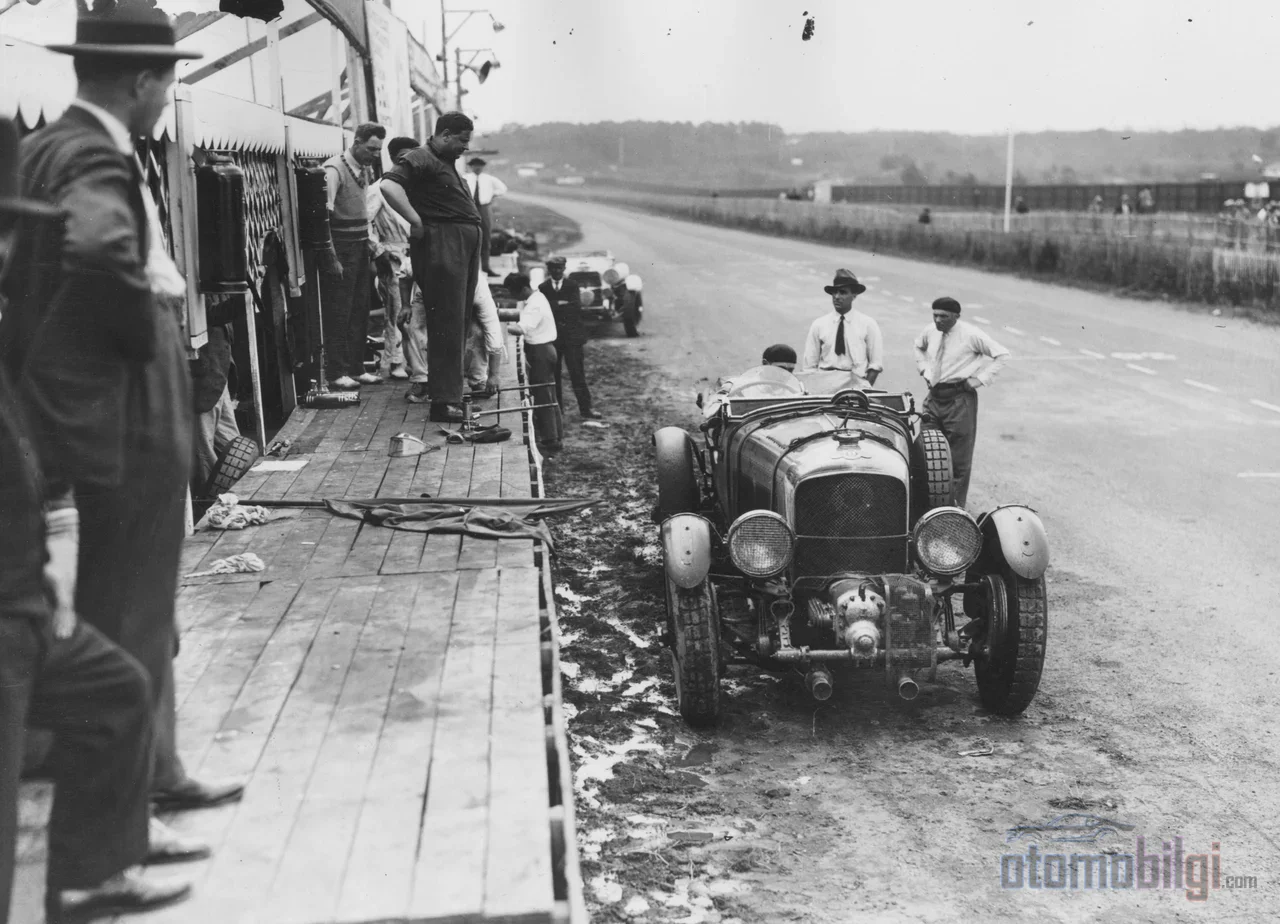
The answer is clear: 1924, 1927, 1928, 1929 and 1930. In other words, five victories in eight years, and the last four of them back to back. The first victory in 1924 was the first time a British manufacturer won Le Mans, and it came with the 3 Litre Sport that put the duo of John Duff and Frank Clement behind the wheel. Each following year, a different model was carried to the top: in 1927, a 3 Litre Super Sport nicknamed Old Number 7, in 1928 the 4½ Litre, and in 1929 and 1930 the Speed Six.
The detail that surprises me most about this era is this: the 1930 victory became Bentley's last overall victory for a full 73 years. The brand only returned in 2003 with the Speed 8, crowning its comeback with a 1-2 finish. When you consider the gap in between, you better understand how special a period the 1920s was.
Who Are the Bentley Boys? Le Mans' First Star Driver Squad
Every great story has a cast, and Bentley's wrote itself into the legends: the Bentley Boys. Imagine eight drivers who carried the company to victory - all war veterans, most of them wealthy, all a little crazy. John Duff fought at Passchendaele, Dudley Benjafield was a bacteriologist who had served in Egypt, Woolf Barnato rose to the rank of Captain, Bernard Rubin was seriously wounded in 1917, Tim Birkin was a lieutenant in the air force, and Glen Kidston was a submariner. Sammy Davis was the motorsport editor of the automotive press and wrote under the pseudonym "Casque". These men were heroes in the pit lane and stunt pilots on the hills.
Woolf Barnato: Three Races, Three Victories
The most unusual name among them is undoubtedly Woolf "Babe" Barnato. This British financier, owner of a fortune inherited from South African diamond mines, made his first 100,000-pound investment in Bentley in 1925, saving the company from closure; over the next five years he put in another 175,000 pounds and took a majority stake and the chairmanship. But Barnato was not merely an investor pumping in money - he won all three of the Le Mans races he entered at the wheel: 1928, 1929, and 1930. Barnato, the first driver to enter history with three consecutive victories, remains unrivaled as the only Le Mans name with a perfect career record.
A Car With a Name: Old Number 7
This crew even gave personality to their cars. The 3 Litre Super Sport that brought the 1927 victory was known as "Old Number 7," a nickname we all gave with affection. The team spirit was so strong that it became woven into the race's lasting culture: a street at Le Mans and the road leading to the 24 Hours Museum were named in honor of the Bentley Boys. In the museum's permanent collection, both the 1924 winning car, the 3 Litre Sport, and the 2003 Speed 8 stand side by side - the beginning and end of the story in the same display case.
Speed Six and 4½ Litre: Which Bentley Brought Which Victory?
Four victories, four different models. I think it's best to sum them all up in a table:
| Year | Model | Note |
|---|---|---|
| 1924 | 3 Litre Sport | The first British manufacturer victory, Duff/Clement |
| 1927 | 3 Litre Super Sport | The car nicknamed Old Number 7 |
| 1928 | 4½ Litre | Victory with Barnato/Rubin |
| 1929-1930 | Speed Six | Two consecutive overall victories |
For those curious about the technical side: the 4½ Litre had a 4.4-liter SOHC inline-four engine, paired with a 4-speed manual gearbox, and the standard wheelbase was 3,300 mm. Versions later fitted with a supercharger went down in automotive history under the name Blower Bentley . The Speed Six, meanwhile, was another beast: a 6.5-liter inline-six producing about 180 horsepower at 3,500 rpm as of late 1930. A total of 544 units of the 6½ Litre were produced in Cricklewood, but only 182 of them were to Speed Six specification - meaning the true racing specialists were in the minority. The racing versions had their wheelbase extended to 3,353 mm; the engine block and cylinder head were cast as a single piece, with four valves per cylinder.
Because of these cars' weight and dimensions, the era's most famous rival innovator Ettore Bugatti mocked the Bentleys as the fastest trucks in the world. To give credit where it's due, those trucks sent everyone in France home.
1929 and 1930: How Did Bentley's Consecutive Victories Come About?
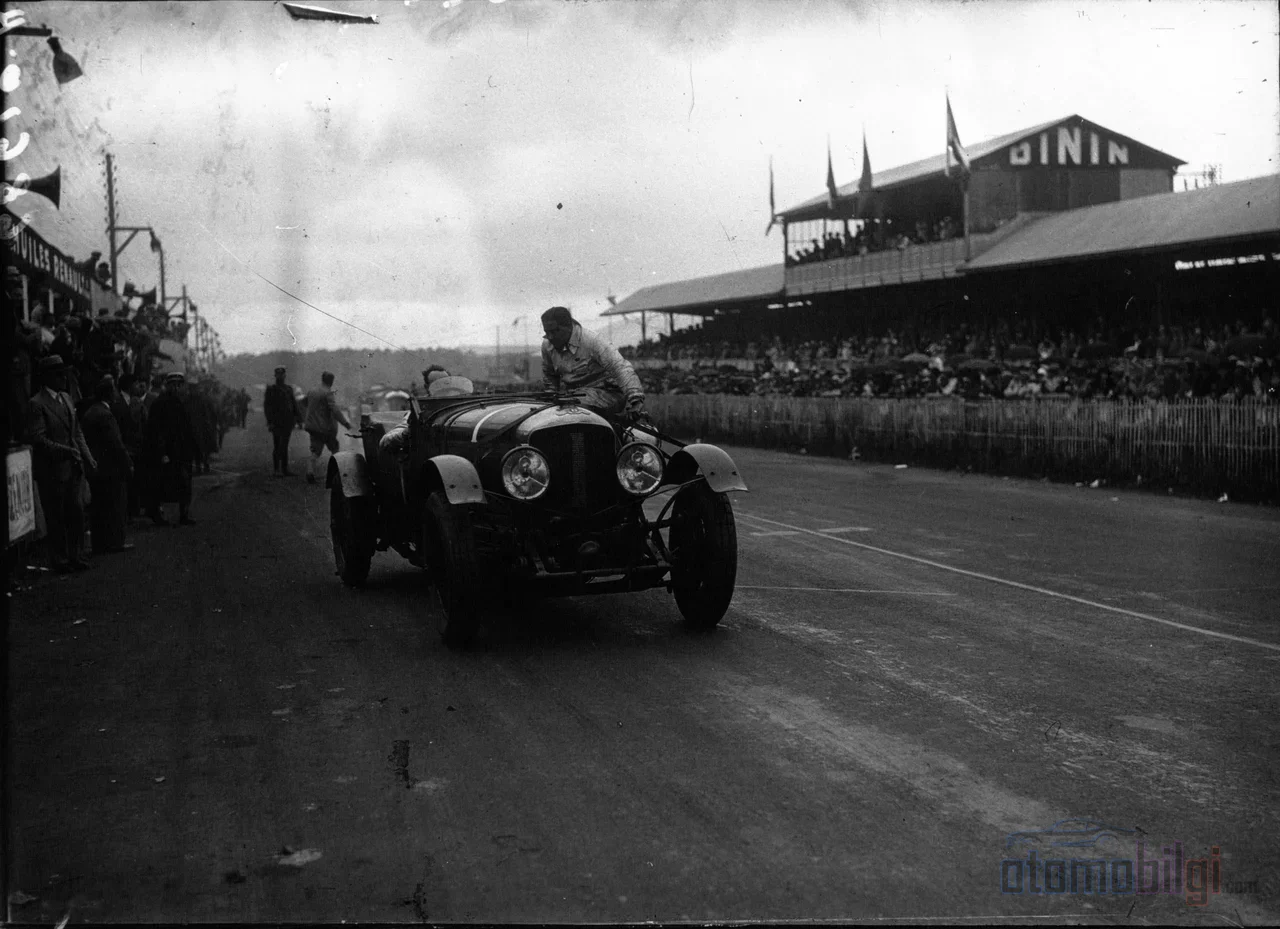
The 1929 race was one of the clearest "sweep" operations in Le Mans history: Bentley cars took the first four places in the overall classification, and only one of the five Bentleys entered failed to finish. In 1930, two Speed Sixes finished first and second; Barnato and Glen Kidston celebrated victory with Old Number 1. These back-to-back wins were no coincidence - behind them, Barnato's money, W.O. Bentley's engineering, and the cool-headedness of those combat-experienced pilots were all pointing in the same direction.
The 1930 Mercedes SSK Duel and the Hare Strategy
The real tension that split the 1930 race in two unfolded between Bentley and Rudolf Caracciola's Mercedes SSK. Birkin's supercharged Blower Bentley raced the Mercedes head-to-head from the very start, and there was a strategy behind it: the Blowers were fast but fragile, and the Bentley team used them as "hares" holding a pace until the German rival wore out. The tactic worked - after 85 laps, Caracciola's SSK parked itself with a generator failure, and the road was cleared. The Bentleys took the first four places; Birkin's Blower broke down after 53 laps and Benjafield's after 6 more, but the result was already sealed.
Betting Against the Blue Train
Off the track, Barnato was just as wild as he was on it. In March 1930, he made a 100-pound bet that the Rover Light Six could beat the Blue Train on the Calais-Cannes route. On March 13, he set out from Cannes in a Speed Six saloon with H.J. Mulliner coachwork, covered the 830 miles in roughly 22.5 hours at an average of 69.89 km/h, and reached the Conservative Club in London a full four minutes before the train arrived at Calais. The bet paid out over 200 pounds. So the man who left his mark on Le Mans was no stranger to humbling trains on the road either.
Why Was the Blower Bentley Controversial?
Here comes the most human part of the story: a fight within the company. W.O. Bentley found the idea of forcing air into the engine with a supercharger, in his own words, repulsive. Tim Birkin, on the other hand, with Dorothy Paget's backing, favored fitting an Amherst Villiers supercharger onto the 4½ Litre and racing the Blower Bentleys. Think of it as a train fight: the engineer said "heavy but reliable," while the racer said "speed is everything." The 1930 hare strategy showed how effective the Blower could be; but the fact that both Blowers retired on the road in that same race proved that W.O.'s distrust was not unfounded. In short, both sides were somewhat right.
The cultural impact of the Blowers should not be underestimated either: in Casino Royale, Ian Fleming gave James Bond a supercharged grey 4½ Litre. The fact that a racing car became iconic enough to inspire a spy novelist really sums up the model's status.
How Did the Empire Collapse? The 1929 Crisis and the Sale to Rolls-Royce
That is where the bright part of the story ends, because history's favorite thing is dropping the curtain right in the middle of the stage. After the 1929 stock market crash, it became nearly impossible for independent manufacturers to secure funding. When Barnato foresaw that mortgage payments could not be made, Bentley Motors entered bankruptcy proceedings in the summer of 1931. Assets were put up for sale through closed auction, and Rolls-Royce, under the cover of British Central Equitable Trust, paid 125,275 pounds to take over its biggest rival. The Cricklewood factory produced until 1931, then production was moved to Rolls-Royce facilities and the company took the name Bentley Motors (1931) Ltd. Barnato, for his part, managed to return to the board of directors in 1934.
Let us also be honest: W.O. Bentley was a brilliant engineer and visionary, but not much of a businessman. Barnato's role is still debated - some see him as a rescuing investor and the best driver, others as a pragmatic businessman who compensated for the weaknesses in operations. I think both are true at the same time; indeed, it is precisely this duality that makes the story so colorful.
The Legacy of the Dynasty in the Shadows: What Remains Today?
The Bentley era of the 1920s gave Le Mans three things. First, the marketing power of endurance racing: Bentley was the first to show that a brand could build prestige with an international victory even in the midst of a commercial crisis. Second, the star driver culture: the Bentley Boys can be considered the ancestors of the ambassador driver programs of modern sports brands. Third, the technical heritage - from the four-valve configuration of four valves per cylinder to single-piece engine blocks, many details became examples for later generations.
The brand did not forget this heritage either. In the Le Mans Collection prepared with inspiration from the 2003 Speed 8 victory, six wreath emblems symbolizing the six overall class victories were used. Mulliner's Speed Six Continuation series took to the track with four cars at the 2023 Le Mans Classic and reenacted the 1929 Bentley Boys photo. The story of the Ford GT40 was brought to the cinema, Audi's diesel revolution was talked about everywhere; but in my opinion, those heavy, noisy, modest British giants of the 1920s are still the most romantic chapter of Le Mans. What do you think - were these cars really the world's fastest trucks, or were those trucks that Bugatti mocked the ones who had devised the smartest racing strategy?
Sources
- Bentley Boys and Girls | History and Heritage
- 24 Hours Stories: The Bentley Boys
- 1924-1930: the one of a kind Bentley Boys
- Woolf Barnato
- Bentley 4½ Litre
- 1930 24 Hours of Le Mans
- The Le Mans Collection - Celebrating Shared History
- Four-strong works team for Le Mans Classic
- The History of Bentley
- 1930 Bentley Speed Six Specifications