Cities Opposing the Rise of Automobiles and the Years of Their Bans
Share This Page
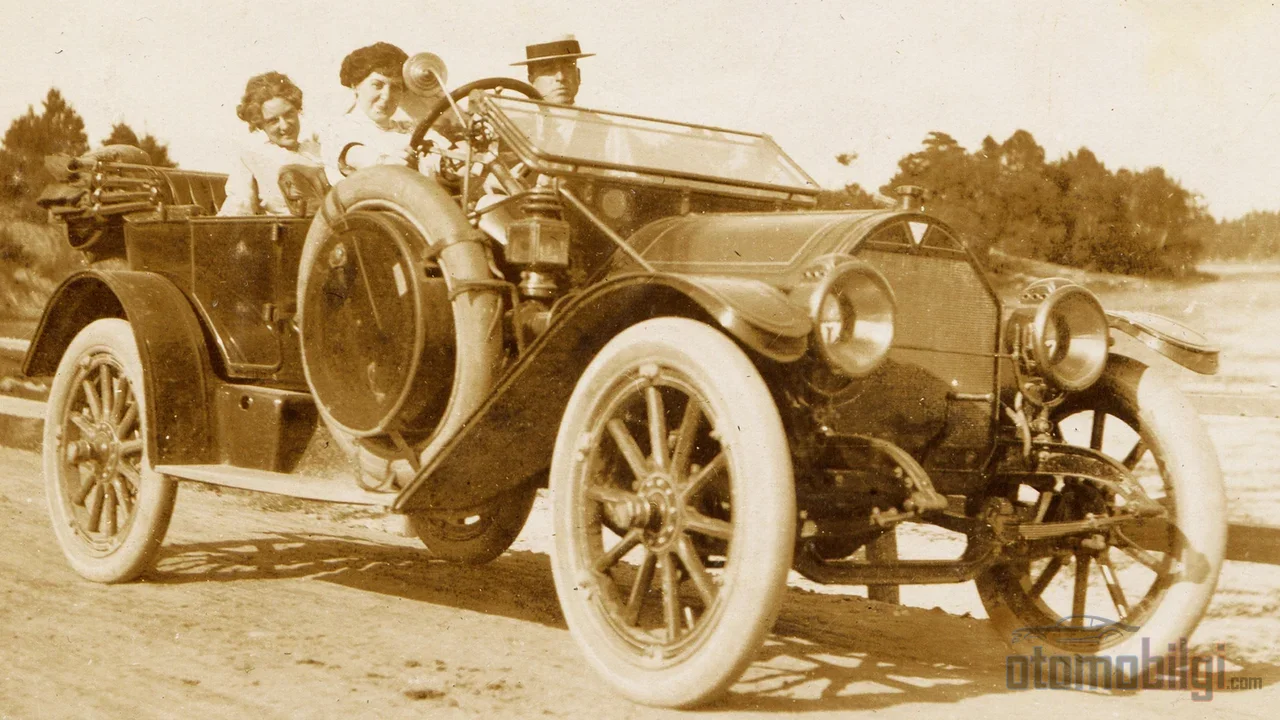
Today we can't live without thinking about cars, but look at this: throughout history, there were two places that banned motor vehicles entirely: Canada's Prince Edward Island (1908–1919) and Switzerland's canton of Grisons (1900–1925). So at one time, driving a car was literally a crime in certain corners of the world. On this page, I tell the story of these two bans, the reasons behind the resistance, and the automobile's struggle for social acceptance.
Highlights
- Prince Edward Island banned the automobile unanimously on March 26, 1908; imprisonment was foreseen for drivers who violated the ban.
- In Switzerland's canton of Grisons, the ban lasted 25 years and could only be lifted by public vote on June 21, 1925 with a mere 52% of the vote.
- Connecticut became the first US state to impose a speed limit on motor vehicles on May 21, 1901: 12 mph in cities, 15 mph in rural areas.
- During the ban era on PEI, car owners would transport their cars by train outside the banned zones and drive them there.
- In Grisons, exactly nine public votes were held to lift the ban.
Why Were Cars Banned? The Real Reasons Behind the Ban
It seems absurd at first glance, doesn't it? But in the early 1900s, the automobile was not seen by everyone as a lovable invention. The objections of those who opposed it were: noise, clouds of dust, and a physical threat to pedestrians. Early automobiles had no muffler like today's; their sound was disturbingly loud beyond comparison with a tractor. Moreover, the biggest victims of that sound were not people but horses. For a society living in the horse-drawn carriage era, having horses panic and die in the middle of traffic was a real disaster.
There was also a class dimension. At that time, the automobile was a luxury only the wealthy could afford. At a time when the island's economy was in a slump, watching a handful of rich people speed by in clouds of dust while farmers carried their goods to market with horses felt like an insult to many people. Andrew MacLean, one of the supporters of the ban on PEI, interprets this as a kick aimed at the rich while the economy was in a slump. There was also a religious and social rhythm: people went to church on Sundays and shopping on Saturdays, and there were fears that fast-passing cars would disrupt this order. Documents of the era used expressions like devil wagons and public nuisances for automobiles. In fact, even the title of one book was Ban the Automobile: Instrument of Death - ban the automobile: an instrument of death. This shows how real these people's fear was.
Prince Edward Island: The Only Place in North America Where Cars Were Banned
The history of the automobile on this small island in eastern Canada is actually quite old. The first horseless carriage was purchased by Georges-Antoine Belcourt, the priest of North Rustico, in 1866; this is considered the first automobile purchased in British North America. In 1900, businessmen from Charlottetown bought a steam car and used it for local tours. So we can't say there was never any love for cars on the island.
But the picture changed. In 1908, while there were only 7 cars on the island, the government stepped in and on March 26, 1908 the Legislative Assembly unanimously approved the ban on motor vehicles. The reasons given for the ban were safety concerns, the fear the cars caused in horses and farm animals, and the poor condition of the island's roads. The ban wasn't limited to just driving: car imports were also banned, and drivers who violated the ban faced imprisonment. Between 1908 and 1919, PEI was the only place in North America where driving a car was illegal.
Roads like a patchwork quilt: Enforcing the ban was impossible
The ban couldn't be fully enforced, because the island became like a "patchwork quilt": cars were free in some areas, banned in others. Drivers found the answer in a crazy solution. Frank Tuplin, a farmer from Fox, couldn't drive his car in Summerside; he took his car by train to Charlottetown and used it there. Imagine - it would be like loading our car onto a train today and driving it in the next city!
In 1913, the pressure increased. Businessmen said tourism revenue had dropped by $90,000 because of the ban, and demanded the ban be loosened. A law passed in April 1913 allowed cars on Mondays, Wednesdays and Thursdays; they remained banned on Tuesdays and Fridays (church preparation), Saturdays (shopping day) and Sundays (church day). But reaching this decision without consulting the farmers stirred things up. In June 1913, a plebiscite was held on a school district basis, and according to reports, more than 90% of participants wanted the ban back; the official results were even hidden by the government.
The end of the ban and the farmers who wouldn't give up
World War I changed everything. Wartime mobilization, falling prices from mass production and growing familiarity softened attitudes toward the automobile. From 1916 onward, regions that collected 75% of signatures could lift the ban. In 1917, Premier John Alexander Mathieson proposed lifting the ban, but the assembly was deadlocked at 14-14; the Speaker, John S. Martin, cast the deciding vote and the motion passed. The ban was officially lifted on August 29, 1919. But here's an interesting detail: the ban ended, yes, but for years farmers continued to block roads to cars by placing old scythe blades, nailed boards and barbed wire on the roads. According to historian Rudy Croken, the major accidents expected from fear of horses didn't happen; what actually occurred was vehicle sabotage.
A 25-Year Ban in Switzerland: The Grisons Example
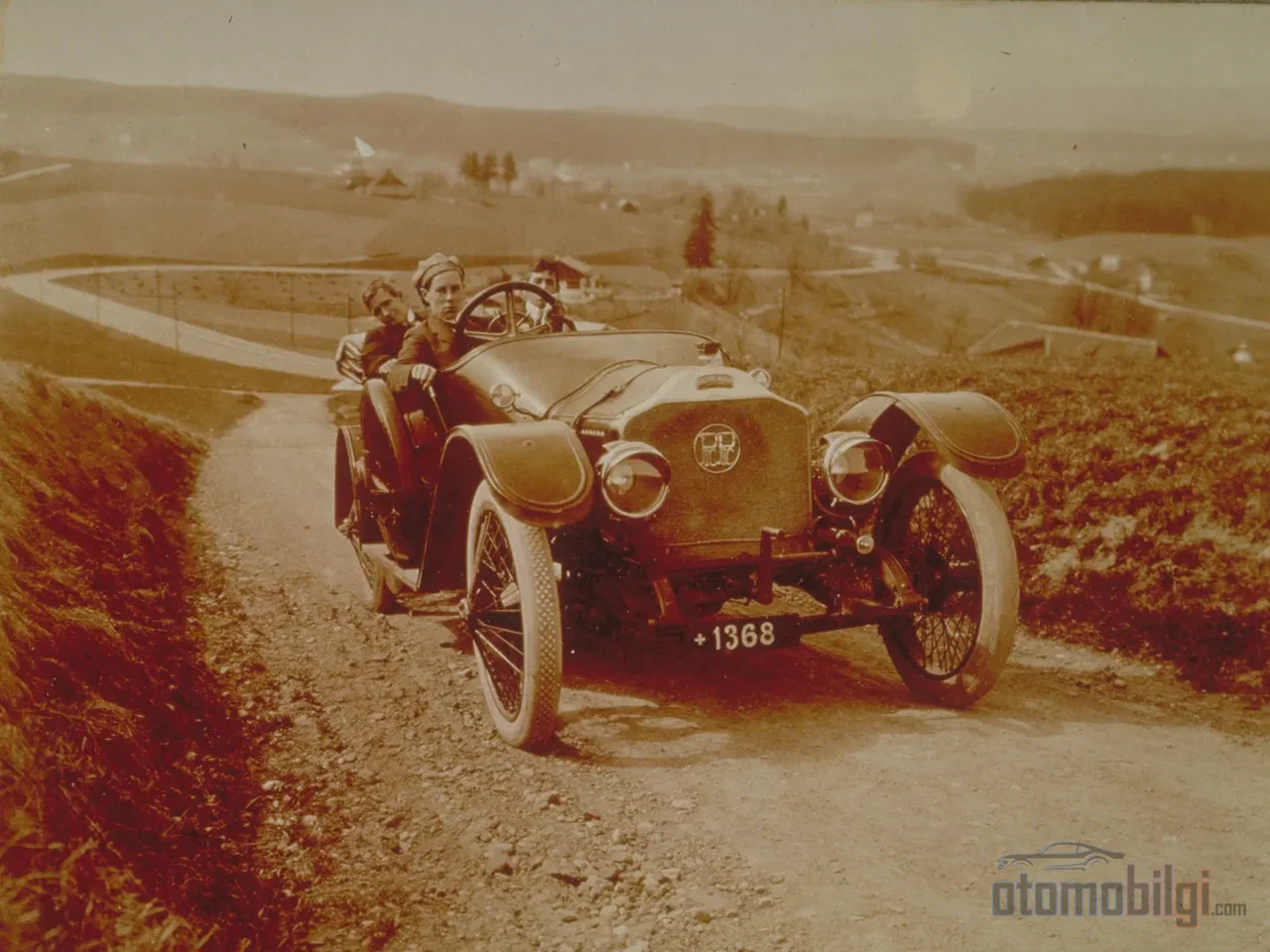
In Europe, things got even more dramatic. Following strong protests, the mountainous Swiss canton of Grisons (Graubünden) banned driving automobiles on all the canton's roads on August 17, 1900. The reasons were familiar: startled horses, noise and dust. But the difference from PEI for Grisons was duration: the ban lasted a full 25 years, which makes it the longest ban ever imposed on the automobile in Europe. Moreover, the canton banned all motor vehicles, meaning even motorcycles were prohibited.
Switzerland's direct democracy played an interesting role here. In total, nine public votes were held to lift the ban, one of which was the vote of October 13, 1907. All of them were rejected; those opposed to motorized traffic promoted it with exaggerated expressions like "monster luxurius". Finally, on June 21, 1925, 52% of voters lifted the ban. So the margin was only 2%! This is a classic example of how democracy can delay innovation. And of course, when the ban ended, the canton lagged years behind; in 1925, the number of vehicles was still very low.
First Regulations: Rules Before the Ban
Setting outright bans aside, the first reactions against the automobile actually came in the form of regulation. With the Locomotive Act of 1865 (popularly known as the Red Flag Act), Britain imposed a speed limit of 4 miles per hour in the countryside and 2 miles in the city, and required each vehicle to be preceded by a walker carrying a red flag. Just imagine a man waving a flag in front of a car! When the new law of November 14, 1896 removed this flag requirement, motor vehicle enthusiasts celebrated by tearing the flag in two on the journey from London to Brighton. Then in 1903, the United Kingdom updated its legislation with the Motor Car Act. Across the Atlantic, on May 21, 1901, Connecticut became the first US state to regulate motor vehicles: 12 miles per hour within cities, 15 miles per hour in the countryside.
| Place | Date | Rule |
|---|---|---|
| England | 1865 | 4 mph in the countryside, 2 mph in the city; walker with a red flag required |
| England | November 14, 1896 | Red flag requirement removed |
| Connecticut | May 21, 1901 | Speed limit of 12 mph in cities, 15 mph in the countryside |
| United Kingdom | 1903 | Motor Car Act |
| Grisons | August 17, 1900 | All motor vehicles banned |
| Prince Edward Island | March 26, 1908 | Automobiles banned, imports prohibited |
Pedestrian Deaths and the Birth of the Concept of "Jaywalking"
One of the most tangible reasons for the resistance also concerned death. Early traffic accidents were quite brutal: in 1896, a woman struck by a vehicle traveling at 4 miles per hour became the first recorded traffic fatality; in 1899, a vehicle killing a pedestrian is also noted as one of the first recorded incidents. At the time, pedestrians were placed at the center of traffic, and drivers were generally accused of willful murder regardless of the circumstances. So initially, the law was on the side of pedestrians, not the automobile.
Then this narrative was reversed. "Jaywalking", that is, the concept of pedestrians crossing the street improperly, was popularized through the influence of the automobile industry. In short, the definition of the crime was rewritten over time in favor of the car, at the expense of the pedestrian. In the eyes of urban Americans in the 1920s, cars and their drivers were "tyrants" who took away other people's freedom. As the automobile spread, the horse population declined drastically, and the horse lost its job in the age of the automobile.
What Does This Story Have to Do with Today?
Here is the question: the story of opposition to the automobile never ended. In the 1960s, a state senator in the US made an attempt to ban gasoline-powered vehicles and nearly succeeded. The story of PEI and Grisons shows that every new technology goes through the same cycle in society: first fear and resistance, then regulation, and finally acceptance. Today's debate over cities that restrict cars in city centers and declare low-emission zones is fed from the same vein.
In my view, the most striking lesson is this: the automobile never turned out to be a nightmare, but some fears were not entirely unfounded either. Traffic accidents are real, as are noise and pollution. PEI and Grisons went too far, but the automobile's acceptance by society was never free, and it is still a matter of negotiation today. Do you think similar ban stories will one day be written about today's vehicles as well? Judging by history, we should rule nothing out.
Sources
- Prince Edward Island automobile ban
- P.E.I. put the brakes on cars 115 years ago. It took 5 years to lift the ban
- When PEI Banned Cars
- Grisons automobile ban
- Graubünden: the canton that said no to the motorcar
- The Swiss canton where cars had to be pulled by horses
- Graubünden Car Free 1900-1925
- Connecticut enacts first speed-limit law
- Motor Car Act 1903
- Red flag traffic laws
- When Cities Treated Cars as Dangerous Intruders
- A Brief History of Traffic Deaths in the U.S.
- The Forgotten History of How Automakers Invented the Crime of Jaywalking
- The forgotten fight to ban gas-powered cars in the 1960s