Why Did the Chrysler Turbine Car Never Enter Mass Production?
Share This Page
The Chrysler Turbine Car never entered series production because hand-built production at 16,000 dollars while a standard V8 Chrysler cost 5,000 dollars was exploding, the engine drank fuel like crazy especially at idle and low speeds, its nitrogen oxide emissions couldn't keep up with tightening regulations, and throttle response remained sluggish. When the program ended in 1966, Chrysler took back most of the vehicles and destroyed all but nine.
Highlights
- Total 55 vehicles were produced: 5 prototypes and 50 units for the public testing program
- 203 families in 133 cities, each drove the cars in three-month periods
- More than 30,000 applications were received for the program
- Today only 9 examples survived
- The engine could run on any combustible liquid from gasoline to tequila, even Chanel No. 5
Imagine this: in 1963, Chrysler offers to let you use a car delivered right to your door for three months. The engine isn't a piston engine, but a gas turbine like in aircraft. Even the cockpit features a classic watch-face layout, with a jet-inspired instrument panel. This car was real, and not just that - thousands of ordinary families took it to the supermarket, to school, to work. So why did such a promising idea never reach dealerships for sale? Here is the anatomy of one of the most compelling "what could have been" stories in automotive history.
First, Let's Meet the Story's Hero
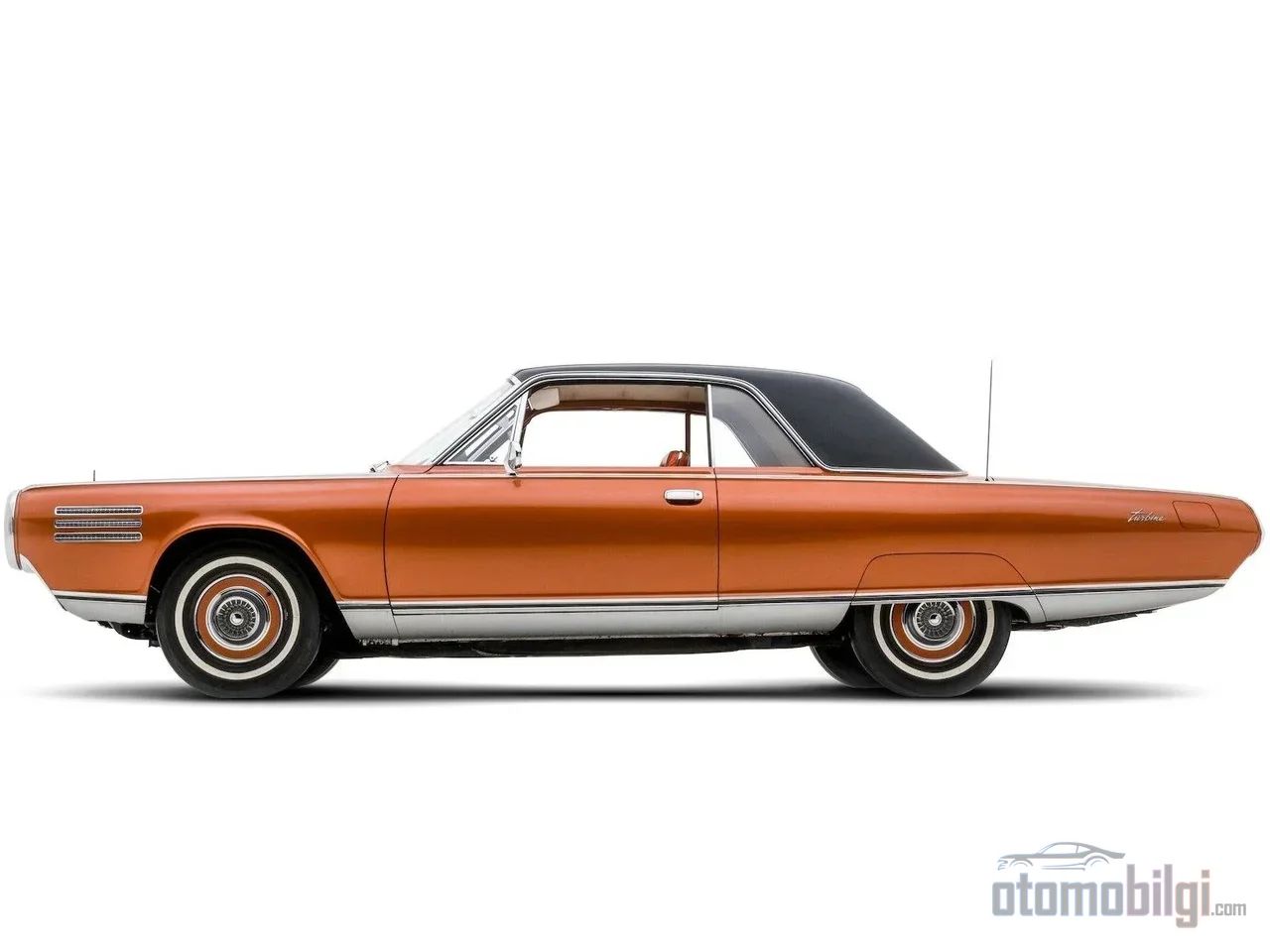
Chrysler had been working on a turbine-powered road vehicle for years, and in 1963-64 we finally had a vehicle ready to make its show: Chrysler Turbine Car. The bodywork was built in Turin by the Italian master coachbuilder Carrozzeria Ghia, while assembly was completed in Detroit. So it was truly an American experiment in Italian clothing. And like it or not, all 55 vehicles were painted the same metallic color: that famous "turbine bronze". If you look closely, you can still see that bronze shine in photos.
After the five prototypes, 50 vehicles to go to users were produced, with production running at one vehicle per week; the 50th was completed in October 1964. No crowded factory lines, no robot arms, no vehicle per second... These cars were made almost by hand, with special processes. And here is where the first red flag appeared.
An Engine That Runs on Any Fuel: Not a Myth at All
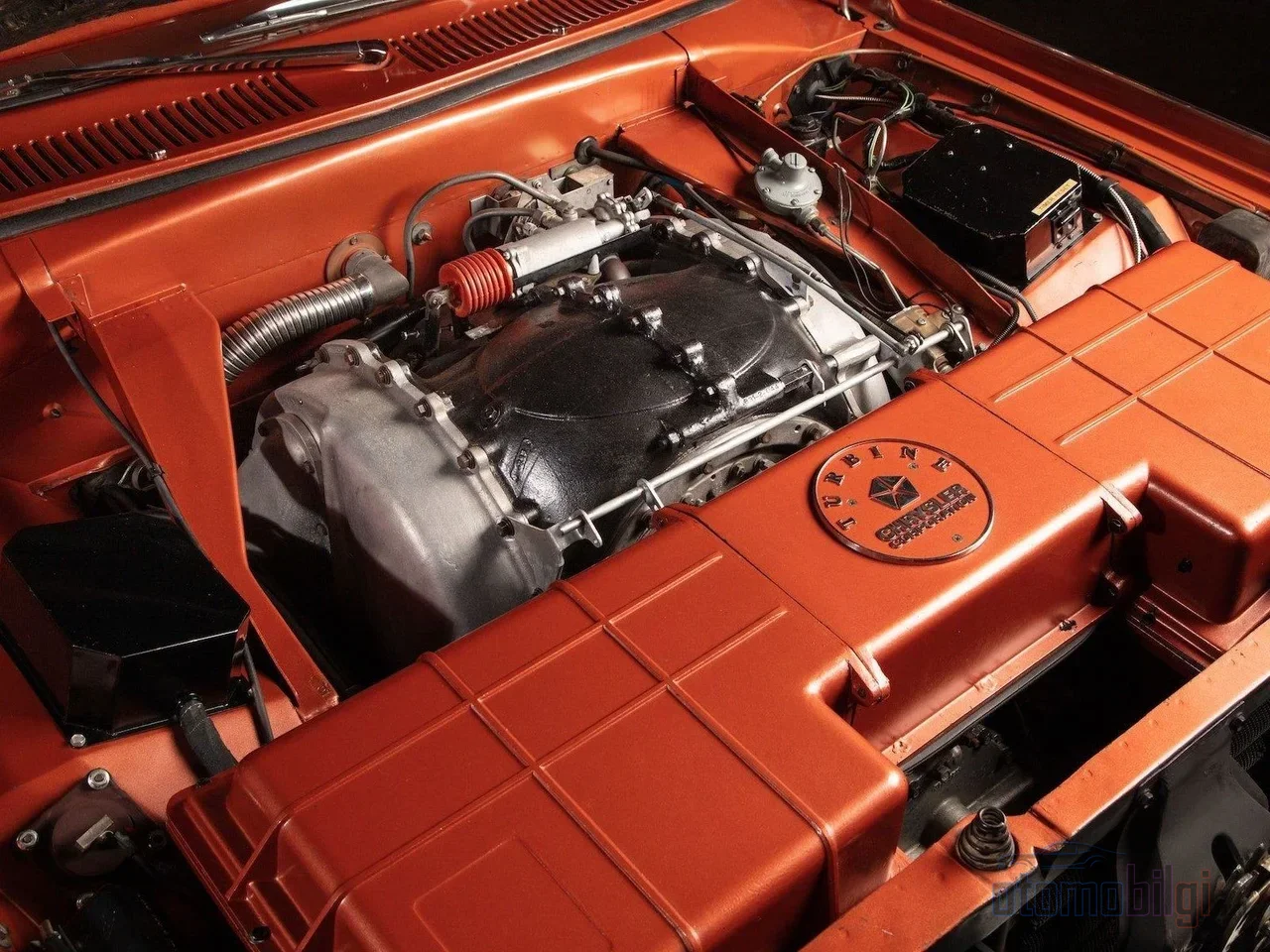
The program's engine A-831 is a gas turbine, and with this engine, the classic notion of "filling up the fuel tank" doesn't make much sense. Gasoline? It runs. Diesel? It runs. Kerosene, JP-4 jet fuel? No problem. According to legend, even tequila, perfume, and peanut oil were tried. While in a piston engine the match at the end of the pump determines the fuel choice, in the turbine nearly every liquid fuel gave the same result.
Moreover, this engine had fewer parts than its piston sibling; it vibrated less, required less maintenance, and growled along reliably in cold and heat, at sea level and at high altitude alike. It sounds like technology from the future, doesn't it? But as in every superhero story, there was an invisible weakness: leaded gasoline. Since leaded gasoline was the most common fuel in those years, its incompatibility with the engine was a serious usability problem.
203 Families, 133 Cities: The World's Most Open Test
Chrysler didn't just display these cars in showrooms; it opened them directly to the public. Under the consumer research program running from October 29, 1963 to October 28, 1965, 50 vehicles were handed over to 203 families and drivers in 133 cities, each for three-month periods. More than 30,000 people applied to the program - so the selected families really passed through a narrow gate.
Gas turbines work efficiently under load and at high rpm; but their performance drops at idle and in slow city driving. This engine's idle speed is cited in sources as between
So Where Was the Problem? The Reasons That Blocked Mass Production
The Price Tag Faced Reality
Mass-producing one of these vehicles to today's standards would have ballooned to around 16,000 dollars in hand-built terms, while a standard V8 Chrysler cost only 5,000 dollars. Building a dedicated factory would have required a serious investment, and that investment would produce a car too expensive for anyone to buy. Even the best engineering, unfortunately, can't convince the laws of physics and the accounting ledger.
Fuel Consumption: A Turbo Balloon
Gas turbines run efficiently under load and at high speeds; but their performance drops at idle and in slow city driving. This engine's idle speed, according to sources, 18,000 and 22,000 rpm - imagine: while the car is parked, the engine hums like an airplane over your neighborhood and keeps consuming fuel all the while. A piston engine nearly falls silent while waiting at a traffic light; the turbine, like a tenor who refuses to leave the stage, keeps on performing.
Performance and Driving Experience
When you pressed the gas pedal, the engine's response came with a delay - a feeling similar to today's turbo lag, but more pronounced. The starting procedure was also complicated, and acceleration was disappointing. In your opinion, which mattered more to a 1960s family: the "runs on any fuel" story, or the feeling of "dropping your friends off at the airport"? The latter, of course.
Emissions: A Target the Era Couldn't Catch
There was also a more insidious problem: high nitrogen oxide (NOx) emissions. As regulations along the Clean Air Act path tightened toward the early 1970s, this point became a bigger wall with each passing day. Ultimately, Chrysler's turbine program ended in 1979 because the engines could not meet government emission regulations and fuel economy was relatively poor. That same year Chrysler needed a large government loan; the discontinuation of the turbine program is cited as a condition for the loan being granted. Yet Chrysler had even announced its intention to launch a turbine-powered New Yorker in 1981.
The "Oil Companies Killed It" Myth: How True Is It?
There is still a narrative circulating on social media: "The turbine car was killed because it threatened the oil industry." An exciting conspiracy, admittedly. But the truth is something more annoying: even though the engine itself was ready, it was expensive, fuel-inefficient, and its emissions did not comply with regulations. The "runs on any fuel" claim sounds like it heralded the end of the oil age; yet it was incompatible even with the most common fuel, leaded gasoline, and the output of the experience of the thousands of families who actually used the car was problems with cost and efficiency. So there is no need to rewrite history; the numbers already tell the story. What killed the turbine car was not the oil companies, but physics and accounting.
Epilogue: 55 Cars, Nine Survivors
When the program ended, Chrysler took back most of the vehicles and destroyed all but nine. Yes, you read that right - nearly all of one of the world's most unique cars was destroyed. Today only 9 examples survive: two are at Chrysler, six were donated to museums. One of these is at the Henry Ford Museum in Dearborn, and another is the 1964 model displayed at the Smithsonian. Although some were initially disabled, they were later made operational with new engines. Curiosity did not end even after the program: the Detroit Historical Museum displayed a car donated by Chrysler in 1968; an example in Jay Leno's garage was restored together with Gregg Williams, and the Hagerty Drivers Foundation even made a documentary on the subject.
The Chrysler Turbine Car was, technically, probably a vehicle ahead of its time; but economics and environmental regulations stopped it before it even got going. The reason we do not see turbine engines in cars today is the same trio: cost, fuel economy, and emissions. Still, the story of those 55 bronze-bodied, jet-sounding cars still mesmerizes curious eyes. If it were you, as a family you would have wanted to experience that program too, right?
Sources
- Chrysler Turbine Car
- A Brief History of the 1963 Chrysler Turbine Car
- Engines Exposed: 1963 Chrysler Turbine
- 1964 Chrysler Turbine Car - Smithsonian
- 1963 Chrysler Turbine Car - National Historic Vehicle Register
- Chrysler's ill-fated Turbine program went way beyond the iconic Ghia car
- A Quick Guide to the Whereabouts of All Nine Chrysler Turbine Cars
- Whatever Happened to the Chrysler Turbine Car?
- Why the Revolutionary Chrysler Turbine Failed
- Whatever Happened to the Chrysler Turbine Car?
- The Italian-Built American Car That Idled At 18000 rpm
- Chrysler Car Brief: 1963 Chrysler Turbine
- The 1963 Chrysler Turbine Car: Engineering a Revolution
- Restoring the Iconic Chrysler Turbine Car - Jay Leno's Garage
- The Chrysler Turbine Car: Engineering a Revolution - Hagerty Drivers Foundation